• Skip to main content

Levinson and Stefani Injury Lawyers

Client-first legal representation for injury victims. Injured? Free Consultation:

(312) 376-3812

  • Home
  • About Us
    • Attorneys
      • Ken Levinson
      • Jay Stefani
      • Vanessa A. Gebka
    • Practice Areas
      • Truck Crashes
      • Bus Collisions
      • Auto Accidents
      • Child Injuries
  • Firm News
  • Library
    • Articles
    • Cases
    • Law
    • Video
  • Blog
  • For Lawyers
    • Focus Groups
  • Free Case Review

Levinson and Stefani

Ken goes back to law school — 2016 edition

August 23, 2016 by Levinson and Stefani Leave a Comment

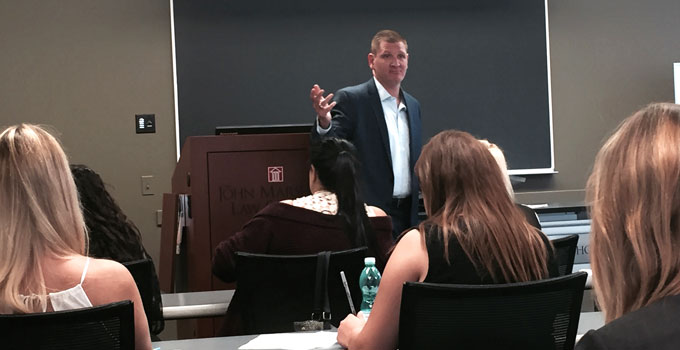
Ken_John-Marshall
Ken speaks to the class of 2019.

Last Friday Ken had the pleasure of leading a group of law students during orientation week at John Marshall Law School. There, members of the class of 2019 got their first taste of their legal education. Fun fact: It was a mere 27 years ago when Ken took his first class at Case Western Reserve University School of Law.

Each year the Illinois Supreme Court Commission on Professionalism promotes the virtues of “integrity, civility, and professionalism” among incoming law students. The commission asks students to take an oath to uphold those standards, followed by teaching sessions with practicing attorneys that are recruited by the commission to pass along the knowledge they’ve acquired while working in the field.

After a quick introduction by John Marshall department head Clifford Scott-Rudnick, the students were taken to classrooms for breakout sessions. Ken led an open-ended discussion about legal ethics and the mandates of the American Bar Association, part of which included an analysis of three scenarios pulled from actual cases and the implications of each situation.

One of the more interesting scenarios was a situation involving a client’s Facebook account that alluded to several instances of violence and the use of a handgun. The ethical dilemma: Should the defense counsel advise their client to delete their Facebook account? Nearly everyone agreed that attorneys should advise their client to delete incriminating social media posts, so it came as a surprise when Ken explained that doing so would be unethical. Ken also pointed out that attorneys should advise clients to refrain from posting on social media when it comes to potential or pending cases, and suggested that changing their privacy settings was a good option. Deleting or destroying potential evidence, however, is problematic.

The revelation brought about a spirited conversation, which raised good points about the impact of social media in the legal profession and how attorneys need to handle it. Ken was particularly pleased to see everyone taking part in a respectful debate, “the first of many to come,” he joked.

Students at John Marshall Law School formally begin classes this week.

Traffic fatalities on the rise in Illinois

August 17, 2016 by Levinson and Stefani Leave a Comment

Photo by Zol87, Wikimedia Commons

The Associated Press is reporting that Illinois traffic deaths are expected to top 1,000 this year for the first time since 2008, a consequence of more miles being driven, higher speeds being reported along rural highways, and an increase in younger drivers on the road.

More than 620 traffic fatalities have already occurred as of August 12, according to the State-Journal Register, a jump of 50 from the same time last year. It’s a trend that’s expected to continue through the end of the year.

The number of traffic deaths in 2015 (998) provides an ominous glimpse into the anticipated numbers of 2016 and it comes at a time when safety experts are beginning to look at several factors related to the rise.

Authorities say that most traffic-related fatalities have occurred along rural interstates where speed is the predominant factor (Illinois raised the speed limit on rural highways from 65 mph to 70 mph in 2014), but officials also say that distractions are becoming more frequent, including the use of cell phones and other handheld devices. That applies to pedestrians, as well.

“Most of our problems come down to a couple of things,” said Randy Blankenhorn, Secretary of the Illinois Department of Transportation, who spoke with the AP about this year’s expected rise in fatalities. “Avoid disruptions, whether it’s being on your cellphone or texting while you’re walking on busy streets. We see a lot of distractions, and speeding is always going to be an issue.”

Non-Profit Spotlight: Joel Feldman talks End Distracted Driving

August 15, 2016 by Levinson and Stefani Leave a Comment

Joel-Feldman
Joel Feldman, founder of End Distracted Driving, speaks with students.

Joel Feldman isn’t bothered when people ask about his daughter Casey, who was killed by a distracted driver in 2009. What bothers him is when people confuse safe driving for lucky driving. For Feldman, that distinction goes a long way toward explaining why many drivers feel they can get away with things like texting on the phone while sitting behind the wheel of a car—a task that seems innocuous in today’s digital-crazed world.

But the facts tell a different story: Over 3,331  people were killed and over 387,000 injured in motor vehicle accidents connected to distracted driving, according to the NHTSA, and the National Safety Council says that at least 28 percent of vehicle crashes are caused by texting and cell phone use alone.

Those are just some of the things Feldman discusses with students across the country as founder and lead advocate for End Distracted Driving, formed seven years ago. The organization has since put together a substantial list of volunteers that speak on behalf of EDD to raise awareness related to dangerous trends.

Feldman spoke with us by phone to talk about his organization’s work, keeping Casey’s memory alive, and what’s in store for the future of EDD.

What is End Distracted Driving and what’s your mission?

We established EndDistractedDriving.org after my daughter Casey was killed by a distracted driver in 2009. After she was killed, I realized that I was driving distracted all the time. I’m a lawyer. I represent families who have lost loved ones to distracted driving. I should’ve known better. So it made me think about the way I was driving. I was asked to speak with folks about distracted driving and one thing led to another. I started doing more talks and then I said, “Gosh, I wonder if I’m really changing people’s attitudes and behaviors.”

It’s okay talking to people and telling them the story of Casey. I like to do that to keep her memory alive. But it certainly wouldn’t have the same level of meaning if I couldn’t affect other people’s behaviors. I looked for a distracted driving presentation that was scientifically based, that had been tested. Couldn’t find one. I went to the Children’s Hospital of Philadelphia and they helped us develop a science-based distracted driving presentation. I would evaluate and update it so we were doing the best in terms of helping people decide for themselves, “Hey, I’m not the safest driver. Let me make some changes.”

It’s definitely about empowering people. It’s not confrontational. It’s not bloody or graphic. We figure out ways to reach different people, whether that’s middle school kids bugging mom and dad not to drive distracted, or if it’s teen drivers talking about how they can influence their moms and dads to drive safer, and, of course parents. Ask any group of parents if they would do anything to keep their children safe and they all raise their hand. Ask them to keep their hands up if they never drive distracted and all hands go down. You can create these moments where people have a little bit of discomfort, and it’s one of the things we do in our presentations to connect with people and have them decide whether there’s some adjustments they can do to be safe.

The situation with Casey is devastating. There’s no way to get over something like that, but have you found purpose in what you’re doing?

It was just the seventh anniversary of Casey’s death and it’s always a time for reflection. People will tell you, “Casey’s smiling down upon you, Casey would be so proud…” I hope so. I have found greater meaning. I love talking to kids, whether it’s middle school, high school, or college. I think they’re wonderful to work with and they’re open to new ideas. I’m optimistic. There are some in traffic safety who are not optimistic about changing our culture, but I’m optimistic that we’re going to change the way we think about driving. Just like drunk driving, distracted driving is no longer socially acceptable.

I’m kind of meant for this; I’m a personal injury attorney who’s represented families who’ve lost loved ones. I’ve represented people who were in distracted driving crashes. The year before Casey was killed I started a masters program because I wanted to learn about grief counseling. Then my daughter gets killed by a distracted driver. In some way I believe I was meant to do this all along.

Do you think people underestimate the dangers of distracted driving?  

I’m not sure people underestimate the dangers of distracted driving or not. Yes, you could say, “If people drive distracted then they must underestimate the dangers of distracted driving.” But I think that many people who understand the dangers of distracted driving do so anyway because they think “I’m a good driver, I’m an experienced driver.”

I had an appreciation of the dangers of distracted driving, but until it sunk in, I continued to drive distracted. That’s important to pay attention to. And with respect to Jay and the folks at [Levinson and Stefani] who are doing talks, they understand that that’s the reason why we talk about the excuses we give ourselves for continuing to drive distracted. You have to explore those excuses: “Hey, does this excuse really make sense and do I want to continue to take chances?”

What’s your reaction when people say, “Well, I’m a good driver, it would never happen to me”?

I let them know that in addition to meeting hundreds of moms and dads who have lost children to distracted driving, I’ve also met with people who have killed others because of distracted driving. No one who’s killed through distracted driving doesn’t give one of the excuses: I looked away for just a few seconds, it was an important call, I’ve never been in a crash, I’m a good driver. Those excuses sound pretty hollow to the family members of those you killed, and also to yourself. And once you’ve done it you can’t change things. You can’t turn back the clock.

Are kids more at risk than adults?

I think kids are more at risk because of their inexperience. The statistics show that 16-18 years olds text 33-35 percent of the time while driving; the 19-25 year olds text at about 42 or 44 percent; the 25-34 year olds text over 50 percent. So the 16-18 year olds who text a lot less, the frequency of them being in crashes, that’s attributable to distracted driving because of their inexperience. But I also think they’re more likely to listen. I think when you get a little older you get fixed in your ways, a little stubborn. You’ve been telling yourself excuses for years and it becomes so ingrained that you’re not open to change.

The thing we have working against ourselves is that most of the time when we drive distracted, we don’t have a crash. It’s that collective experience of not being in a crash that’s always there. Maybe you’re looking at the phone and saying, “You know, I’m driving, I really ought to text somebody. Should I pull over or should I not. Well, it’s just a couple seconds. I’ve done it so many times.” So it’s that collective lock, if you will, that perpetuates the feeling that we can get away with it. There’s a big difference between being a safe driver and a lucky driver.

How do you see the future shaking out as technology advances and, supposedly, more distractions become part of everyday life?

There are challenges. I wish and hope that auto manufacturers wouldn’t find it necessary to build in-voice texting, allowing you to access Facebook in the car, things like that. There’s no need for it. But they continue to do it and the government doesn’t tell them not to do it. Just before you called I spoke with a 17-year-old who is developing an app that keeps his friends and peers safe. And it’s probably every other week I talk to teenagers or college students figuring out, “Hey, has anyone tried this? What about this?”

As I said, I’m optimistic. Middle school kids are wonderful. They know exactly what their moms and dads are doing. I underestimated them the first time I talked to them. When I do talks with middle school kids, I get emails from their moms and dads and they say, in essence, “Gosh, you unleashed a monster on me! On one level I’m annoyed with you, but on a larger level I’m really happy, because if they’re working on me not to drive distracted, I’m hoping that’ll persist through their teenage years and they don’t drive distracted.” I think there’s a lot to be optimistic about. There’s a lot to be concerned about, a lot to be scared about, but lots to be optimistic about.

What are some things people can do to prevent distracted driving?

There’s more distractions than just using your cell phone, whether you’re putting on makeup, eating, whether you’re a young parent turning to talk to your kid in the car seats in the back, guys looking at pretty girls, whatever it might be. It’s easy to focus on cell phones. If you would send out an email or a group text when you get in your car, tell everybody, “Hey, I’m going to be driving, I’m not going to pick up the phone for any reason for the next half hour. If you leave a message, I’ll call you back.”

You do that, and then you put the phone on airplane mode or turn it off, stick it in the glove compartment so you’re not tempted. That’s a simple thing to do. I’m not saying it’s easy. Even after Casey was killed it was probably a couple years when I was tempted to pick up my phone. So it takes a while because these are habits.

What’s your hope for End Distracted Driving moving forward?

We certainly want to ramp up the presentations. We have presenters all across the country like Jay in Chicago. This year we have a big campaign with the American Association for Justice doing free talks in middle schools, high schools, and colleges around the country. The 2016-17 school year, our goal is to talk to at least 100,000 kids on a 100 percent volunteer basis, which is neat. We’re going to be having a national PSA—and it was just explained to me what a meme is—a national video and meme PSA contest that we’re going to announce later in the fall. We think that’s really important. We want to continue to work on … there’s two parts to this: How are you driving yourself and what do you do when you’re a passenger in a car and someone tries to drive distracted. We’re working a lot on the conversation—how you can have a fruitful, non-confrontational conversation with the driver, how you can fashion that conversation to maximize the effectiveness that they’ll put their phone down, and that maybe, just maybe, they’ll think twice about driving distracted as a result of that action or intervention.

To learn more about End Distracted Driving, visit the website and its Facebook page. 

Woman caught texting while driving—with her feet

August 11, 2016 by Levinson and Stefani Leave a Comment

Texting-while-driving
Footage captured by Sarah and Shawn Delong .

Here’s a trend we hope isn’t catching on. A woman was caught texting while speeding along the Schuylkill Expressway in Philadelphia, except it wasn’t in the way you’d expect.

The driver, seen in the video below, was videotaped texting on her phone while steering the car with her feet, as if lounging in the passenger seat. The footage, which was captured by Sarah and Shawn Delong, lasts less than 30 seconds but the Delongs told Action News in Philadelphia that they continued to follow the woman for a good 20 minutes before finally getting her attention.

“At one point we beeped at her and I yelled ‘get off your phone!’ Sarah explained to Action News. “And she looked and smirked at me and went right back to doing whatever it was on her phone.”

The Delongs recorded the woman’s license plate and passed it along to the Pennsylvania Sate Police. No word yet on whether the woman faced any consequences.

It’s hardly the first time this has happened. Last week, a Colorado woman was caught texting while speeding down I-25 with one leg propped up on the dashboard. The sequence was captured by another driver and shared on Facebook. The video was picked up by several local news outlets and has been viewed thousands of times.

The lack of awareness or care for themselves or their fellow drivers is astounding. Distracted driving accounts for a significant number of fatal crashes in the United States. One out four car crashes in the U.S. are caused by texting while driving; and every year, roughly 421,000 people are injured in crashes that involves a driver who was distracted in some way.

But what’s shocking about these videos is the recklessness that makes these dangers all the more real and terrifying. It’s an avoidable situation that continues to be more troubling as people disregard the fatal potential of their actions. I doubt the clients we’ve worked with, who have lost loved ones because of distracted driving, would disagree. There’s just no excuse for this kind of behavior.

Let’s hope it stops.

Associate Attorney Brett Manchel wins appellate argument

August 8, 2016 by Levinson and Stefani Leave a Comment

Brett_Lawerist

A few weeks ago, Levinson and Stefani associate attorney Brett Manchel argued in front of the First District Appellate Court of Illinois on behalf of one of our clients. We’re pleased to announce that Brett has won the appeal and the case is headed back to the Circuit Court for further hearings.

The Appellate Court hearing stems from a workers compensation case in which our client, a CTA employee, injured her ankle while on the job. The injury required surgery and she missed work. The workers compensation commission ruled in favor of our client, awarding her a sum that covered all medical bills, time off from work, as well as future physical therapy sessions to rehab her ankle.

On appeal, the Circuit Court judge questioned the commission’s decision and sent the case back with suggestions. The commission agreed with the judge’s findings and returned a much smaller award for our client, which prompted us to bring the case back before the Circuit Court. The judge agreed with his original ruling and the commission’s decision. We brought the case before the Appellate Court where it was fully briefed and argued.

The Appellate Court ruled that the Circuit Court’s findings needed further consideration, sending the case back to the Circuit Court to be reheard. We’re currently waiting on a date for that hearing.

Congratulations to Brett for all his work on this case and for winning the appeal.

Ken Levinson appointed State Delegate for American Association for Justice

July 6, 2016 by Levinson and Stefani Leave a Comment

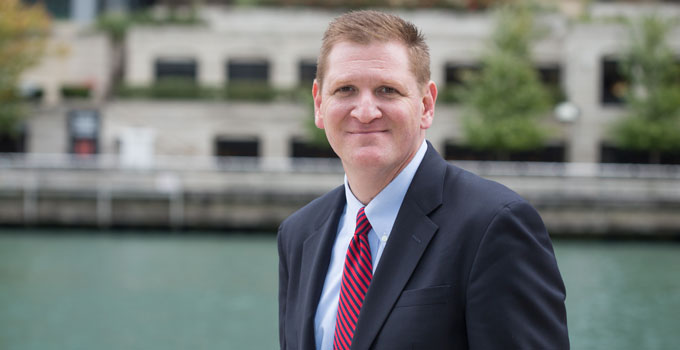
Ken_Headshot

Levinson and Stefani founding partner Ken Levinson has been appointed to serve as the Illinois State Delegate for the American Association for Justice (AAJ), a designation that carries Illinois Trial Lawyers Association (ITLA) Board status. Levinson’s appointment is effective immediately and runs through 2018.

“Like so many attorneys, I have benefited a great deal from ITLA, AAJ, and their missions,” said Levinson. “It’s been a tremendous and important resource for trial lawyers when it comes to protecting our injured clients. I’m grateful for this opportunity to work more intimately with AAJ and ITLA.”

State delegates work on behalf of AAJ to raise awareness among new and existing trial attorneys about the organization. To date, AAJ has earned distinction as the world’s largest trial bar and a safeguard for victims’ rights, most notably the right to trial by jury. As part of his duties, Levinson will oversee institutional relations and work with board members to strengthen the wellbeing of both associations.

Levinson is the co-author of Litigating Major Automobile Injury and Death Cases, the newest reference litigation series published by AAJ Press/Thomson Reuters. He was listed in the Illinois Super Lawyers Top 100 in 2016, his second appearance on the list.

Levinson is the founding partner of Levinson and Stefani, a Chicago-based law firm offering client-first legal representation. The firm focuses on truck, auto and bus-related accidents, as well as child injury cases.

Download a PDF version of the release by clicking here

  • « Go to Previous Page
  • Page 1
  • Interim pages omitted …
  • Page 116
  • Page 117
  • Page 118
  • Page 119
  • Page 120
  • Interim pages omitted …
  • Page 138
  • Go to Next Page »

Levinson and Stefani Injury Lawyers in Chicago / Attorney Advertising