• Skip to main content

Levinson and Stefani Injury Lawyers

Client-first legal representation for injury victims. Injured? Free Consultation:

(312) 376-3812

  • Home
  • About Us
    • Attorneys
      • Ken Levinson
      • Jay Stefani
      • Vanessa A. Gebka
    • Practice Areas
      • Truck Crashes
      • Bus Collisions
      • Auto Accidents
      • Child Injuries
  • Firm News
  • Library
    • Articles
    • Cases
    • Law
    • Video
  • Blog
  • For Lawyers
    • Focus Groups
  • Free Case Review

Levinson and Stefani

$8 Million Granted in Roadway Safety Efforts, Including ND’s Autonomous Crash Truck

March 15, 2020 by Levinson and Stefani Leave a Comment

Commuters are already moving about before dawn on the streets of Washington DC United States Capital City

The state departments of transportation and local governments of 10 different states are receiving part of the Federal Highway Administration’s $8 million in grants for Accelerated Innovation Deployment or AID demonstration programs, as announced January 21st.

These grants will work to accelerate the implementation of new transportation technology, improve traffic management, speed up completion times for bridge projects, and improve overall roadway safety in Alabama, Arkansas, Colorado, Florida, Illinois, Iowa, Michigan, Minnesota, New York, and North Dakota.

“These funds will help support our state and local partners across the country in their efforts to deliver more resilient roads, bridges, and highways for the traveling public,” said FHWA administrator, Nicole Nason.

One of these efforts is that of North Dakota, which received $241,687 for its autonomous crash attenuator truck.

A crash attenuator itself is a tool used to lessen crash impact, and is often installed at the end of a guardrail. An attenuator truck, or a “crash truck,” is typically positioned at the ends of work zones to help protect workers from collisions.

“[The attenuator] dampens or deflects that vehicle that’s coming into the work zone,” NDDOT engineer Travis Lutman said. “This is a big box, essentially, that is meant to deflect or absorb the impact of a crash so it doesn’t enter the work zone and hurt anybody.”

As of now, NDDOT uses an attenuator-mounted truck which must be operated by a driver. According to Lutman, the FHWA will be used for new autonomous vehicle tech in order to create a system allowing a driver-operated lead vehicle to communicate easily with an autonomous follower vehicle.

This attenuator-equipped follower vehicle would not need a driver in a work zone, but a human operator would need to aid in transporting the vehicle to and from the zone itself. Lutman said the autonomous attenuator truck would be useful in tasks like crack sealing, lane striping, and bridge cleaning.

The overarching goal of this new system is to increase safety around work zones, especially for the operator of current crash trucks.

“We want to get him or her out of that vehicle, creating a safe work environment for them,” said Lutman.

He also explained that Fargo will be the first city to implement the technology as efforts move forward between North Dakota and Minnesota.

Additionally, in Florida, the Florida Department of Transportation and the City of Orlando are using their joint $1 million AID grant for a segment of a larger project aiming to better manage traffic flows around downtown Orlando–which will specifically seek to improve “traffic signalization” at roadway intersections throughout the downtown area.

In New York, the state Department of Transportation will work to improve traffic incident management with its $740,000.

With $1 million, the Alabama Department of Transportation and Baldwin County will accelerate bridge construction and next beam ultra-high-performance concrete retrofit in an effort to shorten construction time from 14 weeks to six weeks.

Arkansas will use $313,600 for 3D modeling and paperless construction to enhance Global Navigation Satellite System technology throughout engineering and construction project phases.

Colorado’s DOT will use its $800,000 for Snowplow Signal Priority, allowing prioritized treatment for snowplows at traffic lights in order to help traffic flow more easily during snow removal.

In Iowa, the DOT and the city of Dubuque will develop a next-generation traffic control system in order to link 11 different corridors and act as one large integrated system. The state was given nearly $1 million for the project.

The Minnesota DOT will use another $1 million to improve safety and access along Broadway Avenue in Winona. In Michigan, the Department of Transportation will use $1 million to accelerate bridge construction and employ Prefabricated Bridge Elements and Systems (PBES) to decrease traffic delays, currently caused by the construction of its 2nd Avenue Network Arch Superstructure project.

The Illinois Department of Transportation will also use $1 million to implement compacted concrete pavement to improve the surface of Jerseyville’s Hollow Avenue. This concrete differs from standard roller compacted concrete with its high-density asphalt-type paver instead of standard paving. Compacted concrete pavement has a similar surface finish to standard pavement, but will use a tamper screed on its high-density paver. This will compact the road’s surface without the need for roller compaction.

“The grants being awarded today will help advance innovative transportation solutions to improve safety and mobility on America’s roadways,” said FHWA’s Nason.


Cyberattack Risk Continues in Trucking Industry

March 5, 2020 by Levinson and Stefani Leave a Comment

As technology moves forward within the trucking industry, unfortunately, so do cyberattacks.

“Cybersecurity is always a hot-button item,” said American Trucking Associations’ director of Technology and Engineering Policy, Ross Froat. “We’re very adamant about cybersecurity and how we can help our members.”

At last year’s trucking conference, one major discussion topic was ransomware attacks, as trucking companies had notably become a major target for hackers.

Vice President of McLeod Software special projects, Ken Craig, referenced Forbes’ data at the conference, which showed that the transportation industry ranked fifth on the magazine’s list of most cyber-attacked industries.

Omnitracs‘ chief information security officer Sharon Reyonolds also weighed in, saying that often, smaller trucking companies are easy targets for cyber attacks because they tend to have less sophisticated protection software than larger companies. Those bigger companies are still targets when they unintentionally pay hackers high sums to disable their computer systems.

Currently, modern trucks may have upwards of a dozen kinds of computer technology onboard–which allow fleets to improve safety, communication, and shipment tracking.

“There is a lot of communication going on onboard the truck at all times,” said Froat.” How fleets have been adapting to that has been very beneficial to uptime, more freight deliveries, and assurance to shippers and customers”

McLeod’s vice president of marketing and enterprise systems, Mark Cubine, wants carriers to get ahead of malware risks and reiterates that carriers of all sizes should take precautions.

“You have to have knowledge, awareness and education so people don’t take the bait,” he said, in reference to phishing attempts. What is most important, he said, is that “they don’t click on things they shouldn’t or introduce things they shouldn’t–[it’s] just being knowledgeable.”

Because cyberattack threat methods continue to change and adapt, Cubine said companies should also have software backups in place, in addition to recovery systems and continuous malware protections.

“That’s step one,” he explained. The corporate approach, he said, is strengthening passwords and updatating software to prevent hacking from all directions. “Trucking companies often integrate software from various third-party vendors into their systems. That includes everything from electronic logging devices and transportation management systems. It is important to understand where these services are coming from.”

McLeod’s Craig explained at the October panel that thinking ahead is the best way to avoid catastrophic problems. “By the time you get the notice,” he said of computer protection upgrade needs, “you’re in deep yogurt.”

Joseph Saunders, CEO of RunSafe Security Inc., explained that truckers should protect employees’ and customers’ personal information first, and then begin educating their teams about phishing scam threats.

He also said motor carriers should take annual assessments of their systems, apply software patches, and put in place incident response plans.

Trucks use Controller Area Network Systems to communicate from trucks back to company offices, and some individual components relay data on their own. However, the more technology is present, the higher the risk of hacking is for the company.

“Every step that the industry takes in advancing technologies, there’s a parallel step in terms of vulnerabilities and security, and the scariest things that could happen–like terrorist attacks with truck ramming, and things like that,” said Froat. “That’s partially the reason why we developed Fleet CyWatch.”

Fleet CyWatch is a program that gives fleets cyber threat information on risks that could impact their work by monitoring carriers along with private and federal groups, which also work to report internet crimes.

Geotab’s vice president of commercial vehicle solutions, Scott Sutarik, said data security is one of the biggest threats at hand. “It is important that companies understand their ELD and TMS provider’s security policies to ensure that they are not leaving themselves vulnerable by investing in technology that is not secure.”

Froat added that the National Institute of Standards and Technology’s cybersecurity guidelines should be seriously taken into consideration before trucking companies bring in new software.

“Be proactive in the decision to add whatever to [your] network,” he said. “Because, once one of those systems is hacked, your system is hacked.”

Ken and Jay Honored as Illinois Super Lawyers, Ken Makes Top 100

March 3, 2020 by Levinson and Stefani Leave a Comment

We’re excited to announce that Ken and Jay were both recognized as Illinois Super Lawyers for 2020. This marks the tenth consecutive year for Ken, and the sixth time making the Top 100 in Illinois. This is Jay’s first time to be named a Super Lawyer after being named an Illinois Rising Star four different times.

Super Lawyers Magazine selects attorneys for its list each year based on independent research, peer nominations, and peer evaluations. A mere 5% of lawyers are recognized as Super Lawyers, making it a prestigious honor for those selected — especially considering the approximately 96,000 total attorneys in Illinois alone.

“While we certainly don’t strive for accolades, it’s nice to be recognized by our peers for what we do,” commented Ken.

Jay added, “The most rewarding praise we get comes from our clients, for sure, but the respect from our colleagues and adversaries is nice as well.”

Pedestrian Traffic Deaths Are At A Ten Year High – Too Much Screen Time Could Be A Cause

March 2, 2020 by Levinson and Stefani Leave a Comment

A newly published study by the Governor’s Highway Safety Association, a not-for-profit comprised of the highway safety offices of the 50 states, better known as the organization behind the click-it or ticket campaign, is suggesting that pedestrian deaths in motor vehicle incidents are at a ten year high. The numbers seem to match the claim. Incidents of pedestrian deaths in car crashes are up while other traffic deaths are declining. Therefore, the percentage of traffic fatalities involving pedestrians now comprises a larger percentage than before. These are the worst numbers since 1990. 

Bigger Cars Means More Damage

The study links the fact that there are more SUVs on the road now than before as a possible cause of the increase in fatalities. A heavier vehicle has the potential of causing greater damage than a smaller passenger car like a sedan. Pedestrian deaths involving SUVs went up 50% between 2013 and 2017. 

Vehicle trends are definitely changing. People want bigger cars. Automakers are responding in kind, limiting their offerings for smaller cars in the US. For people with families, purchasing a small car or a sedan is an unlikely choice. People also feel safer in bigger cars. The perception is that larger vehicles offer greater crash safety protection. As other categories of motor vehicle crash deaths decrease, it gets harder to argue against that conclusion. 

There Are More Nighttime Crashes Too

The study points to other factors as well. Nighttime crash deaths are increasing. Pedestrian deaths seem to be increasing in numerous categories. When the publishers looked at nighttime vs. daytime fatalities, instances at night were up 45% from 2008 to 2017, whereas daytime instances went up by 11%. 

Any premature loss of life is tragic. Pedestrians and drivers alike would be well served by keeping an eye out for one another as both groups certainly have the right to travel using surface streets. It’s common sense that anyone who goes anywhere should try and take proper safety precautions. However, the study also looks at population growth as a factor contributing to these alarming statistics. With increasingly bigger cars and more people in a given town, there could be more opportunities where drivers and people on foot will encounter one another, meaning the more that people proceed with caution when going from place to place, the better. 

We Need to Pay Attention to Distracted Driving

One more possible factor contributing to this increase in pedestrian traffic deaths is people not paying attention to the road or where they are going. We certainly have an increasing number of big cars out on the road, but we also have more electronic devices. Screen time has significantly increased since 2008. 

Consumers were first introduced to the iPhone in June of 2007. Since then, the image of a person with their eyes glued to a tiny screen has become ever present. If you ever look around at the drivers next to you when you’re stopped at a red light, unfortunately, it won’t be uncommon for one of those people to be holding up a smartphone.

The evidence against allowing drivers to use handheld electronics is mounting. Illinois, among other states, has passed stricter rules regarding the use of mobile devices behind the wheel. Some researchers have equated using a smartphone while driving as similar to being drunk and getting behind the wheel. Both have been shown to slow down reaction times and decrease our ability to focus on what’s going on outside our windshields. Just think of your own experiences. If you have ever missed a turn because you were having a conversation with a passenger, imagine how poorly you drive trying to send a text message. 

The one thing we all have control over is the use of our phones. Whether you are a pedestrian or a driver, there can be no debate – if you’re looking at a screen, you are not looking where you are going. If you need to check your phone, the best thing to do is go to a safe place. If you’re driving, find a safe place to pull over. If you’re walking, find a safe place to stop. When it comes to injuries or death, none should be the result of smartphone distraction. 

High-Volume International Roadcheck Scheduled for May

March 1, 2020 by Levinson and Stefani Leave a Comment

automobile mechanic checking truck in the garage, selective focus

The Commercial Vehicle Safety Alliance has scheduled its International Roadcheck for 2020–a high-visibility event.

International Roadcheck is the world’s largest targeted commercial motor vehicle requirement enforcement program, with 17 trucks and buses inspected every single minute throughout North America during its annual 3-day period.

On January 27th, the group announced that its 72-hour, re-vamped roadcheck will take place between May 5th and 7th. During that period, commercial motor vehicle inspectors throughout the country will inspect CMVs and their drivers, with an emphasis on driver requirements.

Every year, the roadcheck chooses a particular focus of violation–this year’s is the driver requirements category of a roadside inspection. In 2019, the FMCSA found that 944,794 driver violations occurred out of 3.36 million total inspections. 195,545 of those were out-of-service conditions.

“With last year’s federal electronic logging device full-compliance mandate in the U.S., the Alliance decided that this year’s International Roadcheck would be the perfect opportunity to revisit all aspects of roadside inspection driver requirements,” said Sgt. John Sarnis of the Delaware State Police, CVSA’s president.

Some common violations found last year included: failure to show proof of medical qualifications, lack of insurance and vehicle registration, detected drug or alcohol use, failure to wear a seat belt, and showing a false record-of-duty status.

During a roadcheck, inspectors typically conduct the North American Standard Level I Inspection. This procedure includes 37 different steps with two main categories: an examination of driver operating requirements, and an examination of vehicle mechanical fitness. Hazardous materials and dangerous goods is a third category that could also be included in the inspection.

Inspectors may also decide to conduct Level II Walk-Around Driver/Vehicle Inspections, Level III Driver/Credential/Administrative Inspections, or Level V Vehicle-Only Inspections, depending on weather conditions or available resources.

To begin an inspection, an inspector will interview and prepare the driver, collect his or her documents, identify the motor carrier, verify the driver’s license or commercial driver’s license, check record of duty status, and review periodic inspections reports. Additionally, the inspector may check the Medical Examiner’s Certificate, Skill Performance Evaluation Certificate, and the driver’s daily vehicle inspection report.

Drivers will be checked for:

-Seat belt usage

-Illness

-Fatigue

-Apparent alcohol possession or impairment

-Apparent drug possession or impairment

Vehicles will be inspected for the proper use of:

-Brake systems

-Cargo security

-Coupling devices

-Driveline/driveshaft components

-Driver’s seat

-Exhaust systems

-Frames

-Fuel Systems

-Lighting Devices

-Steering mechanisms

-Suspensions

-Tires

-Van and open-top trailer bodies

-Wheels

-Rims and hubs

-Windshield wipers

For buses, passenger vans, passenger-carrying vehicles, and motorcoaches, other items under inspection include:

-Emergency exits

-Electrical cables and systems in engine/battery compartments

-Temporary seating

-Aisle seating

If there are no critical violations found in a Level I or Level V inspection, the vehicle will receive a CVSA decal. However, if a required impact guard is inspected during one of these efforts and violations are discovered, a CVSA decal will not be issued and an inspector may render the vehicle out of service.

If the driver and/or vehicle meets the North American Standard Out-of-Service Criteria, the vehicle will not be able to be operated until the violation(s) are corrected.

International Roadchecks previously occurred throughout the first week of June. The event was moved up by one month this year, as the weather will likely be more favorable in many areas, according to the CVSA.

“Announcing the dates of the International Roadcheck has always been a deliberate, thoughtful, and purposeful decision by the Alliance,” said Sgt. Samis. By announcing the dates in advance, we hope to remind motor carriers of the importance of proactive vehicle maintenance and remind drivers to be prepared for inspections and to always conduct pre= and post-trip inspections. We want every vehicle and driver inspected during this initiative to pass inspection with no violations.”

Samis said the CVSA is aware some drivers may try to find loopholes. “We’re aware that some drivers opt to stay off roadways during the three days of International Roadcheck,” he explained. “Although there is certainly an increase in the number of inspections conducted during International Roadcheck, it’s important to remember that inspections are conducted every day of the year. Inspectors will be inspecting commercial motor vehicles the day before International Road check starts, the day after it ends, as well as any other day of the year.”

As Technology Advances, Disruptions Could be Detrimental for Fleets

February 29, 2020 by Levinson and Stefani Leave a Comment

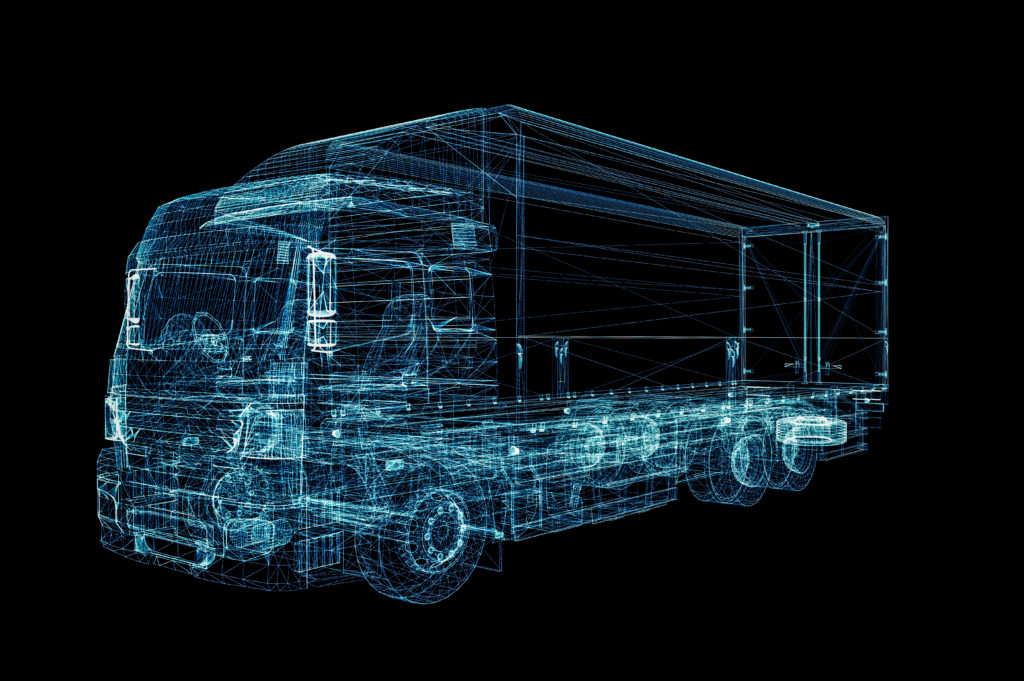
Digital Truck. The concept of digital technology in the delivery industry. 3D Illustration

After last year’s GPS rollover on April 6th, the extent to which many carriers lean on technology became evident. The GPS update event, which takes place around every 20 years, brought to light the trucking industry’s possibility of experiencing widespread tech malfunctions–and the large problems those can easily cause for businesses.

The update connects to the system’s 10-digit format. Once it runs out of 10 binary digits, it must undergo a large-scale update.

“We don’t hear many questions from fleets that we work with on the concern of a network-wide outage,” said Deryk Powell, president of Velociti. “The GPS rollover event heightened the awareness of that for some fleets–it’s absolutely a concern.”

Smaller tech interruptions can be just as disruptive.

“Systems go down occasionally,” said founder of C.J. Driscoll & Associations, Clem Driscoll. “A particular telematics provider may have its servers go down. It doesn’t happen often..but it does happen from time to time. That can be an issue.”

Geotab commercial vehicle solutions vice president Scott Sutarik agrees. He said technology progression is vital in regards to safety improvement, even at the risk of systems going down. This is true, he explained, across all tech use–from electronic logging device compliance, safety camera systems, and radio frequency identification to fuel tax reporting, cargo sensors, and electronic door locks.

These updates will only continue across all technology, said Greentree Advisors LLC founder Ken Davis. As we see more manufacturers entering the industry with electric or hydrogen fuel cell-powered vehicles, he believes that 25 percent of the global vehicle market will be electric by 2030–a trend we will see among commercial vehicles as Class 5 to 6 vehicles lean toward electric operation as well.

“Trucking does depend on GPS a lot, but it is generally a very reliable system,” said Driscoll. “The U.S. military depends on it. It’s used for all kinds of commercial and government applications. There can be problems, but they are not very common.”

Supporters of electric commercial vehicles note that current trucks with internal combustion engines cost 30% more than those electrically powered. There are, however, worries around charging infrastructure development and grid capability, as electric vehicle demand is pushed forward by regulation and subsidies.

Although this tech brings innovative benefits to the industry, Powell also explained that disruptions to service can impact the bottom line of a carrier, thus negatively affecting its business overall.

“When you’re talking about drivers having to revert back to paper logs [in the event of a disruption], as an example, it’s a real issue for the industry,” he said “There is a mandate around the repair of ELDs. You have eight days to get a broken ELD repaired. That’s a real issue for fleets.” He also explained that many drivers–especially those new to the industry–could possibly have zero paper log experience.

It would, however, be much easier for truckers to revert temporarily to logging manually than it would be for smaller fleets using TMS systems to have to fall back on manual processes, noted McLeod Software marketing vice president Mark Cubine.

“Those examples are good wake-up calls for the vulnerability of technology,” he said. “Fortunately, in the case of driver’s logs, there is a paper paradigm that an individual driver could go back to.”

Currently, asset managers include mobility providers, said Davis. As services move toward digital reliance, mobility services take the place of financing, maintenance, storage, parking, and ownership. Availability is extremely vital with this mobility, he explained.

“I think the danger is more–in terms of losing functionality of ELDs and fleet management–it’s more [about] individual systems that could have hardware or software failures,” said Driscoll. “I think it’s more in the area of specific devices and specific solutions.”

The way to best combat these large-scale issues? Researching while investing in new carrier technology, said Sutarik.

“Companies that do not share a similar focus on engineering and continuous innovation, and instead accumulate legacy IT debt by focusing their efforts on keeping old and outdated systems working, are made more vulnerable to threats such as downtime,” he explained.

The potential for progress and success will always outweigh the risks, though. Industry professionals like Davis reiterate that staying up-to-date as new technologies grow in development is the best way to stay ahead of important opportunities as they arise throughout the industry.

  • « Go to Previous Page
  • Page 1
  • Interim pages omitted …
  • Page 78
  • Page 79
  • Page 80
  • Page 81
  • Page 82
  • Interim pages omitted …
  • Page 138
  • Go to Next Page »

Levinson and Stefani Injury Lawyers in Chicago / Attorney Advertising