• Skip to main content

Levinson and Stefani Injury Lawyers

Client-first legal representation for injury victims. Injured? Free Consultation:

(312) 376-3812

  • Home
  • About Us
    • Attorneys
      • Ken Levinson
      • Jay Stefani
      • Vanessa A. Gebka
    • Practice Areas
      • Truck Crashes
      • Bus Collisions
      • Auto Accidents
      • Child Injuries
  • Firm News
  • Library
    • Articles
    • Cases
    • Law
    • Video
  • Blog
  • For Lawyers
    • Focus Groups
  • Free Case Review

driver safety

As Labor Day Nears, Some Tips for Staying Safe and Avoiding the Dreaded Traffic

September 4, 2019 by Levinson and Stefani Leave a Comment


Many throughout the United States will use the upcoming Labor Day Weekend to go on their last planned road trips and family outings prior to the holiday season. As we are all very much aware, Labor Day has a long history of being designated for such activities; one last opportunity to get out and enjoy the end of summer. However, with that excitement comes the downside of having to hit the road alongside what often seems like every other family in the city. As we would all like to believe that traveling over Labor Day Weekend will be a smooth and easy process, the reality is that Chicago has nearly three million residents and it will most certainly show this weekend. Not only will the traffic be far worse for those tempted to get out of the city and explore different parts of the region, but the drivers will be that much crazier and eager to get where they are going.

Similar to other summer holidays like Memorial Day and the Fourth of July, Labor Day has proven to be one of the riskiest times for a driver to be on the road. Ultimately, according to a survey of statistics available between 2011 and 2015, Value Penguin found Labor Day to be the second most dangerous holiday for drivers, with 308 fatal accidents per year. In comparison, the most dangerous holiday was found to be Memorial Day, which resulted in 312 accidents per year. To no one’s surprise, the cities that contributed the most to these alarming numbers were the likes of Houston and Los Angeles, where driving is essentially necessary anywhere you go. For a city like Chicago, where public transit is exceptional in terms of allowing residents to navigate downtown and the surrounding suburbs, this may not seem like as much of an issue; however, with so many people leaving and entering the city limits for their dose of late summer fun, the Illinois Tollway has stated that it now expects roughly 8 million vehicles to pass through the state freeway system, with around 2 million vehicles expected to be on the road on Friday. While those numbers seem almost comical, they present a harsh reality for those living in large metropolitan areas.

Patch Illinois recently wrote a piece on this same topic regarding the best and worst times to be on the roads for the upcoming weekend. The worst time to travel for drivers will be on Friday, August 30th as most people use that day for travelling to their destinations and plan on doing so early in the morning. Unfortunately, the issue for those hoping to beat rush hour and leave early is that most people travelling are thinking of doing the exact same thing. To put it lightly, traffic will be bad, and it will cause some to drive dangerously. Fortunately, there are a variety of sources providing great tips on things drivers can do to make traveling during this time of the year much safer.

Staying Safe While Enjoying the Holiday

We all want to enjoy the extended weekend and while traffic certainly puts a damper on the experience, USA Today has provided several key tips that may help make your experience just a little better:

  • Staying Safe – USA states that “there are two major reasons for accidents on highways: losing concentration while driving and ignoring the risk of big trucks. While both factors are incredibly dangerous, the former poses even more risks to others on the roads. Many will be drinking and enjoying their extended weekend with family and friends, but it is necessary that you let others drive. Monitor yourself if you have been drinking and certainly don’t risk getting behind the wheel.
  • Getting Your Car in Shape – “A routine check of the engine, radiator and fluids will go a long way. Tires should be well inflated and wiper fluid should be replenished. Also, check that the steering wheel and brakes work properly.” Ensuring that your vehicle is running properly and is equipped with all the proper safety features and measures necessary to drive safely is essential. Not only will your drive be far more difficult if a mechanical issue occurs, but you become part of the problem when you are forced to pull over those three lanes of traffic in the middle of rush hour. Be sure to have your vehicle maintenance up to date and keep yourself going to your destination.
  • Avoiding the Madness – “The most important thing you can do is leave early. Take on the highways early Saturday morning or before rush hour on Friday. If you’re driving on Labor Day, follow the same rules. Most people will brave their return home in the early evening or late afternoon. Try getting to the highways before 4 p.m. or after 10 p.m. and you should be in much better shape.” Although we previously said that the traffic will be bad no matter what over the weekend, you really are putting yourself in a better situation as far as traffic and safety goes. City drivers are already notoriously “wild” in terms of following the laws of the road, the smaller number of drivers you can be around during one of the busiest traffic days of the year, the better.

Overall, we have a responsibility to keep ourselves and others safe, just like any other day of the year. Just know that there will be dangers out there and drivers will be incredibly eager to get to where they are going. Following these tips is just a start for making your Labor Day weekend that much better. Stay safe out there and enjoy the holiday!
As Traffic in Chicago Worsens, City and Trucking Companies Forced to Change Their Practices

August 23, 2019 by Levinson and Stefani Leave a Comment

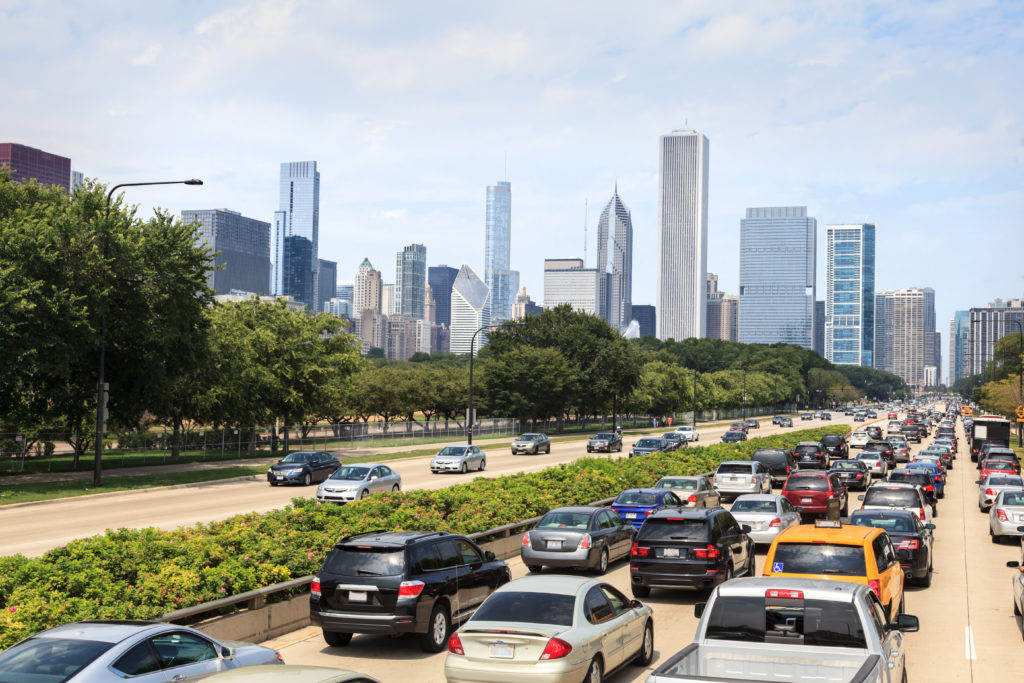
Recent reports conducted by the Texas A&M Transportation Institute and the 2019 Urban Mobility Report have discovered that Chicago is tenth in the nation regarding the number of hours that Chicagoans waste commuting, as well as ranking third in the total number of hours spent in traffic, resulting in 352 million hours. Looking at these numbers a little closer, the report suggests that due to traffic delays, commuters lose a total of $1,307 annually, a staggering number considering the cost of having a vehicle in the city and commuting to surrounding suburbs. As the Chicago Tribune reported this week on the new study, “more congestion is occurring at periods beyond what is traditionally considered “rush hour.” The author of the report, Bill Eisele, was also able to speak with the Tribune and noted that “a third of the area’s delays happened outside the peak morning and afternoon commuting times.” Why the sudden increase in traffic? While many in Chicago would agree that such circumstances have been a long time in the making, it turns out that the recent uptick in the economy is likely to blame for the increased amount of congestion. The report cites back to some of the initial data it compiled in 1982 and found that the total number of jobs has grown 50% since then, therefore meaning there are far more people not only living in the city but commuting for work as well.

Many people who already live in large cities around the United States may say that this is common sense and as jobs grow, so does the amount of people living and working in the city. To an extent, that is true; however, there are a multitude of outside factors that make traffic in cities like Chicago far worse. For instance, we previously wrote on Chicago’s history of infrastructure issues, specifically regarding crumbling roads and bridges, especially in rural Illinois. As much as we want to think those small potholes on the freeway are a very minor issue not worth dealing with, Chicago is the third largest city in the United States and should be capable of much more. It just so happens that factors such as these are exactly what the new Texas A&M study suggests are only fueling the fire that is the increase in traffic. In his interview with the Tribune, Eisele referred to a need for “squeezing more efficiency out of the system,” essentially ensuring that traffic lights are properly timed, crashes are cleared, and more efficient options, such as public transportation and working from home are provided by employers and the city.

Ultimately, the hope is that by doing what the city already is, but more efficiently, will ultimately curb this increase in traffic. Unfortunately, there is no silver bullet that will fix traffic. The City’s infrastructure can only maintain so many commuters and it needs to take this one step at a time to really begin making a difference.

Overall Effect on the Trucking Industry  

As we are all well aware, the quicker truck drivers can reach their destination, the less money lost in the process. Situations such as the ones posed in Chicago and other big cities like Los Angeles and New York cost the economy and commuters a lot of money. For instance, the report cites that the total congestion cost for the freight industry in the region totals $6.53 billion annually. Not only does that truly exhibit the ramifications of traffic issues across the United States, but it shows why steps have recently been taken to help drivers reach their destinations quicker. We previously wrote on how the current administration is aiming to cut the federal drive-time regulations currently in place that protect drivers from driving while fatigued. Unfortunately, such actions as this one eventually establish greater dangers to the drivers and others on the road. So, what can actually be done to ensure that the roads stay safe for truck drivers and commuters, while limiting the amount of money lost?

Transport Topics recently reported on a study that was conducted that could help companies alleviate the affects at issue here. Overall, the study focused on nine motor carriers and their efforts to enhance their safety records. The report listed the following keys to success for companies to increase their driver safety:

  • Maintaining an open-door policy for drivers to discuss safety-related issues with management.
  • Sharing carrierwide safety indicators with management and drivers.
  • Improving hiring policies and training, as well as modifying driver scheduling to reduce fatigue.
  • Having a zero-tolerance policy for hours-of-service violations.
  • Informing drivers about the company’s safety culture during orientation, and having all employees participate in safety training and education programs.
  • The report’s authors acknowledge the industry faces significant challenges hiring and keeping drivers, but they stress companies should resist the temptation to hire drivers to fill a slot.

For further information on the findings of the study and additional tips on driver safety, click here. As traffic congestion grows, it is well known that the roads become less safe. It is important that both drivers and trucking companies do their part, then we can push on the city to keep up with the maintenance.

Why Do So Many People Turn Left On Red?

July 23, 2019 by Levinson and Stefani Leave a Comment

Left hand turns are among the most dangerous maneuvers a driver has to make. Turning left is also inefficient. UPS, the private shipping company, implemented a vehicle routing plan that almost entirely eliminates left turns for its delivery drivers. The company states on its website that cutting out left turns, “will result in a 100,000 metric ton reduction in CO2 emissions, equivalent to taking 21,000 passenger cars off the road.”

UPS says that this strategy saves them millions of dollars in fuel costs every year, too. There is also research that shows avoiding left turns can help regular motorists save on gas. The theory is that left turns cause more idling because drivers often have to wait at intersections before they can turn left safely or for traffic signals to allow them to go.

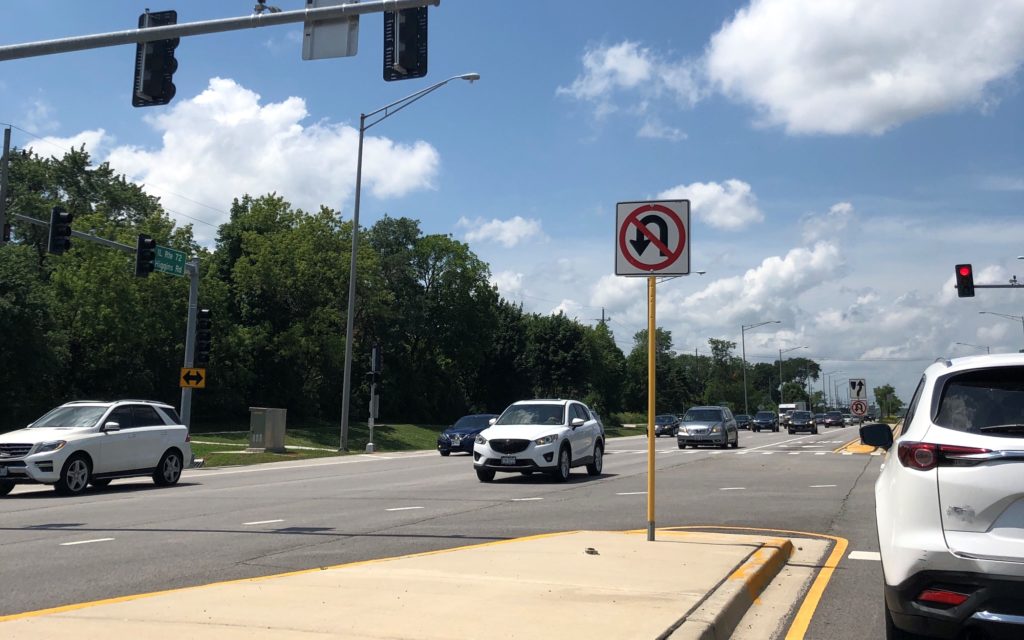
I know from personal experience that waiting in traffic is frustrating. I know this because I live near Chicago. One of the features of the city’s Northwest Suburbs is multi-lane streets where left turns are only allowed from designated turning lanes and on green arrows. “NO TURN ON RED,” is a sign that I see all over suburban intersections. When traffic is heavy, I end up having to wait two, sometimes even three traffic-light cycles before I am in a position to complete a legal left turn.

That long wait sometimes causes drivers to ignore the red arrow and try to squeeze in a left turn before the drivers that were waiting to go straight from the opposite side in the oncoming lanes start to move forward on their green light. This usually causes a backup because the cars that are trying to go straight are forced to wait while cars have cross in front of them on a red arrow.

This type of turn doesn’t only cause delays. It’s also very dangerous. For example, I was recently stopped at a red light on Higgins Road at an intersection in Schaumburg, IL. Cars from the opposite direction were turning left on a green arrow. Inevitably, maybe because traffic was on the heavier side, some impatient drivers decided they could make their left turn even after their green arrow turned red. As the cars in my lane started moving forward, everyone was forced to stop or slow down to avoid hitting a car that was trying to complete a left turn in front of them. The cars going straight were stopped so as not to hit the driver turning left and the car turning left was moving slowly because some cars, especially in the far-right lanes who may have not seen the person turning left against the light, were passing through the intersection.

What surprised me about this interaction was that the driver of the car turning left was expressing anger-filled gestures at the cars moving forward as she slowly passed in front of them. These were the cars that had a green light.  The cars that were going straight on green did have a duty to avoid crashing into the person violating the law and turning left on red if they could, but this person was clearly in the wrong and did not have the right-of-way. This is my personal opinion, but I didn’t see the utility in an avoidable situation for getting angry at people who were following the rules.

There are two easy ways to avoid these kinds of scenarios:

  1. Don’t turn on red – It’s better to have to wait longer at a light than to risk hurting yourself, someone else, and as a result, damaging property.
  2. Avoid left turns – Apart from making your commute safer, you might also save money on gas and help the environment by idling less and reducing your car’s emissions.

I do want to add, that some newer cars cut the engine when stopped instead of idling. That technological development may have eliminated the efficiency problem of left turns for some vehicles. However, until we are all traveling in self driving cars, assuming that robots can eliminate all crashes or that they don’t turn against us (I may have watched too many movies), it is still safer to get where you’re going with all right turns where it’s reasonable to do so.

Why Do Federal Rules Apply to Truck Drivers – Chicago Truck and Auto Crash Lawyers Explain

July 10, 2019 by Levinson and Stefani Leave a Comment

Commercial truck drivers are held to a higher standard than other drivers on the highway. They travel in larger vehicles that take longer to stop and take up a much larger area of the road than a passenger car does. Additionally, semi-trucks are not only regulated by the state rules of the road wherever they happen to be at any given time, but also federal law because they cross state lines on a regular basis. That is why, when people are injured in crashes involving large trucks and semis, it is important to contact an experienced attorney who is familiar with federal truck regulations.

Holding Commercial Drivers Accountable for Failing to Follow the Rules

Proper space management allows professional truck drivers to keep a safe distance from other travelers or hazards they may find on the road and it is vital for avoiding collisions. Truck drivers should be aware of their surroundings. This means not only paying attention to what is in front of them, but also to what is behind them and on either side of their vehicle. Semi-trucks take up far more space than most other vehicles. By keeping plenty of space between themselves and other cars and objects on the road, truck drivers can give themselves enough space to maneuver out of the way when something unexpected happens.

Professional Truck Drivers Should Expect the Unexpected

Vehicles on the highway are moving at a high rate of speed. A commercial driver cannot rely on other motorists to always be predictable. Traffic jams can spring up, virtually out of nowhere, and drivers need to be ready to slow down, stop, or move out of the way. This unpredictability requires drivers to be diligent and hyper aware. Also, since trucks are so much bigger than other vehicles, they need more time to stop. Drivers who leave themselves more space on the road have more time to act in case there is a sudden change in traffic patterns. A semi-truck should not follow closely behind other vehicles.

A Second for Every 10 Feet

There is a formula that most truck drivers are taught in order to measure safe distances on the highway. Most people have heard of the “2 second rule” when it comes to calculating safe distances between cars on the road. For Professional drivers, the rule of seconds starts at 4, not 2.

Figuring out how much space a commercial driver needs in order to stop safely to avoid a collision requires some pretty straight forward arithmetic. Generally, a driver needs at least 10 feet of space in front of his or her truck for every 10 feet of the length of their vehicles when traveling under 40 miles per hour (MPH). For speeds about that, drivers need to add another second. Calculating this is not hard because professional drivers should know how long their vehicles are.

A common length for a single tractor-trailer is 60 feet. When driving under 40 MPH, a trucker would need 6 seconds of space ahead of his or her cab in order to keep a safe distance. Once that truck goes over 40 MPH, the time doubles and 12 seconds is needed to have enough room to maneuver safely.

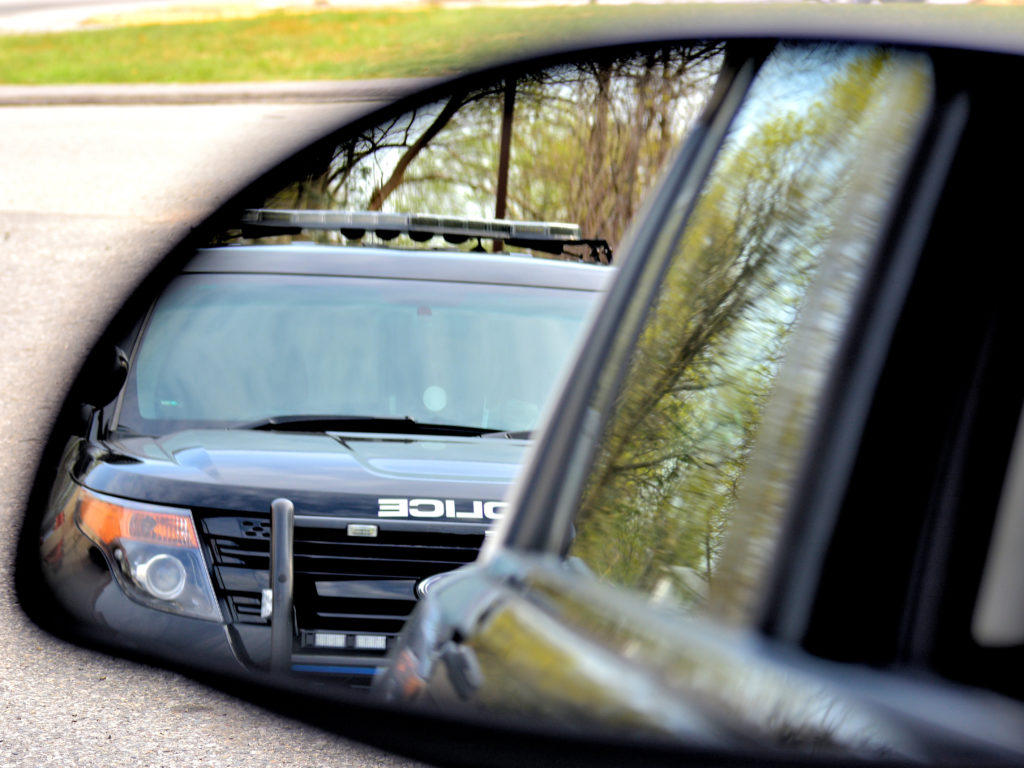
Professional drivers are not the only ones who can use the “seconds rules” to figure out where they should be on the road relative to other vehicles. A person in a passenger car can utilize his or her rear-view mirror to gauge how far a truck is traveling behind them.

The more vigilance used by all commuters will go a long way in getting people to their planned destinations safely.

New Marijuana Legislation Brings Challenges to the Trucking Industry

July 3, 2019 by Levinson and Stefani Leave a Comment

On May 31st, 2019 Illinois joined 10 other states in officially making the decision to legalize recreational marijuana. The decision promises to provide a major financial boost to the state, bringing in roughly $800 million to $1 billion a year in taxes. With the potential for great financial gain, many have seen the new law as a win for the state of Illinois. While the new law does bring great economic potential, it’s important to remember it may have a variety of ramifications for those in several industries throughout the state.

As we previously touched on regarding truck driver impairment and the necessary precautions that must be taken with drug use on the rise in the United States, the legalization of marijuana does pose a threat to the truck driving industry. Just like any other driver on the road, an individual who is impaired via the use of marijuana should never get behind the wheel of a vehicle. Similar to alcohol consumption, the drug delays an individuals’ reaction time and ultimately impairs their judgement. Now pair those adverse effects with a truck driver who has been behind the wheel for up to 14 hours at a time, and this is a recipe for disaster. Unfortunately, the reality of the situation is that marijuana use amongst truck drivers has become far more prevalent, with positive marijuana tests among truck drivers increasing 4% year over year to 2.6% for the federally mandated drug testing that drivers must undergo. While that number may appear small, it is an increase, nevertheless. More importantly, we must keep in mind that although the positive test rate remains in the single digits, it is absolutely unacceptable to have drivers on the road who participate in any sort of recreational drug or alcohol use.

Unfortunately, driver impairment is not the only issue that residents of Illinois need to be considering since the new law has been passed. Over the last decade, there appears to be a new report circulated each year that warns of the truck industry being in dire need of more professionals due to the small pool of drivers to choose from. We even wrote an article on how aging truck drivers are a factor in this exact issue. With Illinois legalizing recreational marijuana and with more states following suit, the driver pool throughout the United States and Illinois will be affected. Heavy Duty Trucking wrote an article in 2018 exploring this topic in further detail and noted that “in an industry facing a driver shortage, legal use of cannabis may cut into the available driver pool. Some drivers could even consume edible cannabis unawares and fail a pre-employment drug test.” The article also cites a study conducted by the Insurance Institute for Highway Safety and the Highway Loss Data Institute, which found that in the “first states to legalize the sale of recreational marijuana, there has been a 5.2% increase in crashes.” The hope is that any time a substance is legalized, no accidents occur as a result of such substance abuse; however, while that is clearly wishful thinking, there are steps that can be taken to make certain that such drivers using marijuana are not allowed on the road. 

Safety Precautions Must Be Taken to Increase Road Safety

In March of 2019, the American Transportation Research Institute (ATRI) produced a manual, Marijuana Legalization and Impaired Driving: Solutions for Protecting our Roadways, with the goal of providing useful tips on maintaining safe roads. One of the key points of note throughout the manual is the fact that it acknowledges that drug testing for marijuana is not the same as testing for blood alcohol content. The manual goes on to provide several reasons as to exactly why drug testing for marijuana is currently not a viable option to truly see if an individual has been driving under the influence of the drug:

  1. Unlike alcohol, where impairment level is easily predicted by BAC, the severity of impairment resulting from marijuana use depends on a number of factors, including the frequency of marijuana use and consumption method. While higher doses of marijuana often result in greater impairment, this relationship is less predictable than that of alcohol and impairment.
  2. Peak subjective marijuana impairment does not coincide with peak THC blood concentrations.
  3. THC deteriorates rapidly in the user’s blood.
  4. Low levels of THC in a user’s blood are not necessarily indicative of recent use.

As established by the Federal Motor Carrier Safety Administration (FMCSA) under CFR § 382, commercial truck drivers must be tested for controlled substances and alcohol use. However, it is only mandatory that a urine test be taken, not a hair analysis which has proven to be far more accurate when testing for specific drugs other than alcohol.

Moving Forward with Legalization

Unfortunately, as the federally mandated drug testing appears to be behind the curve when it comes to accurately finding whether a driver is under the influence of the drug, it appears that one of the best measures that can be taken to ensuring such drivers stay off the road for good is not only requesting that a hair analysis become a part of the federally mandated testing, but that transportation and law enforcement officials begin collecting data immediately on such drivers involved in unfortunate crashes. For example, Transport Topics cited another study conducted by ATRI, which quoted that “whether or not the federal government recognizes the legality of marijuana, it should take the lead on related federal data collection programs; . . . key to this role is identifying and conveying standards for state – and local – level data collection by law enforcement and the criminal justice system.” While this clearly appears to be a quick fix approach to driver impairment, it may be the best way to curb the increase in truck driver’s driving under the influence as more states continue legalizing marijuana. As a state, we must make certain that the public remains safe, and advocating for increased measures to keep drivers who will abuse drugs and alcohol off the roads should be something we are all for.

Illinois State Police Working Alongside Truckers to Curb Distracted Driving

June 25, 2019 by Levinson and Stefani Leave a Comment

As of June 19, 2019, Illinois State Police Officers have begun taking an unconventional approach to monitoring highway safety in Chicago. Throughout this summer, don’t be surprised if you happen to see state troopers seated alongside truckers on the road. “Trooper in a Truck” is what the Illinois state police are calling the new program, which they partnered with the Illinois Trucking Association and Cadence Premier Logistics to make a possibility. Due to significant increases in the number of fatalities resulting from distracted driving all across the United States, the “Trooper in a Truck” program makes sense.

As WJOL recently reported, “the new program is helping officers spot and correct unsafe driving behaviors of passing motorists by riding in the cabs of commercial motor vehicles and watching primarily for distracted driving offenses. Troopers are able to observe the violation taking place and notify other police units ahead to take enforcement action.” Based on the initial results, the plan just might work. On a single day of working the program, on June 19th, police were able to issue more than 20 tickets for a variety of violations including distracted driving and improper lane changes.

While the new program may be unique to Chicago, it’s important to mention that troopers have been doing this program throughout the state for roughly a year now, and for good cause. Based on data from the Centers for Disease Control and Prevention (CDC), a total of 3,450 people died in crashes involving a distracted driver in 2016, which comes to roughly 9 people in the United States being killed each day by a distracted driver. Additionally, the CDC goes to great lengths to provide necessary information that any driver should know when it comes to distracted driving such as the types of distracted driving an individual may be practicing on the road. Such types of distractions include visual, such as taking your eyes off the road; manual, meaning taking your hands off the wheel; and cognitive, taking your mind off of driving. After seeing these three categories, it is easy to imagine just how dangerous our favorite electronic devices are when driving on the road. For example, using a cell phone while driving combines all three categories essentially rendering yourself blind while driving.

Maintaining Road Safety

Outside of Illinois with its Trooper in a Truck program, many other states have adopted stricter distracted driving laws than what Illinois currently imposes. For example, Illinois currently prohibits the use of hand-held cellphones, texting, or using other electronic devices while driving. Further, if a driver is involved in a crash resulting from a distracted driver, they may end up facing criminal penalties and incarceration. However, violators of the law will only be charged a $75 fine for their first offense, which if caught again will increase by $25 and eventually be capped at $150. On the other hand, states with similar driving laws have actually imposed far stricter penalties if caught with a cell phone. For example, in 2017, Oregon unveiled a new distracted driving law that fines individuals $1,000 for a first offense, with a maximum fine of $2,000. While it is clear that each state handles driver safety differently, you would be hard pressed to find someone willing to risk paying $1000 for using their cell phone while driving. All of this goes to say that distracted driving is an issue. State’s are adopting these new rules for good reasons and we need to make certain that we do our best to follow them.

Tips for Drivers

With Trooper in a Truck now making its way to Chicago, it is safe to say we can all expect our actions on the road to be watched much more closely. This isn’t a bad thing though. Chicagoans should be practicing safe driving no matter what. However, this is a great time to finally get yourself to put the phone away for good and practice additional safe driving tips. The Associated Press reported in April of 2019 that Floow, “a telematics-based provider of smarter and safer mobility solutions has studied billions of journey miles to identify a number of key behaviors that have a significant impact on driver safety.” As a result of their tests, Floow put together a list of driver safety tips and best practices that if done properly, will certainly result in safer roads. See below for their list:

  1. Put your cell phone out of arm’s reach. If you can’t grab it while you’re driving, you’ll get in the habit of waiting to answer your phone when it’s safe.
  2. If you must talk, do it hands-free. Some cities and states have banned texting while driving altogether. Either way, a hands-free Bluetooth device is the safer way to go.
  3. Secure your mobile device. Put your cell phone in the glove compartment or some other place where it’s securely stowed. The Floow’s crash testing shows that a free-flying mobile device can cause further damage or injury during a collision.
  4. Pick a safe time to travel. Studies indicate that you are statistically more likely to have an accident between 11pm and 7am than at any other time of day. Planning ahead and choosing a responsible travel time will minimize risk.
  5. Take regular breaks during long journeys. The longer you drive, the harder it is to stay alert. During a longer trip, take a quick refresher break every two hours.
  6. Consider the speed limit as a guide, not a target. All driving conditions aren’t equal. When the weather is bad, or the driving conditions are less-than-desirable, slow down to allow for a greater breaking distance.
  7. Drive smoothly. Aggressive acceleration and deceleration are both potentially dangerous. The smoother you drive, the greater your reaction times will be.
  • « Go to Previous Page
  • Page 1
  • Interim pages omitted …
  • Page 18
  • Page 19
  • Page 20
  • Page 21
  • Go to Next Page »

Levinson and Stefani Injury Lawyers in Chicago / Attorney Advertising