• Skip to main content

Levinson and Stefani Injury Lawyers

Client-first legal representation for injury victims. Injured? Free Consultation:

(312) 376-3812

  • Home
  • About Us
    • Attorneys
      • Ken Levinson
      • Jay Stefani
      • Vanessa A. Gebka
    • Practice Areas
      • Truck Crashes
      • Bus Collisions
      • Auto Accidents
      • Child Injuries
  • Firm News
  • Library
    • Articles
    • Cases
    • Law
    • Video
  • Blog
  • For Lawyers
    • Focus Groups
  • Free Case Review

Trucking Industry

Paccar Issues Two Truck Recalls Due to Underhood Fires, Blown Fuses

May 21, 2020 by Levinson and Stefani Leave a Comment

Paccar Inc. is issuing a recall of hundreds of thousands of trucks regarding potential fuses blowing out, leading to dashboards failing to illuminate

The recall notice, posted by the National Highway Traffic Safety Administration, covers 455,458 trucks that were manufactured between January 2007 and March 2018.

According to Paccar, if a blown fuse did take place, the dashboard illumination would fail and prevent anti-lock braking or the control of electronic stability. The fuse could also cause the possibility of a crash to increase if a driver happens to be unaware of the potential problem.

“This recall is an outgrowth of an investigation performed in connection with 18V-368,” said Paccar in its notice. “Further testing showed a larger population of vehicles was affected, and proposed remedies were not effective. A new testing matrix and bench test were developed in September 2018.”

Electronic stability control lights and anti-lock braking systems could fail to illuminate without battery power to the ABS controller. Therefore, those warning lights are not in alignment with Federal Motor Vehicle Safety Standards.

Ways to identify an affected chassis and develop methods of making repairs began as early as the end of 2018. Now, the recall includes trucks with NAMUX software in place which also have the 25% voltage threshold setting in the indicator lamp for the ABS/ESC malfunction.

Additionally, PACCAR had also recalled nearly 86,000 trucks from the 2015 to 2018 model years back in August of 2018, when those particular trucks had similar issues to current models. Those trucks will also need updated software, and the current recall notice includes issues with those models as well.

The solution, according to Paccar, is to update each cab control module’s NAMUX software, which will be done for free.

Paccar said it will begin notifying dealers of this recall starting June 4th, and will notify customers on June 5th.

This recall comes shortly after Paccar began recalling nearly 36,000 of its Peterbilt trucks due to a battery cable electrical short circuit–a malfunction that could potentially lead to underhood fires.

Only around 1% of the 365, 389, 567, and 579 vehicles from the six model years between 2015 and 2020 are suspected of having excessively long positive battery jumper terminal cables. With these lengths, the cables can easily change against the left front suspension spring.

According to Paccar, this chafing can allow the chassis ground to short circuit and create a vehicle underhood fire–which could potentially lead to a major crash.

“The recall population was determined by filtering build records by option code,” said Paccar in a safety report. “The recalled trucks are equipped with a left hand under hood jumper terminal.”

On January 17th, the company found a small underhood fire near the left-hand side rail mounted jump-start terminals. The fire damage was able to be localized to the battery cable area, and no injuries were reported.

After an investigation by engineers, Peterbilt decided to conduct this safety recall on February 27th.

Paccar said it will begin to notify owners and dealers on May 1st, and dealers will start inspecting battery jumper and terminal cables and will replace them, when needed, for free. The jump start terminal cables will be shorter than the originals, and an additional bracket will be added to support cables for certain option content.

On September 30th, a production change took place which began to allow improved jump start terminal cable routings with shorter cable lengths. After this change was implemented, the areas around the front suspension components had increased overall clearance.

Additionally, in the wake of COVID-19, Paccar announced it would be suspending trucking and engine production throughout its worldwide factories until at least April 6th, which was the first announcement from a truck manufacturer affecting the American heavy-duty market.

Paccar is currently the second-leading U.S. truck maker, according to retail sales data, and said its reasons for shutting down include customer demand changes and concerns for the overall global economy due to the coronavirus pandemic.

Amazon, UPS, and Fedex Face Challenges in Protecting Workers During Delivery Surge

May 17, 2020 by Levinson and Stefani Leave a Comment

As the COVID-19 pandemic continues, many delivery services are making sure employees and customers are as well-protected as possible.

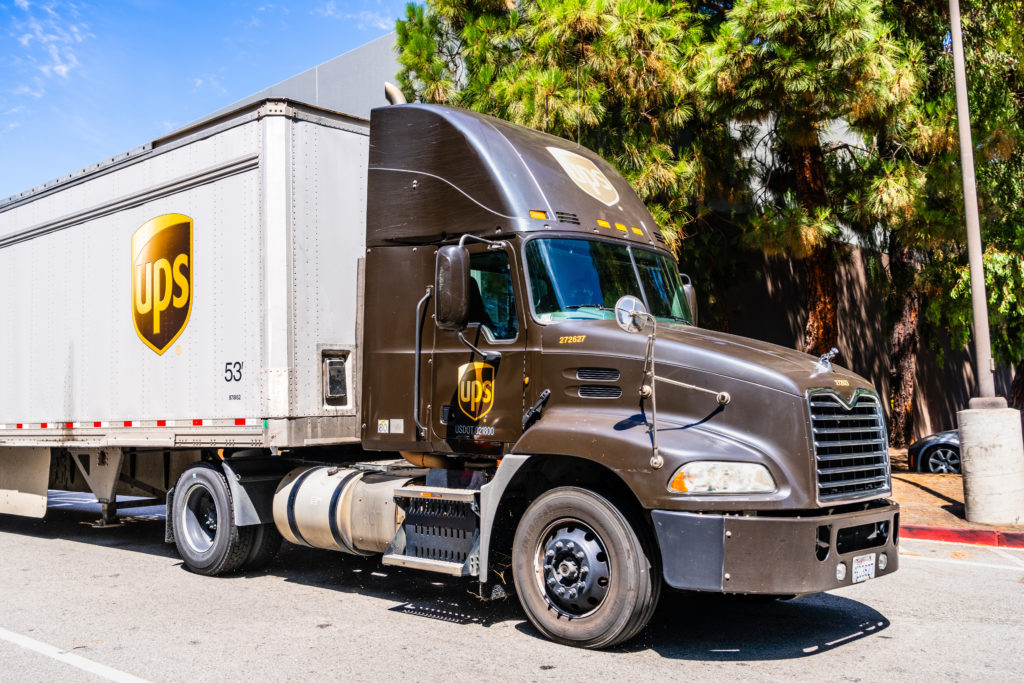
In a statement, UPS said it is making efforts to enhance cleaning in all facilities, especially around shared equipment, and is encouraging its employees to practice social distancing and to follow guidelines around proper hygiene. The company said it is also providing sanitizing supplies to all drivers, refilling automatic hand sanitizing stations, and providing emergency paid leave to any employee affected by coronavirus. UPS also said its facilities keep 60 days worth of stock in soap, paper towels, toilet paper, and other hygiene products.

Additionally, the company is adjusting signature regulations so that a majority of deliveries will not require a signature. If a delivery does need one, UPS will not share a pen with the recipient and will maintain social distancing guidelines.

Currently, UPS is working with the International Brotherhood of Teamsters regarding paid-leave for unionized workers.

FedEx is also temporarily suspending most U.S. and Canada signature requirements for its FedEx Express and FedEx Ground deliveries. The company has also relaxed signature requirements for same-day service, at FedEx office stores, and for FedEx Freight operations.

“This change is meant to help protect our couriers, drivers, and customers by preventing exchange of the signature equipment and keeping them at a safe distance from each other [that is] consistent with social-distancing guidelines from the WHO,” said a Fedex spokeswoman in a statement.

Amazon is temporarily suspending shipments of nonessential items and is focusing on making household goods and medical supplies a priority throughout its facilities.

Customers can still order in-stock nonessential goods that are already in warehouses, and can choose the “unattended delivery” option during checkout when ordering from Prime Now, Amazon Fresh, and Whole Foods Market. With this option, their items will be dropped off at a specific location in order to maintain social distancing.

Amazon said it has also increased its sanitizing practices in all facilities, especially around door handles, stairway railings, lockers, touch screens, and elevator buttons. Any Amazon employee placed into quarantine or diagnosed with COVID-19 will be able to receive two weeks of pay.

Amazon has also been working to hire 100,000 additional full-and part-time employees throughout the country in order to keep up with increased demand. The company has said it will be boosting hourly pay for its workers by $2 through April.

As for UPS, the company said its paid-leave agreement applies to around 300,000 full-time and hourly employees–especially drivers, mechanics, and package handlers who are directly impacted by the virus.

UPS’ agreement with the Brotherhood of Teamsters will provide paid leave for any worker diagnosed with COVID-19 or who is placed under quarantine.

While on leave, full-time employees will receive payment for eight hours per workday for up to 10 workdays. For part-time workers, employees will receive payment for 3.5 hours per workday for up to 10 work days. Part-timers are also guaranteed at least 3.5 hours per day when they are called into work. Part-time UPS Freight workers will receive pay for four hours a day for up to 10 workdays, and UPS Cartage Service part-time employees will have local addenda guarantees applied. All workers will have health and pension plan contributions made in alignment with union requirements.. If a worker uses paid time off or self-quarantines and is later diagnosed with COVID-19, UPS will repopulate that accrued paid time off for up to 80 hours for full-time workers and 35 for part-time workers.

This agreement also maintains that any employee missing work due to the virus will not have any days missed counted as an attendance infraction.

UPS has also worked with the federal government to provide logistical support and transportation for the COVID-19 drive-through testing sites throughout the United States. Union members’ roles will only be associated with the delivery and pick up of supplies and test kits.

Regarding the safety of handling packages, the U.S. the Center for Disease Control and Prevention and the World Health Organization have both stated that the risk of contracting COVID-19 from packages or mail is low. Coronaviruses typically spread through respiratory droplets, according to the CDC.

“In general, because of poor survivability of these coronaviruses on surfaces, there is likely very low risk of spread from products or packages that are shipped over a period of days or weeks at ambient temperatures,” the CDC explained.

Tire Makers Experience Unprecedented Shutdown

May 13, 2020 by Levinson and Stefani Leave a Comment

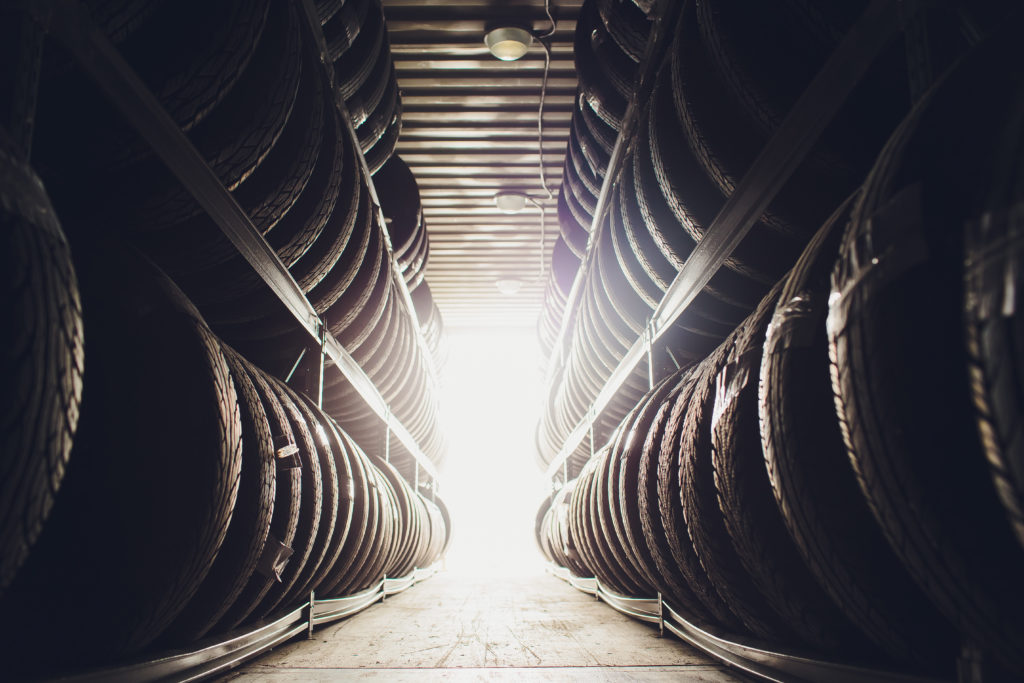
Tire manufacturing leaders throughout the commercial vehicle market in North America have been halting production as the COVID-19 crisis brings a decline in overall demand.

These companies saw shutdowns begin in late March, which are currently expected to last through April.

“Because of the complexity involved, we are not sharing detailed information on how each individual plant will be affected,” said a Michelin company spokesman. “Michelin North America has never been involved in a widespread shutdown like this in the past.”

Michelin has announced shutdowns at particular facilities, while Bridgestone Americas Inc, Cooper Tire & Rubber Co., and Goodyear Tire & Rubber Co. announced temporary shutdowns at all plants.

After 2019 saw the tire industry facing a steep decline in original equipment demand, the North American truck cycle ended up in a retreat. 

This pandemic is clearly making matters much worse.

When Goodyear originally took steps to close its manufacturing facilities in Europe, it decided to phase out North and South American facility production the following day–affecting an additional 13 tire plants throughout the two continents and roughly 17,000 workers.

“During this unprecedented and extremely fluid situation, Goodyear’s top priorities are the health and wellbeing of our associates and service to our customers,” Goodyear said in a statement. “We are closely monitoring both inventory levels and supply of raw materials and have optimized our warehouse and distribution operations to continue delivery of Goodyear products. All associates who are able to perform their roles remotely have been encouraged to work from home.”

Still, the company remains optimistic about future earnings.

“As we enter the new decade, it’s clear that the inflection point in new mobility is here” said Richard Kramer, Goodyear Chairman and CEO. “Tire technology is rapidly advancing to meet the needs of electric vehicles including range, ride and handling, and durability improvements. Intelligent tires will be integrated in autonomous driving systems.”

However, Michelin reported worrisome mid-February data. Original equipment truck and bus tires throughout the continent had fallen by 21%, and replacement demand by 6%.

In regards to COVID-19 restrictions, Michelin said its affected production does not include critical tires for the sake of economic continuity. Customers will continue to receive support through existing inventories in the company’s distribution and logistics activities.

“While we are facing some supply chain disruption, our components, semi-finishes, and products are still able to circulate,” said Michelin in a statement. “As the situation changes, we will make adjustments to our production accordingly. It is still too early to assess any possible impact this situation could have on our industry long-term.”

Cooper Tire & Rubber Co., along with other tire manufacturers, has implemented techniques to further protect employees and customers, including travel restrictions, social distancing rules, remote working, frequent deep cleaning and disinfecting of facilities, and stricter visitor limitations.

Although Cooper’s plants in China have reopened, its European and North American plants have been closing as the coronavirus situation is monitored and adjusted to.

Hankook Tire is currently working to buy back shares in order to boost shareholder value, and plans to purchase around KRW 50 billion of shares over the next six months.

This announcement comes after the company stated it would shut down its Clarksville, Tennessee manufacturing hub, and that its plants in Asia were working to support its facilities throughout the United States. If needed, those overseas plans can provide production assistance, help supply raw materials, and assist with other shipments.

Hankook said in a statement that it is still too soon to tell how much impact coronavirus will have on its business, but for now, all employees and company partners have postponed unnecessary travel, and those who have traveled for personal reasons have been asked to self-quarantine. 

“Currently there is a lot of unknown, and it depends on what happens as events unfold in the United States over the next three to four weeks,” said a spokesperson in the statement. “We are already seeing automotive manufacturing plants shutting down worldwide, so we would expect a fall-off in OE demand. It’s a difficult time for everyone right now and we hope that the economic conditions will begin to recover in the second half of 2020.”

The company said it is currently working on methods of enhancing e-commerce and is finding strategies to secure profitability during a decline in the prices of raw materials.

Additionally, a $2 trillion stimulus package has been passed by congress that will include $367 billion for small business, and the Tire Industry Association is one group looking for this aid for its members.

“TIA represents small businesses that cannot switch their core functions to remote operation during this disaster,” said Roy Littlefield IV, Director of Government Relations for TIA. “Tire dealers are staying open under these conditions to especially service trucks, emergency vehicles, and vehicles of medical personnel. Tires and tire dealers are essential to keeping the flow of supplies to stores and hospitals.”

UPS Called to Help White House in Developing CoronaVirus Testing Sites

May 7, 2020 by Levinson and Stefani Leave a Comment

As coronavirus uncertainty continues to progress, deliveries need more flexibility in order to adhere to social distancing protocols, and upcoming COVID-19 testing sites need immediate support. Therefore, through the Rapid-Response Taskforce for CoronaVirus Testing Sites, the White House has requested the aid of the United Parcel Service in planning and support for community-based coronavirus testing site operations across multiple cities. UPS says they are ready to step up to the challenge.

“UPS is proud to provide logistics and transportation support to assist with the administration’s special Coronavirus multi-city testing program,” said UPS Chairman and CEO, David Abney. “We stand ready to assist to help keep our communities safe. We are mobilizing our air and ground network planning and operations teams and we are prepared to fully support this urgent testing program.”

Currently, the administration is testing drive-up sites as part of its pandemic response, and said it is working along with the private sector to open these sites–which would aim to serve between 2,000 and 4,000 people per day each–in the areas most impacted by the virus.

Most recently, New York, Washington, and California are the states with the highest number of COVID-19 cases. Testing priority will be given to healthcare workers, those suffering from symptoms of the virus, and the elderly.

Private testing sites are already active in more than ten states, including Colorado, Florida, and Texas. These new drive-through sites are an additional effort, made after the administration received heavy criticism for the slow progression of tests across the nation, which has quickly fallen behind other countries. Many health experts have explained that far too many patients showing COVID-19 symptoms are unable to get tested and that the overall testing capacity is extremely inadequate.

Abney explained that UPS is “prepared to fully support this urgent testing program.” The company transports more than three percent of global domestic product, and about six percent of American GDP. 

“We know our customers rely on UPS to maintain the flow of goods throughout their supply chains,” Abney continued. “We are committed to rapidly adjusting our processes to ensure our employees, customers, and communities can maintain normal daily life to the greatest extent possible while we adjust to the new realities of this pandemic.”

So far, UPS has worked to minimize coronavirus risk by changing procedures, such as relaxing signature requirements on deliveries. To minimize contact and allow social distancing between carriers and recipients, UPS drivers will record the recipient’s name instead of a signature when a signature is requested. Recipients must also present identification with proof of age when an adult signature is requested by the shipper.

UPS also gives support to major healthcare companies, including its offering of supply chain management services as well as its shipping and storage of medical devices, pharmaceuticals, and clinical trials specimens.

Additionally, the company was one of the first to provide air cargo shipments to China of face masks and other protective equipment.

“UPS is serving the same role in the United States and in other countries around the world, beyond China, that are grappling with this virus,” said the company on its website.

The UPS Foundation has stated it will be giving $6 million in grants to organizations during this time such as United Way Worldwide, American Red Cross, Salvation Army, Operation Hope, Center for Disaster Philanthropy, Good360, UNICEF, World Food Programme, CARE, United Nations High Commission for Refugees, International Federation of Red Cross/Red Crescent, and NVOAD.

“We know our customers rely on UPS to maintain the flow of goods throughout their supply chains,” Abney said. “We are committed to rapidly adjusting our processes to ensure our employees, customers, and communities can maintain normal daily life to the greatest extent possible while we adjust to the new realities of this pandemic.”

According to UPS Spokesperson Steve Gaut, a timetable for the testing site roll-out can not yet be provided.

“The White House and the Task Force will be discussing the cities at a future time,” said Gaut. “We will be working with them to make sure there are plans in place to ship the test kits for manufacturers to the locations set up in temporary facilities or parking lots in other public spaces. We will also be working to make sure the swabs are able to be picked up on a timely basis and sent to the labs to complete the tests.”

CoronaVirus Causes Cancellation of Trucking Events

May 6, 2020 by Levinson and Stefani Leave a Comment

Because of COVID-19 concerns, the Federal Motor Carrier Safety Administration has decided to postpone its Truck Safety Summit.

After President Donald Trump announced in mid-March that he would be suspending all travel to the United States from Europe for 30 days, the FMCSA decided it would be delaying the summit, which was scheduled to be held on March 19th at the U.S. Department of Transportation headquarters in Washington.

“We will be following changes in the impact of COVID-19 and work to schedule a new date for the summit in the near future,” said FMCSA in the announcement.

The summit’s goal was for the agency to gain new insight into how to best improve the safety of motor carrier operations. Once the formal conference is finally held, stakeholders, motor carriers, truck drivers, federal and state agency partners, safety technology experts, and safety advocacy groups will have a chance to come together and have “an opportunity to share their ideas on improving truck safety.”

The summit also would have been a follow-up to the Transportation Research Board’s recent annual meeting, which took place in January. There, Jim Mullen, FMCSA Administrator, explained that he was urging the agency to implement new methods of reversing the large amount big-rig fatalities that had been occurring over the last four years.

Between 2017 and 2018, for example, deaths in crashes involving large trucks increased from 4,905 to 4,951. The issue of driver fatigue is a growing problem as well, as the National Transportation Safety Board has said it is making efforts to focus on the issue regarding fatigued drivers. The board also named decreasing fatigue-related accidents as one of the safety improvements on its ‘Most Wanted List’ of 2019-2020.

Hours-of-Service disagreements have also been a major issue in the industry, as stakeholders believe the relaxation of regulations will make it possible for drivers to work longer hours on less rest–bringing a possibility for more fatigued drivers and thus, more accidents. 

These topics were all likely to be key discussion points at the summit.

“We are disappointed, but the safety of the attendees is of the utmost importance,” said the FMCSA on its website. “We look forward to setting a new date for the Summit.”

Another event cancelled due to coronavirus worries is 2020’s International Roadcheck, which was originally planned to take place between May 5th and 7th. The Commercial Vehicle Safety Alliance said the rescheduled date has yet to be determined.

“The alliance will monitor the status of the coronavirus pandemic and appropriately select the new dates when it’s safe and reasonable to do so,” said CVSA. “Once the rescheduled dates have been selected, CVSA will notify the commercial motor vehicle enforcement community, the motor carrier industry, the press, and the public.

This 73-hour Roadcheck was to be an amped-up version of the checks that have been running on schedule for the last 32 years. This year, the enforcement effort would focus on driver requirements.

According to CVSA, 944,794 violations out of last year’s 3.36 million inspections were in the category of driver requirements. Of those, nearly 200,000 citations were for out-of-service conditions, according to the Federal Motor Carrier Safety Administration’s data.

Some of the most common requirement violations include: insurance and vehicle registration, proof of medical qualifications, detected substance use, failure to wear a seat belt, and giving a false record-of-duty status.

Because the Roadcheck has run smoothly for over three decades in a row, the decision to postpone was “thoroughly and thoughtfully discussed,” said Delaware State Police sergeant and CVSA president, John Samis.

“As we urgently respond to this time-sensitive crisis, we must remain diligent and committed to ensuring that the commercial motor vehicles and drivers providing essential goods and services to our communities are following motor carrier safety regulations,” Samis explained. “Safety doesn’t take a break. It is always our top priority.”

The CVSA still plans to monitor the COVID-19 outbreak closely, notify membership and industry stakeholders of the new Roadcheck dates, follow guidance from public health experts, and keep the public updated regarding future enforcement and safety campaigns.

“This experience is unprecedented in our modern society,” said Samis, “and we need to do all that we can to help stop the spread of this global pandemic.”

AV 4.0 Relies on Public and Stakeholder Opinions

May 5, 2020 by Levinson and Stefani Leave a Comment

WASHINGTON — The U.S. Department of Transportation officials are partnering with trucking industry stakeholders to develop the latest autonomous vehicles guidelines.

The DOT, along with the White House Office of Science and Technology Policy, has been calling for public comments on the most recent federal guideline update regarding autonomous vehicle technology–AV 4.0.

Last month, the Federal Register published the DOT’s comment request after Transportation Secretary Elaine Chao first announced the initiative,  officially titled “Ensuring American Leadership in Automated Vehicle Technologies” at CES 2020.

Public comments are due before April 2nd, and this summer will see further stakeholder work sessions to delve deeper into the future guidelines before they are finally published later in 2020.

“The U.S. DOT and OSTP see AV 4.0 as a method to ensure a consistent [U.S. government] approach to AV technologies and to ensure that the United States continues to lead AV technologies’ research, development, and integration,” said the Federal Register.

AV 4.0 aims to be a set of unifying principles throughout 38 different federal departments and agencies which gives state and local governments, industry representatives, and tech experts guidance regarding the operation of automated vehicles.  The guidelines were originally built around government opportunities for collaboration, and AV tech growth boosting through administration efforts.

The initiative’s main aspiration was to prioritize safety, innovation, and  consistent regulatory methods.

“While keeping safety as the approach–the priority for all of our engagements–we’ve been able to move this throughout the federal government so that all of the tools, assets, research, and grant-making dollars that are available, and enforcement authorities that are available throughout the federal government, can be at the hands of all our stakeholders that care about this,” said DOT deputy assistant secretary Finch Fulton.

According to Fulton, the upcoming national highway policy updates are an important way in which this technology can demonstrate its safety benefits throughout U.S. transit networks.

“Developments such as automated vehicles, drones, hyperloop, commercial space, and data initiatives can dramatically change the way people and goods are moved about the country and world,” Fulton explained. “Many of these technologies challenge the department in new or more sophisticated ways on methods to both prove and improve levels of safety, or in determining what mechanisms are best suited in the department for providing oversight.”

A main determining factor around AV regulation will be public opinion, according to Elaine Chao, Transportation Secretary.

“The real challenge is, as regulators, how do we address, how do we engage with emerging new technologies to address legitimate public concerns about safety, security, and privacy without hampering innovation? Because innovation is a trademark of who we are as Americans. That is our greatest export,” she said in February.

Currently, guidelines align with AV technology support initiatives and collaboration efforts by the Trump administration, including AV sector federal investments and research resources.

Back in January, Chao also announced the DOT’s standardized list of recommended ADAS terminology named “Clearing the Confusion” in collaboration with the National Safety Council, Consumer Reports, AAA, and J.D. Power–an initiative aiming to advance driver assistance systems.

“Currently, there is variance among manufacturers,” said Chao. “We want to make sure that drivers are aware that these systems are designed to ‘assist,’ not replace an engaged driver, which is still very important.”

Chao also explained her confidence behind AV tech’s potential to save thousands of lives, as 94% of crashes are a result of human error. She also noted that the tech could be particularly beneficial for those with transportation challenges needing more mobility options.

Still, congressional policymakers have not yet progressed on any autonomous tech legislation. According to Commerce Committee Chairman Roger Wicker (R-Miss.), new automated vehicle legislation directives were not likely to involve any provisions relative to trucks and buses. Additionally, the latest autonomous vehicle bill not to pass the Senate was related to vehicle regulations.

DOT’s DAS terminology list was announced two days after the American Transportation Research Institute demanded an autonomous vehicle technology policy for the trucking industry.

“Given that we intend for the policy document to be a living document and to be developed in an iterative fashion, subsequent opportunities to comment will also be provided periodically,” said the Federal Register.

  • « Go to Previous Page
  • Page 1
  • Interim pages omitted …
  • Page 46
  • Page 47
  • Page 48
  • Page 49
  • Page 50
  • Interim pages omitted …
  • Page 59
  • Go to Next Page »

Levinson and Stefani Injury Lawyers in Chicago / Attorney Advertising