• Skip to main content

Levinson and Stefani Injury Lawyers

Client-first legal representation for injury victims. Injured? Free Consultation:

(312) 376-3812

  • Home
  • About Us
    • Attorneys
      • Ken Levinson
      • Jay Stefani
      • Vanessa A. Gebka
    • Practice Areas
      • Truck Crashes
      • Bus Collisions
      • Auto Accidents
      • Child Injuries
  • Firm News
  • Library
    • Articles
    • Cases
    • Law
    • Video
  • Blog
  • For Lawyers
    • Focus Groups
  • Free Case Review

Trucking Industry

America’s Truck Drivers Can’t Stay Home

April 30, 2020 by Levinson and Stefani Leave a Comment

When we think about the people in our communities who definitely can’t work from home, we most often think of emergency room doctors and nurses, and rightly so. However, there are many workers on the front lines in the fight against the spread of COVID-19 who may not be top of mind for most people, yet their contributions are vital to allowing people to get food and supplies in this critical time. 

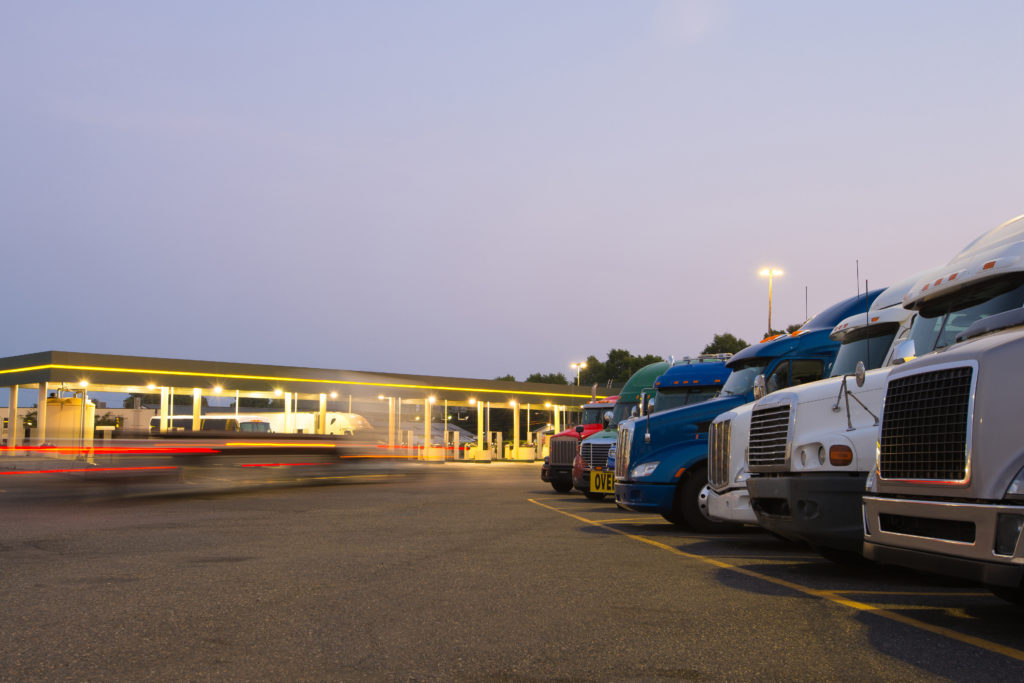
Whether you’re buying your food and essentials from a store or getting them delivered, those items most certainly spent part of their journey to your home on a truck driven by one of the over 3 million professional truck drivers in the United States. Since most the country is under some form of quarantine order or another, food, essentials, and medical supplies are nearly entirely moved only by professional drivers. 

Some drivers regularly travel thousands of miles as part of a supply chain that keeps grocery store shelves fully stocked. If a driver were to get sick far from home at a time when there is no guarantee of testing, they may be left with few options and they even might get stranded. With so many businesses closed, many drivers will rely on truck stops and travel centers for rest, fuel, essentials, and supplies. In Some cases, these facilities may be the only ones available for drivers who are far from home. 

The National Association of Truck Stop Operators (NATSO), a trade association based in Washington D.C. that represents the truck stop industry keeps a directory of stops and travel centers on their website to make it easier for drivers to locate facilities near them. 

What if a driver gets sick?

Each trucking company is likely to have a different set of policies for its employees. In March, new Federal legislation was signed into law, called the Families First Coronavirus Response Act. The law requires employers with less than 500 workers to provide additional paid sick leave to their employees. Some of the provisions that require employers to provide additional paid leave to an employee situations where an employee has been advised by a health care provider to self-quarantine, or to someone is experiencing COVID-19 symptoms and is seeking diagnosis. There are also provisions requiring higher compensation rates for some employees. However, there are exceptions to these rules given to some smaller businesses whose viability would be jeopardized by enacting these provisions. These new rules are set to expire at the end of 2020. 

The Centers for Disease Control and Prevention (CDC) has issued some guidelines to help delivery drivers stay safe while working. Some of these tips can also apply to long-haul truckers. Additionally, truck drivers should be diligent about taking all the precautions they can to prevent the spread of this virus. 

You’re probably tired of hearing this, but wash your hands: 

Hand sanitizer may be helpful to have in a bind. However, it doesn’t substitute for washing your hands with soap and water for at least 30 seconds. This may seem like overkill, but you should wash your hands every time you get fuel, use the washroom, or before you eat. Just think about how many people touch a fuel pump or use the bathroom every day. In fact, try to avoid things that multiple people come into contact with, like buffet style dining facilities or public computers.

Finally, if a driver does get sick – stop working. You should contact your company’s safety department as soon as you feel ill. Not only are you risking getting someone else sick if you keep working, but it’s also unsafe to operate a rig if you’re sick or fatigued. 

Exxon to Reduce Methane Emissions

April 29, 2020 by Levinson and Stefani Leave a Comment

NEW YORK — In March, ExxonMobil detailed its plans for reducing the amount of methane released into the atmosphere by its operations. Currently, many governments are creating new regulations in regards to greenhouse gas emissions.

Exxon is hoping to be of influence to other companies and regulators regarding how they write rules of this kind. According to Exxon, its procedures have made a 20% decrease in methane emissions among some of the company’s American drilling operations since 2018.

“Our industry has developed high-tech advances to curb emissions, and we also hope this framework will be helpful for governments as they develop new regulations,” said Exxon’s CEO, Darren Woods. 

The Obama Administration’s Environmental Protection Agency set new methane emission limits back in 2016, and called for total emissions numbers to decrease by half by 2025. Trump’s administration has been working toward relaxing these rules, and many oil and gas companies are working to fight that regression.

For this purpose, Exxon proposed its “model framework” for regulation of its emissions in all phases of production. Exxon’s plan also asks other companies to replace their energy infrastructure components within production sites that have a “high-leak potential,” to begin improving production technology, and to start conducting new research.

Still, some environmental advocates want Exxon to be more aggressive in its methods of combating global warming.

“The steps ExxonMobil has taken and the commitments the company announced are nowhere near sufficient to get us there,” said the Union of Concerned Scientists’ accountability campaign director, Kathy Mulvey. “We need to see much more ambitious and urgent actions taken by companies like ExxonMobil.”

Methane in the atmosphere can be more potent than carbon dioxide as a greenhouse gas by up to 86 times over a period of 20 years. When companies drill for oil, they find natural gas, whether it is wanted or not. During extraction, methane is released into the atmosphere–although scientists are still unsure of exactly how much.

With global warming threats so present, many major oil companies are under pressure from their investors to show how they will curtail the issue and adapt to new regulations.

“With the climate crisis upon us, companies can’t afford to ignore their contributions to climate change,” said senior director of the Environmental Defense Fund, Ben Ratner. “In at least one or two parts of [Exxon’s methane] framework, what they are recommending appeared to fall considerably short of what would be considered the best available operational practice and regulatory requirements.”

According to Ratner, Exxon’s framework involves implementing a program of leak detection and repair to fix gas leaks immediately. The company conducts these leak inspections at least once annually, but isn’t leading in this effort. Some other major oil companies have monthly inspections with sensors mounted on drones. 

“The truth is, it needs to be much more,” he explained, “and we need to be driving to a world of continuous, real-time monitoring and rapid mitigation of this highly potent greenhouse gas. Once-a-year inspection is not a serious proposal for regulatory requirements that are up to the magnitude of the challenge.”

It is clearly in companies like Exxon’s best interest to meet these expectations. When new regulations are in the works, energy companies typically prefer to be ahead of the curve and collaborate in writing the rules that would control their operations. Increased regulation costs also have the potential to increase the costs of companies’ competitors, allowing companies with more expansive operations to grow their business advantages.

Exxon also believes that it would be preferable for an oil and gas operator to burn off (“flare”) natural gas if venting is needed, as opposed to releasing methane directly into the atmosphere. The company also suggests improving the combustion efficiency of these flares to avoid methane being accidentally released. Still, flaring releases carbon dioxide–which is less potent, but lasts longer within the atmosphere.

This flaring is a major issue, as U.S. gas flaring activity rose by 48% from 2017 to 2018, reaching 1.4 billion cubic feet per day. When natural gas prices fell, flaring amounts surged and pipeline capacity was constrained, causing many producers to pay to have it removed instead of selling it.

Now, Exxon assures that its efforts are aligned with solving these problems. The company’s subsidiary, XTO Energy, has expanded its methane emissions reduction efforts and officially signed onto the industry program Environmental Partnership.

“Our comprehensive initiative is underscored by a technology research and testing effort,” said XTO President, Sara Ortwein, “and includes personnel training, equipment phaseout, and facility design improvements.”

TuSimple Adds New Autonomous Trucking Routes with UPS

April 28, 2020 by Levinson and Stefani Leave a Comment

Autonomous-driving technology company TuSimple has announced its expansion of autonomous truck service for the United Parcel Service.

The company will increase UPS’ autonomous trips to 20 per week and will also add a new route between Phoenix, Arizona, and El Paso, Texas–with 10 total weekly runs on its original route between Phoenix and Tucson and another 10 on the additional route.

For the Level 4 autonomous driving program, TuSimple is using retrofitted trucks that are able to drive themselves. Still, current regulations require a safety driver to be present in the cab to take over control of the vehicle if needed.

Eventually, TuSimple wants to completely eradicate the need for in-cab drivers and has a goal to demonstrate completely driverless operations by 2021.

TuSimple has been partnering with UPS since March of last year, when the companies launched a new ongoing pilot program. In August, UPS’ venture division, UPS Ventures, invested in the robotic trucking outfit.

Additionally, autonomous trucks achieve a fuel savings of 10% during UPS operations in comparison to traditional truck operation. TuSimple also announced research results in December from the University of California, San Diego Jacobs School of Engineering showing its autonomous technology’s reduction of heavy-duty truck fuel consumption.

TuSimple currently has 19 contracted customers and operates over 40 Peterbilt and International trucks with the company’s autonomous tech. UPS chief strategy and transformation officer, Scott Price, said that the company decided to partner with TuSimple in order to further explore the benefits of autonomous driving technology for UPS’ Global Smart Logistics Network, “which aims to improve network efficiencies, safety, and customer service.”

“TuSimple has been instrumental to this initiative,” Price explained, “so it was a logical next step for us to expand the test to additional routes within our North American Freight Forwarding lanes.”

According to the company, its technology can reduce overall shipping costs via tractor-trailers by 30%. It said the driving system has been showing its benefits already, and that UCSD’s research also found that automated driving operates more precisely on its throttle than a human driver, as the sensors can see further ahead. Therefore, the vehicle can stay efficient and avoid slow-moving traffic.

Some analysts say autonomous driving will first become commonplace among commercial operations, such as ride-hailing companies and TuSimple’s partnership with UPS. However, many disagree regarding how soon we will see this widespread commercialization.

“We are still far away from living in the world with a truck with no one in the cab driving on the highway,” said IHS Markit global heavy truck research director, Andrej Divis. “It’s not around the corner.”

However, senior research director at Gartner Inc., Michael Ramsey, said distribution centers, ports, and mines–contained areas without heavy traffic or pedestrians–will find large uses for this technology.

“I think we will eventually see a big impact on trucking and commercial vehicles,” said Ramsey.

In addition to UPS, TuSimple has been raising funds from Chinese tech company Sina, the operator of Weibo (China’s largest microblogging platform), and Nvidia, an American graphic processor manufacturer. The company currently has offices in both Beijing and Shanghai, where it develops technology around image-processing and advanced camera equipment.

The robotic trucking company currently employees around 105 engineers and drivers, and plans to hire hundreds more during the course of a few years.

TuSimple is aiming to transform the multi-billion-dollar trucking industry in the United States by reducing overall costs, carbon emissions, and by improving safety. Company officials are promising a true “depot-to-depot” driverless truck.

The company is excited to have UPS on board with these innovations.

“UPS has been a valued partner of ours since we officially started working together early last year,” said TuSimple chief product officer, Chuck Price. The program “shows the company’s commitment to innovation and exemplifies why UPS is considered a trailblazer when it comes to exploring and implementing cutting-edge technology.

Autonomous trucking has seen a lot of innovative action recently, as the focus on autonomous vehicle benefits becomes more and more prevalent. Alphabet Inc’s self-driving branch Waymo began testing self-driving trucks in Texas and New Mexico back in January, and just announced its first outside investment by Silver Lake Management LLC.

Swedish self-driving truck outfit, Einride, also announced it would be expanding into the states as well as hiring remote drivers in 2020.

Trucking Industry Leaders Support Call to Fight Human Trafficking

April 27, 2020 by Levinson and Stefani Leave a Comment

WASHINGTON — Transportation Secretary Elaine Chao is calling for 100 pledges to work towards combating human trafficking.

Chao was joined by Congress, state government, and transportation industry leaders earlier this year in response to her call to action.

“The U.S. Department of Transportation is committed to working with our public and private partners to fight human trafficking on America’s transportation system,” Chao said.

Chao is committing $5.4 million in grant selections to the Federal Transit Administration’s Human Trafficking Awareness and Public Safety Initiative. The program will bring together 24 organizations from across the United States, each of which will receive project funding dedicated to preventing human trafficking on public transportation.

The Transportation Leaders Against Human Trafficking Pledge asks participants to educate their employees on recognizing the signs of human trafficking and aims to raise overall awareness of this modern-day slavery through outreach campaigns and by sharing data. 

Human trafficking, which involves forceful labor or commercial sex acts, affects millions of adults and children throughout the country and worldwide, of all ages, races, genders and backgrounds. Many are trafficked within their communities and others are transported to other locations.

Chao requested that the transportation industry commits to 100 pledges within 100 days, and as of late February, the Department of Transportation stated the agency has exceeded that goal and received 100 pledges within a month.

“America’s transportation system is being used to facilitate this modern form of slavery,” explained Chao. “The department commends these employers for their commitment to train their employees to help detect and save victims of human trafficking.”

To boost these counter-trafficking efforts, Chao has also established an annual Combating Human Trafficking in Transportation Impact Award of $50,000 to motivate non-governmental organizations, research institutions, industry associations, and government organizations to develop new ways of combating human trafficking throughout the industry. The Department will then review submissions and choose which group will best utilize these funds to create a viable solution.

“The funding announced today will empower transit agencies and other organizations to develop local solutions to address human trafficking on buses, trains, and other forms of public transportation,” said K. Jane Williams, FTA Acting Administrator. “Our goal is to build awareness among all transit operators and the traveling public to enable them to recognize and report potential instances of human trafficking.”

Some of the selected projects working within the scope of the $5.4 million grant include:

-The Santa Clara Valley Transportation Authority, which is receiving $350,000 to launch an awareness campaign centering on rider education around detecting human trafficking. It will also increase employee training on the issue, as Santa Clara is particularly vulnerable to human trafficking and other related crimes due to its location near international travel hubs.

-Georgia’s Gwinnett County Board of Commissioners, which is receiving $352,000 to implement communications equipment on buses connected to dispatchers in a transit maintenance center, which will bring live monitoring of the driver and his or her surroundings. Gwinnett County Transit transports around 1.5 million riders each year.

-The Community Transportation Association of America, which is receiving $242,677 to develop and improve educational materials on human trafficking, public safety, and operator assault for transit agencies. CTAA includes public, private, and nonprofit transportation and mobility management providers.

Since Chao first announced the call to action in late January, over 250 pledges have been signed–including by city government agencies, state transportation departments, trucking companies, airline groups, port and and airport authorities, transit groups, and nongovernmental organizations.

FTA’s Human Trafficking Awareness and Public Safety Initiative supports USDOT’s Transportation Leaders Against Human Trafficking, which was formed in 2012 as a group of transport and travel industry representatives working with other institutions to increase training and public awareness resources.

A few days after Chao initially called on transportation leaders for support, President Donald Trump signed the “Executive Order on Combating Human Trafficking and Online Child Exploitation in the United States,” which dedicates a White House position on finding solutions to these particular crimes full-time.

“We are not letting up!” Elaine Chao stated in a Tweet. “Multiple initiatives are underway to increase awareness of human trafficking and equip transportation industry employees and the public with strategies to fight it.”

FMCSA Plans to Study Crimes Against Female and Minority Truckers

April 23, 2020 by Levinson and Stefani Leave a Comment

Due to recent evidence showing “a serious pattern of harassment- and assault-related crimes against female and minority male truckers,” the Federal Motor Carrier Safety Administration will study the “prevalence, seriousness, and nature of the problem of harassment and assaults” that have been committed.

The agency is submitting, once again, an information collection request to the White House’s Office of Management and Budget. The request will ask for approval to conduct a “Crime Prevention for Truckers” study–similar to the agency’s request from last July.

“FMCSA has accumulated evidence, both documentary and anecdotal” for these kinds of harassment, said the agency in its pre-publication announcement late last month.

“For example,” it said, “Security Journal, in a [2005] article titled ‘Workplace Violence against Female Long-haul Truckers,’ reported that 42% of female long-haul truckers reported experiencing one or more types of workplace violence.”

To gain momentum toward validating the problems at hand, FMCSA has decided to work with Battelle in executing a primary exploratory survey of female and minority truckers. Analysis of the survey’s results will “begin to formulate an approach to reducing,” the agency explained.

FMCSA’s intended study will include a maximum of 440 female truckers and 440 male minority truckers, with data being collected from both online surveys and in-person interviews. For a driver to be eligible, he or she will need to confirm that they are either a female or a minority male who has worked professionally as a truck driver within the past two years. If chosen, they will receive a $25 incentive upon completing the interview or survey.

If a significant issues are found, FMCSA plans to develop outreach and training methods and materials to help truckers protect themselves from harassment and crime.

“First, there seems to be a perception among these subpopulations of truckers that they are more vulnerable than others,” said the agency of its reasoning. “Second, there is a critical shortage of truckers, and helping these subpopulations of truckers protect themselves from crimes could draw more truckers from these subpopulations, while stemming turnover, to alleviate the shortage.”

However, the study will not be used explicitly for rulemaking. FMCSA said those interested in participating in the survey may submit their written comments on the proposed information collection to the Office of Information and Regulatory Affairs, Office of Management and Budget. These comments will be taken until the end of March.

The reasoning for the lack of action, FMCSA said, is that it does not yet have a full grasp of the scope of the problem. Until then, no effective solutions for preventing crimes against minority truckers can be put in place.

“Currently, there is insufficient data,” the agency said. “[With] the frequency and number of harassment- and assault-related crimes occurring, the portion that are unreported, and reasons for underreporting, are unknown.”

As of now, FMCSA does not provide any training to truckers on how to protect themselves from being harassed, robbed, stalked, or assaulted.

The agency’s exploratory survey will aim to be an analysis of data–however limited the scope of data may be–that will aid the FMCSA in understanding “the nature and extent of the problem and begin to formulate an approach to reducing it.”

The survey will ask drivers whether or not they have experienced race- or gender-related harassment or crimes while working. If they have, follow-up questions will ask them where and when these instances took place, what they respondent knows about the perpetrator, and whether or not the respondent reported the incident.

The questions will be anonymous, and none will ask for any kind of information that could possibly identify the respondent or the perpetrators involved in any incident.

Findings from the data analysis will be compiled into a comprehensive report available on FMCSA’s website for interested public and stakeholders to read.

Desiree Wood, president of Real Women in Trucking Inc., welcomed the survey and said her group has received distress calls related to sexual misconduct in entry-level driver training fleets for at least 10 years.

FMCSA is asking the public to comment in any regard to this proposal, including on: 1) Whether the collection is necessary for the agency to properly perform its functions; 2) the accuracy of the burden estimated; 3) how FMCSA can enhance the quality and usefulness of the collected information; and 4) ways to minimize the burden without reducing the quality of the collected information.

Comments should reference Federal Docket Management System Docket Number FMCSA-2018-0278. Information on how to submit comments can be found here.

Airman Introduces Automated Landing Gear System

April 20, 2020 by Levinson and Stefani Leave a Comment

At the recent 2020 American Trucking Associations Technology and Maintenance Council Annual Meeting in Atlanta, Airman Products unveiled its new Automated Landing Gear Deployment and Retraction Technology.

The company’s patent-pending device allows drivers to limit their exposure to potential injuries–such as knee and back damage–by eliminating manual cranking needs for raising and lowering the landing gear of a truck, and replacing it with the flip of a switch.

“What we’re bringing to the fleets is a faster solution that requires significantly less effort out of the driver,” said vice president of Airman sales, Jim Babbitt.

The electrically-driven unit can be OEM-installed in under an hour, works easily with all existing landing gear makes and models, and only weighs 15 pounds. A driver can deploy and retract landing gear much more quickly with the new technology than he or she could manually.

When drivers work with the manual system and sustain injuries, they often end up missing work for months–which can even cost them their jobs.

“You do this tens of thousands of times over a lifetime of being a truck driver, and that’s going to cause problems,” said Shane LaHousse, Airman vice president of engineering. “Automation is the way to eliminate this problem”

Repetitive cranking motion can also because heavy wear on muscles and joints, especially in aging drivers, which is a growing issue as the median truck driver age continues to rise.

“Depending on the equipment and circumstances, it can take between 50 to 60 crank arm rotations to get the legs on a trailer’s landing gear at the ground, and this task can keep some otherwise great drivers from working or coming back to work,” LaHousse explained. “Operating the crank arm can be awkward and physically taxing, even if the driver is young and uses the proper technique for landing gear operation, so we’ve taken this task out of the driver equation by automating it.”

Babbitt assures that this is a major solution.

“The fleets we’ve surveyed tell us that shoulder, back, and rotator cuff injuries are at the top of their list for workers’ comp claims, and that cranking landing gear up and down can cause or exacerbate these injuries,” said Babbitt. “Truck driving is already a physically demanding profession, so our automated system focuses on one primary stressor–making trailer drops and hookup operations safer and faster, while improving the truck driver experience and, as a result, driver retention.”

According to LaHouse, the Automated Landing Gear Deployment and Retraction system also increases lot utilization by allowing trailers to park closer together. This is made possible because the controller is mounted directly under the trailer apron and there is no longer a need to be able to reach a crank arm.

Babbitt said installing the system is simple–it arrives in kit form with all mounting hardware included. It only needs two bolts on the landing gear crossbar removed, the Airman landing gear actuator attached, and then the crossbar reinstalled.

The interface also only needs a 12-volt power supply, and the unit’s control box mounts easily under the trailer. Its two-way toggle switch sits on the side of the trailer frame rail and is easily accessible.

There is no maintenance required once installed, besides periodic battery replacement as needed. The company’s landing gear actuator is self-contained and does not need any lubrication.

“Some landing gear manufacturers offer automated systems now, but they are expensive, upgrading requires discarding an existing drive leg, and if the landing gear is damaged, may require complete replacement,” said Babbitt. “Not only is the Airman system about half the cost of other systems, it also works universally with all existing landing gear makes and models, and doesn’t have to be replaced if the landing gear is damaged.”

Airman also asserts that fleets with multiple trailer brands using various types of landing gear are now able to use one piece of equipment and one single source overall. Thus, whether a fleet orders the Airman Automated Landing Gear Deployment and Retraction Technology on new trailers, retrofits older trailers, or utilizes both options, it can still increase its parts inventory by just one SKU.

As of now, implementing the new automated landing gear system–which is expected to enter production in the third quarter–will only cost fleets about $700 per unit.

Additionally, it will come with a standard five-year warranty, or a seven-year warranty with a fleet agreement.

  • « Go to Previous Page
  • Page 1
  • Interim pages omitted …
  • Page 47
  • Page 48
  • Page 49
  • Page 50
  • Page 51
  • Interim pages omitted …
  • Page 59
  • Go to Next Page »

Levinson and Stefani Injury Lawyers in Chicago / Attorney Advertising