• Skip to main content

Levinson and Stefani Injury Lawyers

Client-first legal representation for injury victims. Injured? Free Consultation:

(312) 376-3812

  • Home
  • About Us
    • Attorneys
      • Ken Levinson
      • Jay Stefani
      • Vanessa A. Gebka
    • Practice Areas
      • Truck Crashes
      • Bus Collisions
      • Auto Accidents
      • Child Injuries
  • Firm News
  • Library
    • Articles
    • Cases
    • Law
    • Video
  • Blog
  • For Lawyers
    • Focus Groups
  • Free Case Review

trucking laws

More Trucking Companies Focusing on Transparent Risk Management Strategies

May 18, 2021 by Levinson and Stefani Leave a Comment

Risk management strategies are coming to the forefront of trucking company upgrades in this current era of technology, especially while fleets are seeing more and more of a need to protect their employees while simultaneously protecting themselves from liability–and the high costs that are involved when a truck is found to be at fault in an accident.

With a solid risk management strategy, a fleet should be able to easily mitigate all possible risks and safety breaches, including any potential crashes or unsafe circumstances where a driver would be at fault. Of course, avoiding any unsafe situations is the top priority for any fleet.

Still, driver performance perfection is impossible, as is complete prevention of any obstacles throughout an entire trucking operation. Therefore, a fully-developed and efficient risk management strategy is vital for any business in the transportation sector.

“Without a risk management program, when an event happens, you have no guidelines of what you asked the driver to do or not to do,” explained Halvor Lines’ chief risk officer, Adam Lang. “Having a risk management program sets the baseline of expectations.”

It’s much easier for a company not to lose huge amounts of money in a nuclear verdict if fleets are able to keep efficient records and safety data easily accessible and up-to-date, and these records clearly show that drivers are adequately trained and vetted, Lang noted. 

Additionally, a trucking company’s risk management strategies should clearly outline all processes for proper driver on-boarding, coaching, and consequences if rules are broken. These policies should also include any road accident reports, data analysis, and comprehensive investigation information. Risk management strategies should be made transparent and explained thoroughly to all employees, and these policies should be regularly re-evaluated. According to Lang, all employees in a fleet, including management and truck drivers, should be held individually responsible for safety policy adherence.

Lang explained that Halvor has implemented heavily-structured hiring guidelines to bring on new truckers, which includes accident and safety history reports, drug and alcohol testing, and reference checks.

“We also require drivers to do a very large amount of pre-employment training,” he noted. “They need to check a lot of boxes before showing up to orientation.”

Like many aspects of driver on-boarding, risk management strategies are becoming heavily digitized within the trucking world. Now, many truck companies are able to receive real-time driver performance information using comprehensive digital driver management platforms. The data accumulated in these programs is then used to find the areas in which truck driver coaching may be necessary.

“The best risk program is preventing accidents from happening in the first place,” said Idelic CEO, Hayden Cardiff.

Idelic is a driver management software development company that allows users to implement methods of compliance, operations, safety, driver retention and driver training within one program.

With artificial intelligence programming, Idelic’s Safety Suite is able to help fleets “understand driver behavior to assign risk proactively and predictively, giving fleets understanding of why that driver is at risk, how much each event contributes to risk scores, and allows them to assign corrective action and coaching over subsequent weeks,” said Cardiff.

Driveri, a fleet safety platform from Netradyne, offers road object monitoring through artificial intelligence and on-board cameras to give insight into how a particular driver navigates various safety threats. According to Netradyne’s commercial fleet team president, Adam Kahn, safety managers can utilize this kind of technology to address risks as they take place.

For example, if a trucker is seen on his mobile phone in real time, he or she may be given helpful coaching through an audio message, Kahn explained–but positive behaviors can also be addressed, of course.

“If you’re going to coach your workforce, we take the stance of, maybe you don’t always point the finger, but you can give them a thumbs-up,” he said. “That is a really powerful thing. It is hard to replace drivers. The goal shouldn’t be ‘How do I get my worst drivers out?’ but [rather], ‘How [do I] get my fleet to act like my best drivers?”

For Lang’s company, unsafe driving behavior and violations have significantly declined since implementing these kind of technologies.

“We’ve seen a decrease in DOT recordable collisions,” he said. “We’ve seen a decrease in rear-end collisions, though part of that is implementing more collision mitigation [technology] in our trucks.”

The live driver monitoring has also helped the company “change the approach with how [we] deal with the other party [in an incident],” he added.
Trucking Companies Reaping Benefits of ELD Utilization

April 7, 2021 by Levinson and Stefani Leave a Comment

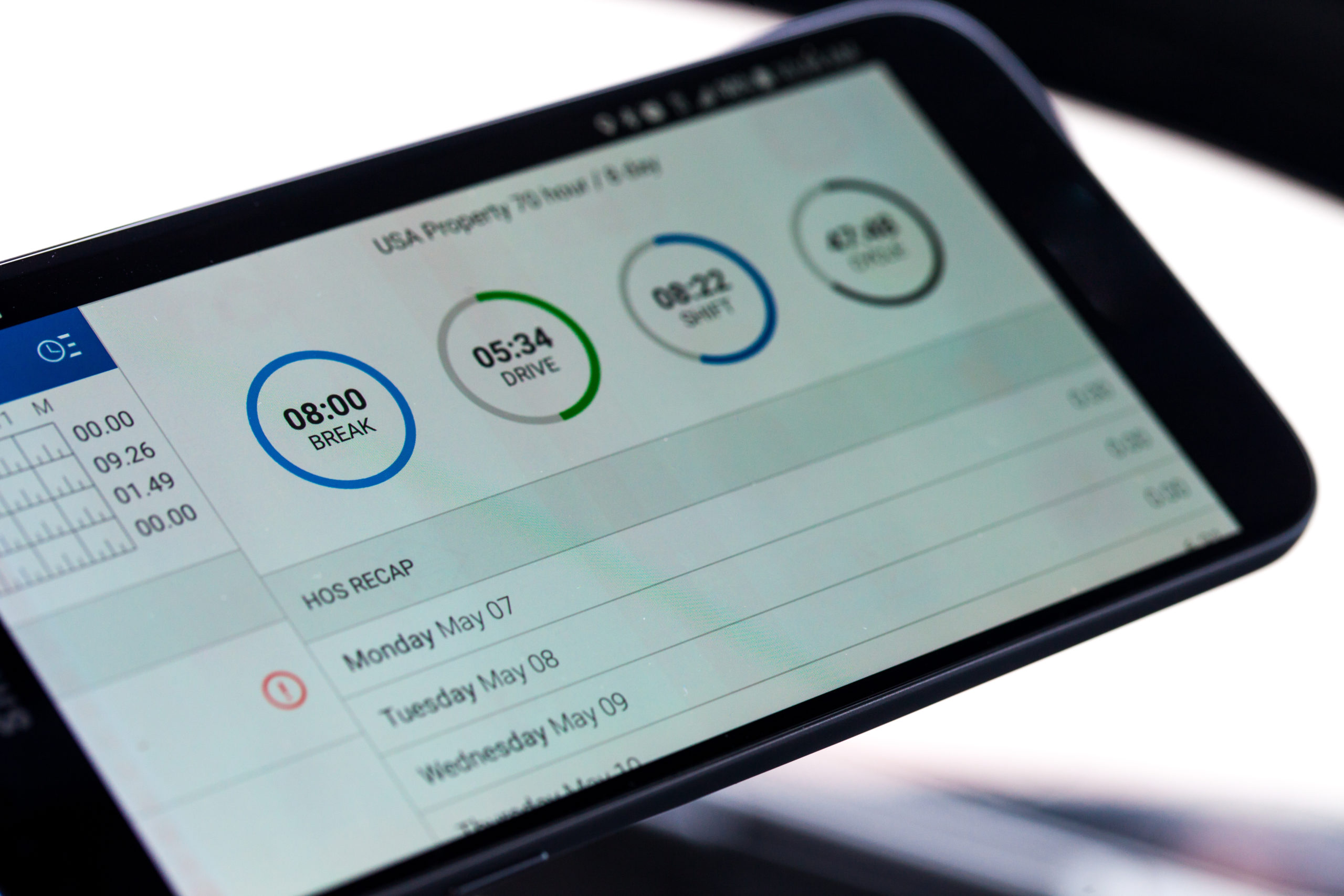
We recently reported on the effects of the latest ELD mandates on road safety and hours-of-service regulation compliance. But, how can ELDs also help fleets themselves better manage their businesses and employees?

“These devices help with understanding behaviors like speeding, hard braking, and over-accelerating,” said KeepTruckin vice president of product, Jai Ranganathan.

Dispatchers can even dispatch more quickly and efficiently with real-time location tracking through ELDs, which allows freight transportation to move as swiftly as possible.

“Dispatching has become the gold standard for efficiency, even in smaller fleets,”  Ranganathan said.

“[ELD data] is straightforward and really leaves no room for interpretation, which is a good thing,” agreed Cargo Transporters vice president of safety, Shawn Brown, in regards to ELDs’ helpfulness with driver training.

Additionally, dispatching actions can also be improved by ELDs, explained vice president of product management at Trimble Transportation, Glenn Williams.

“By electronically capturing key hours-of-service data, fleets are also able to more readily pair available capacity with freight to reduce empty miles and backhauls, improve driver efficiency, and connect the entire supply chain to make it easier for shippers and carriers to work together,” he said, noting that supply chain transparency, vehicle utilization maximization, freight coverage boosts, and shipper-carrier communication have also seen major improvements with ELDs’ abilities to bring much higher levels of driver data access and vehicle connectivity to fleets.

ELD data can also help fleets lower overall detention time, fuel usage, and vehicle breakdowns by allowing them to better identify the best times at which certain vehicles can be properly dispatched, according to Michael Ahart, Omnitracs’ vice president of regulatory affairs.

“It can also be used to set realistic performance expectations with customers, allowing fleets to better predict arrival times based on HOS data,” he explained.

In fact, an overall decrease in delays has become a key focus in the use of ELDs, said director of operations at Grand Island Express, Deen Albert.

“It forced our driver managers to be very actively involved in the drivers’ hours, understanding where the drivers were, how much time they had left on the clock, and being able to maximize that,” he said.

For example, driver managers can track how long drivers are spending at home on their days off, explained Garner Trucking Inc. chief operating officer, Tim Chrulski.

“The data allows us, at a quick snapshot, to separate our data and look at hours,” he said. “Then, we track that weekly, so we’re fair and balanced for everyone.”

Fleets can also improve their overall route efficiency with ELDs, said Orbcomm’s director of fleet safety and compliance, Scott Stofer.

“They’re utilizing the system to the fullest to manage violations, manage fuel efficiencies, and make better decisions for dispatching,” he said.

J.J. Keller & Associates transport industry business adviser, Rick Malchow, added that fleets can track out-of-route miles and equipment-use efficiency with ELDs, as well as reduce shipper facility driver detention. If detention does occur, ELDs make it easier for drivers to get paid for that time.

Fuel consumption and vehicle idling tracking is also a helpful usage of ELDs, Ranganathan noted.

“This common-use case is helping to drive up the efficiency of trucks on the road while reducing carbon footprints across the country as more fleets utilize technology,” he said. “Data from ELDs helps eliminate the administrative burden of collecting state mileage and fuel receipts and automatically calculates this information instead.”

Driver education is another bonus of ELD implementation, said Cargo Transporters’ Brown. 

“One big factor for a driver is trip planning and taking the time to think about not only your next stop, but the stop after that and where you’ll be parking for the next HOS break, etc.,” he explained. “Knowledge is power, and the ELDs provide much-needed real-time data that is very helpful in maximizing a compliant workday.”

ELDs may even be the launching-off point for further safety technology adoption, Orbcomm’s Stofer noted.

“In a lot of ways, the ELD mandate has accelerated the adoption not only from the provider side, but also from the carrier side,” he said.

Industry Partnerships Collaborate to Boost Driver Visibility and Safety

February 8, 2021 by Levinson and Stefani Leave a Comment

Industry groups have banded together in efforts to boost trucking safety through a new design challenge, dubbed the ‘Truck of the Future.’

Together for Safer Roads, along with PepsiCo Inc., Republic Services, and Anheuser-Busch InBev are working together to find the most efficient and cost-effective methods of ending big-rig involved crashes. The groups say non-commercial vehicle drivers and passengers are particularly at risk in regards to visibility issues while on the road with heavy-duty trucks.

The timing of this new design challenge comes in honor of the World Day of Remembrance for Road Traffic Victims.

According to safety experts from large fleets gathered by Together for Safer Roads, one of the biggest issues currently at hand for road safety is that of driver visibility. TSR is a global NGO that aims to work with community stakeholders, government officials, and businesses on fleet safety management efforts, technology initiatives, and local projects that will help to prevent traffic crashes and deaths.

TSR also began in alignment with the UN’s Decade of Road Safety and is collaborating with TSR members around the globe. Partners also include groups like AT&T, CalAmp, Geotab, Lyft, Marsh, and Samsara.

“This project is our call to arms regarding an under-appreciated aspect of road safety,” said David Braunstein, president of TSR. “After all, drivers cannot react to what they cannot see or sense. We must make meaningful progress towards the 2030 agenda, and bringing together these influential partners is part of our unique contribution.”

The team effort is looking for startups dedicating efforts to commercially-viable new technology to partner with, and the participating groups say this is the key to finally improving overall driver visibility on roads worldwide.

“There are many interventions that can address driver visibility issues–improved cab designs, collision avoidance systems, and better infrastructure, to name a few,” said PepsiCo’s vice president of global environment, health, and safety, Cormac Gilligan. “PepsiCo is pleased to be a part of a collective solution.”

The group has also partnered with other organizations such as the NYC Department of Citywide Administration Services, UPS Inc., and advisors from prominent truck safety research agencies.

The main goal of the effort is TSR’s intention to reaffirm the groups’ Stockholm Declaration commitment, along with their commitment to the United Nations’ Decade of Action for Road Safety plan, which will continue through 2030.

“At AB InBev, we believe that multi-stakeholder approaches are key to tackling road safety effectively,” said AV InBev global director of safety, Joshua Girard. “The inclusion of our technology incubator in this unique initiative allows us to solve big business challenges with innovation and creativity, all while contributing to the United Nations’ Sustainable Development Goals, and [while] fostering safe communities globally.”

Donald Slager, CEO of Republic Services, agrees, explaining that the company is right to be urging for further innovation within the trucking market and safety initiatives.

“We’re the seventh-largest vocational fleet in the nation,” Slager said. “When you get [to that point], those benefits accrue in large ways because we’ve got 16,000 trucks on the street every day.”

Republic is also consistently looking toward newer technology in order to find ways to keep drivers as safe as possible, according to the company’s vice president of safety, Jim Olson.

“Republic Services operates one of the nation’s largest fleets, and safety is our number one priority,” Olson explained further.  “We are constantly evaluating new technologies to help our drivers stay safe behind the wheel. Over the last decade, there have been significant advances in video and sensor technology. We are excited to be part of the core focus team for the Truck of the Future project and the potential for fleet innovation.”

For the TSR project, the chosen innovative solution provider is set to be announced during a virtual pitch day in December. This innovative solution will be implemented throughout international markets, along with that of the United States, throughout 2021.

The overarching goal of all of these initiatives, according to group members, is for the participants to be able to create steady, lasting, and scalable changes within domestic and international road safety.

DOT Announces Strategic Plan to Boost Country’s Freight System

November 10, 2020 by Levinson and Stefani Leave a Comment

The comprehensive National Freight Strategic Plan was released by the U.S. Department of Transportation earlier this month, a plan which will aim to give clear guidance regarding how to create safety and resilience improvements within the country’s freight system.

“Every day, America’s transportation network moves more than 51 million tons of freight and energy products valued at nearly $52 billion via highways, railways, ports, and inland waterways, pipelines, and airports,” said the DOT in a statement. “The growth in freight demand due to increasing use of e-commerce and local supply chains in recent years has strained our freight system, and could threaten the competitive advantage of American businesses.”

This plan, deemed necessary by the Fixing America’s Surface Transportation Act, will work to guide infrastructure planning and freight movement efficiency improvements. It will also boost freight system safety, infrastructure developments, and data and technology capability support. 

Transportation Secretary Elaine Chao explained that freight system investment will help the country’s competitive strength in agriculture and manufacturing industries, and that economic competitiveness boosts will align with a strong infrastructure network.

“This system helps drive economic growth and touches the lives of every American,” she said. “This plan establishes a clear vision for the future of our nation’s transportation system.”

The plan addresses current areas for improvement and opportunity in relation to overall freight movement, including the challenge of e-commerce, which has brought upticks in truck traffic and curb space jams. For shipments moving 750 miles or fewer, trucks are the main method of transportation.

Online shopping habits have also risen exponentially, and, according to the plan, delivery demand in areas with high numbers of traffic and congestion has been a large obstacle. E-commerce sales jumped by 16.7% between 2018 and 2019’s fourth quarters according to Census Bureau data, and the trend has continued as coronavirus shelter-in-lace mandates have caused more people to order online in lieu of in-store shopping.

“The rise of e-commerce has disrupted our supply chains and increased demand for last-mile deliveries in areas that are already heavily congested,” said Chao. “This National Freight Strategic Plan will help us invest strategically in our country’s future and turn these challenges into opportunities.”

The plan also points to technology capabilities, as transportation experts have been looking to innovative driver assistance tech and automated systems to progress the industry to new levels.

Nicole Nason, Federal Highway Administrator, said electronic routing systems, port automation systems, and weigh-in motion sensors will play a huge part in the future of trucking.

“Freight movement is often intermodal,” she said. “Even if airports, seaports, or railroads are involved, trucks are still needed to move those products to their final destinations.”

Pandemic-caused travel obstacles will be just as much a factor in trucking as e-commerce changes, according DOT undersecretary for transportation policy, Joel Szabat. Federal Motor Carrier Safety Administration deputy administrator, Wiley Deck, agreed.

“Focused attention on the freight system is especially urgent in light of supply chain challenges caused by the recent pandemic,” Deck said. “To continue moving forward, we need a holistic plan for our freight system.” The National Freight Strategic Plan is that exact plan, he explained.

This plan also addresses traffic congestion increases with the identification of bottlenecks caused by weight-restricted bridges, road geometries, and other structural conditions. According to the American Transportation Research Institute, the trucking industry as a whole loses around $74.5 billion sitting in traffic every year.

Szabat also noted that the DOT worked with 13 separate events to gain input regarding the new plan, and said DOT received 82 comments from industry experts on the matter.

“We look forward to continuing to work with you all as we strive to improve the safety and efficiency of our nation’s multimodal freight systems,” he said, explaining that DOT will use the plan to create a framework for multimodal partnerships and to guide national policy.

The plan “recognizes the promise of technological solutions to safety [and] environmental and mobility concerns while acknowledging the need to make significant investments to modernize our nation’s transportation infrastructure,” said Darrin Roth, Vice President of Highway Policy for ATA. Roth believes the plan will present feasible solutions to any challenges freight transportation workers may face.

FMCSA Holds Virtual Trucking Safety Summit

September 25, 2020 by Levinson and Stefani Leave a Comment

The 2020 Trucking Safety Summit, hosted by the Federal Motor Carrier Safety Administration August 5th, focused on finding ways to improve safer operation of commercial motor vehicles throughout the country.

Stakeholders, including drivers, safety technology developers, motor carriers, safety advocacy groups, and federal and state partners, were allowed to discuss their ideas on improving road safety during the virtual event, hosted from the U.S. Department of Transportation’s headquarters in Washington.

All presentations and public participation were provided electronically in order to follow federal guidelines around public events held during the COVID-19 pandemic. The safety summit was originally scheduled for mid-March, but had to be postponed due to the current public health emergency.

National Highway Traffic Safety Administration data have shown an increase in large truck-involved crash fatalities over the last few years, an issue that was a major focus of the online event.

“To respond to this trend, FMCSA continues to work with state entities, industry, and others to identify new approaches to safety,” said the summit announcement. “These approaches can involve technology, company management practices, enforcement, outreach and education, and other techniques–encompassing a holistic approach to truck safety.”

The virtual meeting consisted of six individual panel discussions, with FMCSA also streaming live video of the summit to allow viewers to weigh in. The event began with an association perspective moderated by Deputy Administrator Jim Mullen, along with ATA’s Chris Spear, NTTC’s Dan Furth, Road Safe America’s Steve Owings, and OOIDA’s Lewie Pugh on the panel. Next was a “What’s Working” discussion by Schneider National‘s Steve Parker and Thomas DiSalvi, followed by a second “What’s Working” discussion by Rollin’ B’s Shannon Watson and Ingrid Brown. There was also a state partner discussion, a panel discussion on industry technology, and a “Florida Safety Story” discussion which included members of the Florida Trucking Association and Florida Highway Patrol. Special guest speakers during the summit included a FHWA Administrator and NHTSA Deputy Administrator.

The summit was originally set to follow up on the Transportation Research Board’s annual meeting in January, where Jim Mullen explained that the agency would be working to reverse the increase in recent large-truck fatalities.

“When I assumed this role as acting administrator three months ago, the members of this panel asked me, what are my top priorities,” said Mullen. “That, to me, was a no-brainer. The top priority for me at this agency is to reverse that four-year trend increasing fatalities involved with large trucks and buses.”

Jack Van Steenburg, chief safety officer for FMCSA, reiterated Mullen’s worries around the trend of big-rig-involved deaths over the last four years in a briefing about the industry during TRB.

Between 2017 and 2018, the number of trucks weighing between 10,001 and 14,000 pounds involved in deadly crashes rose by 4.6%, and the number of trucks over 26,000 pounds involved in these crashes rose by 1.6%, according to Van Steenburg. In addition, the number of big-rig occupant deaths increased from 815 to 885 between 2016 and 2018. Of truck drivers who were ejected from their vehicles in fatal crashes, over 40% were not wearing a seat belt.

Earlier this year, the FMCSA released a formal request for public comment regarding the best ways to study contributing factors in large-truck crashes. The Large Truck Crash Causal Factors Study will replace a 15-year-old study that has been used to make policy decisions by the agency.

“In the more than 15 years since the original study, many changes in technology, vehicle safety, driver behavior, and roadway design have occurred that affect how a driver performs,” said the agency in its formal request. “Since the study ended in 2003, fatal crashes involving large trucks decreased until 2009, when they hit their lowest point in recent years (2,893 fatal crashes). Since 2009, fatal crashes involving large trucks have steadily increased to 4,415 fatal crashes in 2018, a 52.6% increase when compared to 2009. Over the last three years (2016-2018), fatal crashes involving large trucks increased 5.7%.”

FMCSA has also been working on “completing the picture of crashes” through a study that will use the agency’s crash datasets in addition to other information sources to create a full picture of big-rig and bus crashes in order to better determine the root causes at hand.

Supply Chain Workers Form Task Force to Increase Social Distancing During Delivery

September 21, 2020 by Levinson and Stefani Leave a Comment

Recently, a group of supply chain partners, retailers, and manufacturers came together to create a task force that would outline standards needed in order to reduce person-to-person contact when freight is moved from Class 8 vehicles to last-mile drop-offs.

The Contactless Delivery Task Force, launched by the Consumer Brands Association, has developed protocols for safer and smoother delivery processes for everyone involved.

“Everyone is very concerned about ‘How do we keep our employees safe, how do we keep things moving efficiently in a high-demand environment?’” said Consumer Brands Association vice president of supply chains, Tom Madrecki. “But, that issue of safety continues to percolate and continues to be very relevant.”

The group’s primary focus will be electronic bills of lading (eBOL), which bring the benefits of digitizing typically paper-based processes for further efficiency and data accuracy, as well as health and safety improvements (by reducing the need for human contact).

“As shippers continue to build more efficient and resilient supply chains, the eBOL fills in a gap that many clients have been asking for,” said Accenture’s supply chain and operations practice senior manager, Henry Blum. “The touchless BOL will result in entry error reduction, increased visibility to OS&Ds, drive lower transportation costs, and benefit their green footprint.”

EBOLs will help the industry move away from paper documentation and forward into the age of online dashboards, virtual booking, instant quotes, and data analytics. These methods are becoming much more present throughout the industry as shippers more regularly prefer real-time updates and information. Trucking industry carriers have been adopting the technology more rapidly than ever.

Additionally, as more industry workers have been working from home due to COVID-19, the demand for quickly-available electronic information has skyrocketed, and the transition to eBOL has allowed shippers to give faster and more efficient insight into the operations and logistics of their warehouses from their remote locations. For jobs that cannot be done from home, an eBOL allows for easier social distancing as files and documents no longer need to be exchanged in person.

“As CPG companies identify ways to increase supply chain efficiencies and ensure employee safety, electronic delivery verification through a contactless pick-up and delivery process is a natural solution,” said Madrecki.

The task force plans to make contactless delivery and pickup protocol much easier while maintaining and increasing system efficiency and employee safety. Since its launch, the task force has grown to include 25 consumer packaged goods retailers and companies.

“We’re really looking at ‘How do we reduce human interaction so that we can continue to facilitate the movement of goods and services?’” Madrecki explained. “A lot of companies raised the need for contactless deliveries mechanisms or tools.”

One company on the task force is Land O’Lakes, Inc., which hopes to be part of a major change for the progress of supply chains.

“While a major disruptor, COVID-19 now gives us the opportunity to partner across our industry and develop the processes and procedures that will define the consumer packaged goods space for years to come,” said Land O’Lakes senior vice president and chief supply chain officer, Yone Dewberry. “Health, safety, and efficiency have always been our priorities, but now we’re forced to look for new and innovative ways of incorporating technology even further.”

Virtualization is key for the task force, and those that are part of the effort have found a solution to keeping supply chains moving efficiently has been electronic delivery verification. Because of this, eBOL processes are a logical next step.

“We specifically looked at that as the first bite of the apple when it comes to contactless deliveries and how do we remove paperwork and the physical process from deliveries,” said Madrecki. “But, there are clearly other applications.”

If a company is able to implement an eBOL system, it would also be able to put in place other related solutions for different situations, as many aspects of a trucking business involve electronic information transfers.

“If we can work in a concerted way to provide a workable standard for that, then there are clearly other applications to other parts of the delivery ecosystem,” said Madrecki. “It can definitely open up into a lot of different directions.”

  • « Go to Previous Page
  • Page 1
  • Interim pages omitted …
  • Page 3
  • Page 4
  • Page 5
  • Page 6
  • Page 7
  • Interim pages omitted …
  • Page 11
  • Go to Next Page »

Levinson and Stefani Injury Lawyers in Chicago / Attorney Advertising