• Skip to main content

Levinson and Stefani Injury Lawyers

Client-first legal representation for injury victims. Injured? Free Consultation:

(312) 376-3812

  • Home
  • About Us
    • Attorneys
      • Ken Levinson
      • Jay Stefani
      • Vanessa A. Gebka
    • Practice Areas
      • Truck Crashes
      • Bus Collisions
      • Auto Accidents
      • Child Injuries
  • Firm News
  • Library
    • Articles
    • Cases
    • Law
    • Video
  • Blog
  • For Lawyers
    • Focus Groups
  • Free Case Review

Levinson and Stefani

Case Summary: Klesowitch v. Smith

May 11, 2017 by Levinson and Stefani Leave a Comment

In the case of Klesowitch v. Smith, Smith rear-ended Klesowitch while Klesowitch’s car was at a stand-still in the middle of an intersection. At her deposition, Smith admitted she was at fault, but claimed Klesowitch was contributorily negligent.

The Plaintiff filed and won a motion for summary judgment on the issue of sole liability. The Defendant appealed, arguing that the court erred in granting summary judgement because a material fact remained as to contributory negligence. The Defendant argued that granting summary judgment on negligence alone, rather than liability, violated 735 ILCS 5/2-1005(c).

This proved unpersuasive as the appellate court affirmed the trial court’s ruling. Although it didn’t matter what the Plaintiff initially sought in her motion, the trial court was within its rights to make the determination of one or more of the major issues as set forth in 735 ILCS 5/2-1005(d). Here, it was the Defendant’s negligence, which left the Plaintiff’s negligence, if any, and damages left to the discretion of a fact finder.

The Defendant also brought up an issue of the Plaintiff’s medical bills, which were admitted without proper foundation. In Illinois, the full amount billed is allowed into evidence, with evidence of a paid bill being prima facie reasonable. In the event of a future bill or a bill that has not yet been paid, there are foundational requirements that must be set before the bill is admitted. A plaintiff must elicit testimony of a person having knowledge of the services rendered and the usual, and customary charges for such serves to establish reasonableness of the bills to admit them into evidence.

The trial court, over objection, allowed the jury to receive the full amounts of the bills that contained amounts that were written-off. The Defendant argued that the Plaintiff needed testimony establishing the reasonableness of those amounts. The appellate court found this argument persuasive, and after reviewing the record they were unable to find testimony that set the proper foundation for the contested medical bills. They ordered a remittitur and absence of consent of the Plaintiff, a new trial based on damages alone.
Jay speaks at the NJAJ Boardwalk Seminar

May 10, 2017 by Levinson and Stefani Leave a Comment

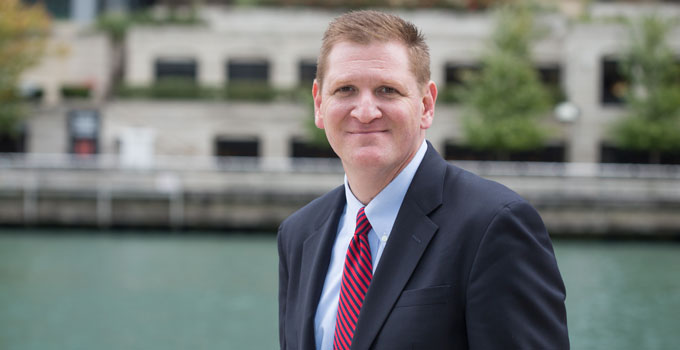
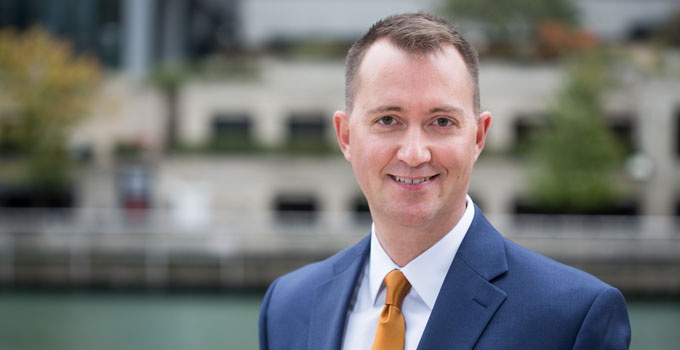
Managing Partner Jay Stefani

Levinson and Stefani Managing Partner Jay Stefani was invited to speak at last month’s New Jersey Association for Justice Boardwalk Seminar, one of the country’s largest legal seminars for trial attorneys.

During the seminar, Stefani spoke about issues related to discovery. His presentation included ways in which attorneys can utilize surveillance cameras to improve their odds of obtaining successful verdicts, as well as interpreting the effects of social media on prospective cases. He also spoke on issues related to unique damages in child injury cases and how to account for overlooked details during the discovery period.

Stefani has handled numerous cases stemming from personal injury matters over the past 12 years. The majority have required extensive discovery, including the recent $6.25 million settlement for the wrongful death of a father of five young children.

The 2017 Boardwalk Seminar welcomed more than 1,000 lawyers from around the country and featured 32 seminars over three days—a unique format designed to allow attorneys to move from seminar to seminar, hearing different topics as desired and thereby creating a seminar tailored to their specific needs.

In 2016, Jay was elected Parliamentarian for the American Association for Justice’s Sole Practitioner & Small Firm Section, serving a one-year term for 2016-2017. He is also a member of the AAJ’s Trucking Litigation Group, Motor Vehicle Collision, Highway and Premises Liability Section, and the Nursing Home Litigation Group. He also works with the Trucking Litigation Group’s Side Underride Guard Task Force (2015-present), advocating for improved trucking safety in cities across the country, most notably in Chicago.

Ken moderates a conversation at the Chicago Bar Association, May 25

May 3, 2017 by Levinson and Stefani Leave a Comment

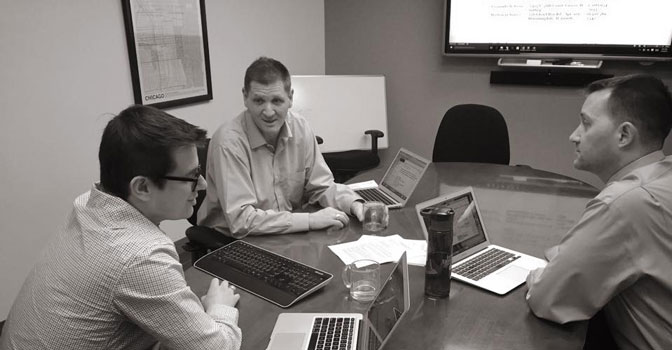
From left: Levinson and Stefani associate attorney Brett Manchel, founding partner Ken Levinson, and managing partner Jay Stefani

Levinson and Stefani founding partner and Chicago Bar Association Solo/Small Firm Practitioners Committee co-chair Ken Levinson is set to moderate a conversation titled “The Lawyer’s Role in a Changing Society,” presented by the CBA’s Solo/Small Firm Practitioners Committee. The talk takes place on Thursday, May 25 from 3-6pm at the CBA.

The law is changing and so is society. Many lawyers look for new, trending areas to hone their niche, but many more are asking, “How can I get involved?” The program features a panel of experienced attorneys from across the legal spectrum, addressing the ways in which lawyers can build their client base by focusing on the nuances their practice.

Participating attorneys include:

  • Jon Loevy of Loevy & Loevy (Civil Rights: Your Gate to Involvement);
  • Fiona McEntee of McEntee Law Group (Immigration: What Can You Do? What Can an Immigration Lawyer Do?);
  • Laura Jacksack of Jacksack Law Offices (Election Law: running for Office and Participating in the Election Process);
  • Hannah Garst of the Law Offices of Hannah Garst (Appointments in Federal Court and Other Opportunities for Involvement);
  • and Wendy Muchman of the Illinois Attorney Registration and Disciplinary Committee (Ethical Considerations for Lawyers Working in Unfamiliar Areas)

The CBA presents over 120 seminars a year that meet minimum continuing legal education requirements in Illinois and many other states. Seminars are held in-person at the CBA Building, 321 S. Plymouth Ct., Chicago.

Ken to speak at Arkansas Trial Lawyers Association convention, April 27

April 26, 2017 by Levinson and Stefani Leave a Comment

Levinson and Stefani founding partner Ken Levinson will participate as an invited faculty member at the Arkansas Trial Lawyer Association’s annual convention, beginning on Thursday, April 27 at the Inn of the Ozarks in Eureka Springs, Arkansas.

Levinson’s topic: Using Focus Groups to Maximize Your Cases. On Thursday, Levinson will shed light on how attorneys can utilize focus groups as a tool for strategy development, discovery intake, and gaining insight into the minds of potential jurors. He will also provide examples from his own experience as a moderator, and how participation influenced several outcomes for prominent cases.

Over the course of his career, Levinson has conducted hundreds of focus groups that have led to successful trial verdicts on matters of personal injury, medical malpractice, product liability, and wrongful death, among others. He has conducted focus groups on behalf of his namesake firm, as well as for several high-profile attorneys across the country. He is invited frequently by nationally recognized trial associations to speak on matters related to focus groups and personal injury cases.

The Arkansas Trial Lawyers Association Convention welcomes thousands of trial lawyers each year for networking opportunities and speaking engagements by featured guests. The convention covers a broad range of topics, including focus groups, robot cars, new ways to prepare for trial, and connecting with the jurors. The convention takes place April 27–29.

Local drivers spend five percent of driving time using their phones each day

April 19, 2017 by Levinson and Stefani Leave a Comment

text_drive

It’s probably no surprise that despite horrific tales of distracted driving, Illinois continues to figure prominently on the graph of unflattering statistics.

A new study conducted by Zendrive discovered that among 3.1 million drivers and over 5.6 billion miles of driving, nearly 88 percent of those trips included at least some use of a smartphone. When extrapolated for the entire driving population of the U.S., that equals out to roughly 600 million distracted trips per day, and on average, phone use was 3.5-minutes per hour of driving.

Placing firmly on the list of offending states is Illinois, whose drivers spend more than 5 percent of driving time on the phone. That’s just below the 7.5 percent high, which belongs to Vermont. But surprisingly, Illinois is one of six states among the top 25 that enforces a ban on cell use while driving, making it one of the few in which the law doesn’t appear to discourage people from doing so. At the local level, Chicago is one of two major cities that ban cell use while driving, yet the city places in the top five of municipalities with the “most distracted” drivers.

That’s in stark contrast with six of the top ten states where people spend the least percentage of time on their phones, including Oregon and California, all of which have also passed laws imposing restrictions on phone use while driving.

Other notable stats and context from Zendrive:

  • Taking your eyes off the road for two seconds increases your chance of collision 20-fold
  • At 55 mph, two seconds is enough time to travel the length of two basketball courts
  • Drivers’ phone use is extremely difficult for crash investigators and traffic safety experts to measure
  • In 2015, 91­percent of Americans owned mobile phones and drove over 3­ trillion miles
  • In 2015, 35,092 people died in traffic, and NHTSA reported just 476 mobile phone­ related deaths
  • After a steady 40 ­year decline, U.S. traffic deaths shot up in 2015 and 2016, exceeding 40,000 for the first time in a decade

Illinois set to unveil smart road tech this spring

April 18, 2017 by Levinson and Stefani Leave a Comment

Smart-Roads
The new I-90 SmartRoad

Will traffic soon be a thing of the past?

If you’ve been driving northbound on the Jane Addams Memorial Tollway, you’ve likely seen construction crews erecting long medal archways that stretch the length of the expressway. Turns out, those archways are soon-to-be giant, scoreboard-looking signs designed to reduce traffic and keep people safe.

You can be forgiven for thinking it’s an elaborate game of tic tac toe. But it’s no game. Rather, it’s the byproduct of the Illinois Tollway’s new safety initiative called “smart road,” a series of dynamic signs that alert drivers of subpar road conditions that lurk in the miles ahead.

Part of a $2.5 billion development project to “replace, expand, and update the entire tollway” for the first time since its original construction in 1958, the signs use a series of brightly colored arrows and Xs to indicate blocked lanes and point drivers to safe zones, effectively limiting traffic congestion and keeping people safe while crews deal with accidents or heavy construction zones.

Expected to go live this spring, the signs will reportedly be controlled and updated remotely by tollway engineers, who will make changes based the conditions they routinely monitor.

WBEZ’s Curious City got the scoop, thanks to an inquiry from a listener. What follows is an expansive look at ways in which other cities are using smart roads to improve conditions on the road, and why Illinois is taking progressive steps to seamlessly integrate the new tech into our lives for the better.

The broadcast is worth listening to, if only for the fact that you’ll learn how smart roads are being used in other cities around the country. Despite Illinois’s foray into the new tech, others states have been using it for years. Seattle first began using smart road technology in 2010, which reduced weekday collisions by seven percent. Weekend collision were reduced by more than 20 percent.

While safety tops the list of reasons why smart roads have begun to capture popular attention, one of its goals is to reduce traffic congestion. That may be hoping for too much, but we can at least remain optimistic.

Listen to the complete episode here

  • « Go to Previous Page
  • Page 1
  • Interim pages omitted …
  • Page 111
  • Page 112
  • Page 113
  • Page 114
  • Page 115
  • Interim pages omitted …
  • Page 138
  • Go to Next Page »

Levinson and Stefani Injury Lawyers in Chicago / Attorney Advertising