• Skip to main content

Levinson and Stefani Injury Lawyers

Client-first legal representation for injury victims. Injured? Free Consultation:

(312) 376-3812

  • Home
  • About Us
    • Attorneys
      • Ken Levinson
      • Jay Stefani
      • Vanessa A. Gebka
    • Practice Areas
      • Truck Crashes
      • Bus Collisions
      • Auto Accidents
      • Child Injuries
  • Firm News
  • Library
    • Articles
    • Cases
    • Law
    • Video
  • Blog
  • For Lawyers
    • Focus Groups
  • Free Case Review

Levinson and Stefani

Ohio Trial Lawyers to Host Ken Levinson as Presenter at Annual Convention

August 12, 2020 by Levinson and Stefani Leave a Comment

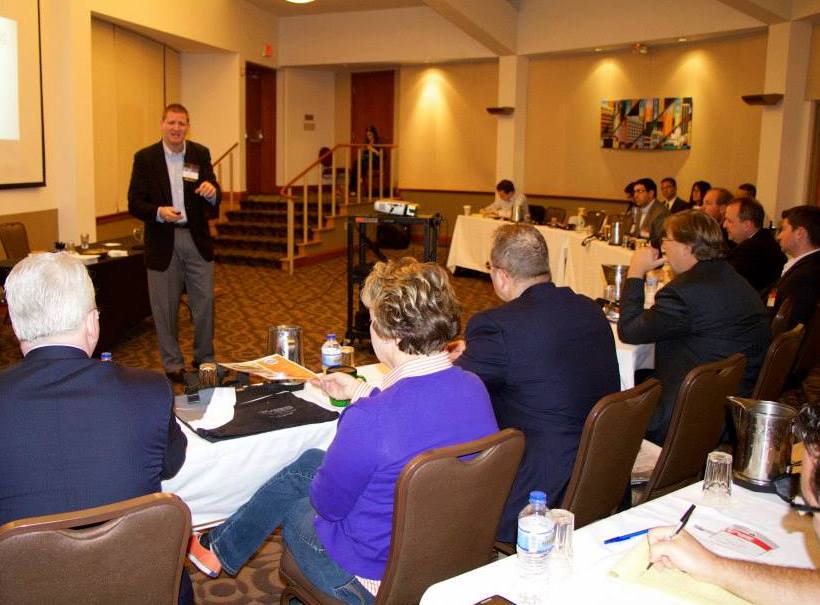
Ken Levinson speaking at past Ohio Association for Justice Convention

Ken Levinson will be speaking at the 2020 Virtual Annual Convention of the Ohio Association for Justice on August 13th.

Some of the most talented trial lawyers from across the United States will gather–virtually–to speak at this event hosted by Ohio trial lawyers. Levinson will be giving a presentation called “The Top Non-Law Books Trial Lawyers Need to Read,” which will include titles covering an array of subjects, from implicit bias, decision making, and strategy, to psychology and even the impact of Second City improvisation.

“I love sharing my favorite non-law books that can help trial lawyers,” Levinson said, explaining that he is also happy the convention has been open to “new and non-traditional presentations.”

“They were just so generous and open to letting me take this topic about non-legal books and run with it, and I can’t wait,” he said.

Other speeches given will include “Fun with Shrinks: Psychological Evidence in Personal Injury” by Jonathan Karon, “Hollywood Ethics: Do They Ever Get it Right?” by Charles Kettlewell,” and “Know When to Hold ‘Em–Know When to Shred ‘Em–Don’t Gamble with Client Files” by Gretchen Mote. Mote is the Director of Loss Prevention at Ohio Bar Liability Insurance Company, and Joseph Caliguiri, who will be presenting “Ethics and the Practice of Law: What Would You Do for $357?” is Disciplinary Counsel at the Supreme Court of Ohio.

With this year’s annual convention being virtual for the first time, Levinson said there are both pros and cons to the new set-up.

“It will certainly be more challenging with a virtual conference and less in-person interaction,” he said, “but a positive is that since attorneys don’t have to travel, we can have more attendees.”

There were also be a safety session dedicated to trucking during the convention, with presentations including “Strategies to Maximizing the Catastrophic Truck Case” by Peter Kestner, and “Accident Reconstruction in Trucking Cases: Initial Perception, Actual Perception, and Reaction,” by James Crawford. 

“I’m teaching other lawyers that do what I do how to better represent their clients,” Levinson continued. “The key is that we’re all in this together in order to be better for our clients.”

The plenary speaker highlight will be “Hidden Damages That Can Add Millions to Your Cases” by Steven Gursten.

The event will be hosted on Zoom from August 12th to the 14th, and qualifies for half of necessary biennial CLEs while giving attendees opportunities to network with plaintiff’s attorneys from around the country.

For information on registering, please click here.
Ken Levinson Discusses Business Marketing and Growth Strategies at ProVisors Presentation

August 11, 2020 by Levinson and Stefani Leave a Comment

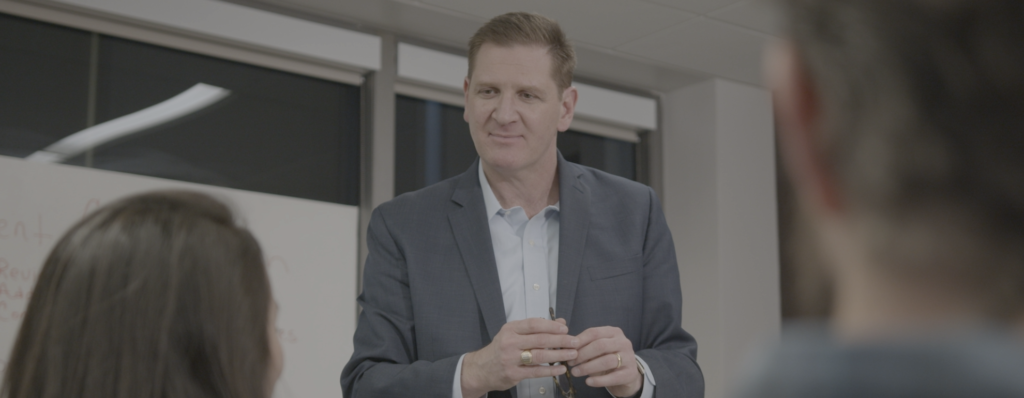
On August 14th, Ken Levinson will be giving a presentation for ProVisors, titled “Supercharging Marketing and Business Development Efforts in the COVID Era.”

ProVisors is a networking organization of advisors that aims to accelerate brand and referral network growth in order for businesses and firms to reach their goals. ProVisors is a group of professionals, called ‘Trusted Advisors,’ who are thoroughly vetted before being invited to join the organization. Advisors help brands ensure they have solid networks of trustworthy professionals who can bring results that will surpass clients’ expectations.

Many of these professionals are attorneys, Levinson said, in addition to financial planners, consultants, bankers, and many others. In his presentation, Levinson will address important topics such as the ability to say positive during this time of pandemic and how to use “extra” time for productive planning, as well as to find new and creative ways to continue developing business strategies.

“For instance, I usually have lots of firm dinners and sporting events where we keep in touch with attorneys who we have relationships with,” Levinson said. “In my opinion, it’s all about trust-based relationships and being honest.”

Levinson said during the era of COVID-19, he has found new ways to stay connected with those in his network, utilizing video-chat technology to have virtual happy hours, wine tastings, and even movie nights.

These kinds of online meetings and social events “can be used by other businesses and a variety of law firms,” he said. ”It’s important to not let our practices wither, even in difficult times.”

The details of Levinson’s presentation will include: five specific actions firms should take to raise their profiles right now, a step-by-step guide to building a marketing infrastructure for sustainable client and prospect outreach, tips for one-on-one networking strategies during the pandemic, creative ways to make connections on video calls and conferences, ideas for standing out when you are communicating virtually, and guidance on distributing compelling and original content that is easily digestible with everything going on today.

Also contributing to the presentation will be Jocelyn Brumbaugh of The Brumbaugh Group, which gives marketing strategy techniques for boutique law firms, as well as some of the most-renowned law firms across the globe. Brumbaugh has led law firm communication efforts for many years, including those of Baker McKenzie and Foley & Lardner. She was also Citadel’s vice president of communications.

Sammy Azzouz will bring another perspective to the event as the founder of personal finance blog, The Boston Advisor. Azzouz is also President of Heritage Financial Services and has over two decades of financial advising experience.

“This shows that a variety of ideas and people can offer universal advice to help your business,” Levinson said.

COVID-19 Brings Big Changes to Travel Safety and Tourism in America

August 10, 2020 by Levinson and Stefani Leave a Comment

Traffic and safety numbers and trends have seen many changes due to shelter-in-place orders since the beginning of the COVID-19 outbreak.

According to Road Ecology Center at the University of California-Davis’ co-director, Fraser Shilling, traffic volumes have seen a sharp decline since stay-at-home mandates were implemented. Traffic has decreased nearly 80% since March. In California, numbers are only now starting to move back toward any normalcy.

Other counties throughout the country have seen varying effects. In San Francisco, miles traveled per day declined quickly when the Bay Area issued its shelter-in-place order in March–those numbers are still notably low. In Kern county and Siskiyou county, miles traveled also decreased significantly but have since begun to slowly return to normal levels.

Throughout the rest of California, locals saw fewer crashes and highly-improved air quality. Sacramento regional hospitals had a 38% reduction in vehicle-related injuries as well as a 46% reduction in pedestrian and cyclist-related injuries.

When Virginia’s state of emergency was announced in March, traffic volumes decreased rapidly, as well. According to data and system analysis manager for The Virginia Department of Transportation, Sanhita Lahiri, traffic numbers dropped steeply in the northern region of the state, but did not decline nearly as much in Lynchburg–an area where numbers began to increase again much sooner than most of the state.

However, Lahiri said she sees commercial motor vehicle traffic staying the most consistent of any vehicles on the road.

“After [the emergency declaration], the decline kept on happening until it reached a trough around mid-April and then gently started ticking up,” said Lahiri. “The trucks kept continuing because of all the deliveries happening around the state. Truck traffic took some time to go down, and then it didn’t go [down as much] as the rest of the vehicles. It’s creeping back up.”

North Carolina also experienced a major decrease in crashes. The state saw a sharp decline in multi-vehicle crashes–70%, to be exact–between March and April. The state also had a 30% decrease in single-vehicle crashes throughout the same time period., according to North Carolina Department of Transportation’s traffic safety project engineer, Daniel Carter.

“For North Carolina, that has been a significant impact for NDOT across the board,” explained Carter. “That has been a very serious hit to our revenue. The drop-off in miles traveled and the drop-off in the fuel tax revenue is hitting us pretty hard.”

Another serious revenue hit? Tourism.

Overall travel spending throughout the country has been predicted to drop by 45% by the end of 2020. Domestic travel is expected to decrease by 40%–from $972 billion in 2019 to $583 billion in 2020. For international inbound spending, numbers are predicted to drop by 75%–from $155 billion to just $39 billion.

U.S. Travel is calling this The Great Travel Depression. With an economy in recession, the travel industry as a whole is experiencing its own depression. Travel industry unemployment is up by 51%, which is double the unemployment rate of the heaviest-hit year during the Great Depression.

Although the travel economy throughout the United States saw progressive expansion in mid-June, it is still 55% below levels of the same time period in 2019. Overall, the COVID-19 crisis has brought $250 billion in cumulative losses thus far.

States without large metropolitan centers, like Alabama and Mississippi, saw travel economy improvements in late June, but other states saw further decline, like New York. Hawaii, Massachusetts, and the District of Columbia, which had overall declines of more than 70%. 

Additionally, the extremely low level of travel spending has cost $32 billion in federal, state, and local tax revenue losses.

Destinations Analysts has found that a major factor in the continuation of travel decline is rooted in Americans’ perceptions of travel activity safety, which has worsened over the end of June. Many business and leisure travelers have completely changed their readiness to travel–which had started to rise just a few weeks prior.

Many are also not ready for tourists to enter their towns–57% of survey respondents said they did not want local visitors in their communities due to a lack of pandemic-related etiquette. Those not wanting any new visitors generally stated that they were less satisfied with the behavior of businesses and residents in their areas while the economy has begun to reopen.

Democrats Unveil $494 Billion Economy-Boosting Transport Bill

August 9, 2020 by Levinson and Stefani Leave a Comment

A new five-year bill has been unveiled by House Democrats on the House Transportation and Infrastructure Committee, a $494 billion measure to boost safety and funding for commuter and freight programs.

This legislation aims to update the FAST Act 2015 highway law that is set to expire in fall of this year. The bill will help enhance highway and transit program fundings and will also offer $4.6 billion for the Federal Motor Carrier Safety Administration.

It will also work to aid areas facing huge obstacles from the COVID-19 pandemic as well as address issues at hand in relation to climate change. According to the committee’s summary of the bill, the new legislation will require the Department of Transportation to create measures reducing greenhouse gas emissions with specific goals in place for each state to meet. To help states reach these goals, the bill will provide them with $8.35 billion; states with sub-par performances will need to invest 10 percent of their federal surface transportation funds in additional emission-lowering efforts.

“The bulk of our nation’s infrastructure–our roads, bridges, public transit, and rail systems, the things that hundreds of millions of American families and businesses rely on every single day–is not only badly outdated, [but] in may places it’s downright dangerous and holding our economy back,” said Peter DeFazio, committee Chairman. “Yet, for decades, Congress has repeatedly ignored the calls for an overhaul and instead simply poured money into short-term patches.”

These actions have led to an entirely outdated system, DeFazio continued. “We’re still running our economy on an inefficient, 1950s-era system that costs Americans increasingly more time and money while making the transportation sector the nation’s biggest source of carbon pollution.”

$6.25 billion from the bill will be funnelled into resilient infrastructure designed to withstand extreme weather as a result of climate change. States will need to maintain infrastructure vulnerability assessments to properly allocate these investments.

$350 million in annual grants will also pay for electric vehicle charging systems and hydrogen fueling stations.

To help with those struggling from coronavirus effects, the bill will provide $83.1 billion in the 2021 fiscal year to aid local transportation agencies that have dealt with major financial setbacks. The bill will also temporarily end state-federal matching, so all federal funds provided in 2021 will be offered at 100 percent federal share. State and local governments will also be able to utilize $22 billion for operating expenses and employee salaries.

In regards to trucking, $250 million will be allocated toward truck parking facility enhancement as well as for motor carrier safety data display prioritization by the secretary of the U.S. Department of Education.

The bill will also direct the DOT to delay hours-of-service changes until a new comprehensive review of waivers for commercial drivers is in place. In this review, state enforcement agencies would need to provide consultation on analysis of both safety impact and driver impact within the rule’s updates. These findings must also appear in the Federal Register within 18 months, with allowance of public comment and a comprehensive report issued to Congress. All details of the report will need to be displayed on the department’s website.

This hours-of-service rule update takes effect in September, and will bring more flexibility to truck drivers’ schedules, allowing truckers to take necessary breaks with “on-duty, not driving” statuses as opposed to “off-duty” statuses. The rule change also “expands the short-haul exception to 150 air-miles and allows a 14-hour work shift to take place as part of the exception, [and] expands the driving window during adverse driving conditions by up to an additional two hours,” according to the Federal Register.

The bill will provide $319 billion for the Federal Highway Administration’s federal-aid highway program. $5.3 will be provided to the National Highway Traffic Safety Administration.

The American Trucking Associations has supported the measure, and ATA’s president, Chris Spear, explained that he believed the bill “contains significant investment in our country’s roads and bridges.” DeFazio agreed, saying the legislation is a “transformational bill that will catapult our country into a new era of how we plan, build, and improve U.S. infrastructure.

American Road and Transportation Builders Association chairman, Steve McGough, echoes these sentiments, saying infrastructure investments will lead to major economic boosts. The association has often been urging Congress to push forward large-scale infrastructure funding measures.

“Without the infrastructure built, maintained, and managed by the nation’s transportation construction industry, virtually all of the major industry sectors that comprise the U.S. economy–and the American jobs they sustain–would not exist or could not efficiently and profitably function,” McGough said.

Driver Shortage Ends as Recession Hits, But is Likely to Return

August 8, 2020 by Levinson and Stefani Leave a Comment

Earlier in the pandemic, many were worried about the continuation of America’s truck driver shortage, especially as the health crisis drove up the demand for essential product delivery significantly. As expected, the United States initially saw an impact on timely product shipments to fulfillment centers and for last-mile deliveries.

As recently as April, shoppers were in a “necessity mindset” in regards to food, drink, and tobacco products, which showed an 85 percent year-over-year increase. The number of total online orders was up by 21% percent. Sporting goods was up 86 percent, toys and games–60 percent. 

Industry experts were saying last-mile delivery was hit hard by non-licensed industry entrants, as well as older drivers who feared contracting COVID-19 on the job. As big-rig driving requires a CDL, the lack of trained drivers available to hit the roads was hurting the extremely necessary replenishment of fulfillment centers as demand continued to rise.

But now, with a sharp decline in the health of the American economy, the highly-scrutinized truck driver shortage is over–for the time being. With the country’s recession well under way, the amount of freight needing to be hauled within multiple trucking sectors has heavily decreased.

Before the coronavirus was at the forefront of everyone’s minds, the American Trucking Associations claimed the trucking industry was about 60,000 drivers short due to retirements out-pacing the entrance of sufficient new drivers into the industry. 

While these statistics still hold true, the country’s current economic climate has brought an even larger impact to the trucking industry as a whole.

“The fundamentals of why we had a driver shortage did not go away,” said Bob Costello, Chief Economist for ATA. “Demographic issues, age, gender, lifestyle issues [remain]. But, for the moment, what has changed is [that] the demand side of the equation has fallen significantly.”

Although some areas of trucking, such as grocery store restocking and medical supply delivery, have continued going strong, others have not. Flatbed and tanker operators have struggled with a large drop in overall demand.

According to a recent DAT Truckload Volume Index, refrigerated, dry van, and flatbed loads hauled by truckload carriers dropped 19% in March and 8% in April on a year-over-year basis.

One major issue that was originally of major concern was the closing of State Driver licensing Agencies. With the supply chain relying on new commercial truck drivers, and the trucking industry “accountable for moving 71 percent of all freight across the country,” these closures were detrimental at the beginning of the pandemic, said the CVTA.

These shut-downs left “many future drivers unable to obtain commercial learner’s permits and commercial driver’s licenses,” said CVTA president, Don Lefeve. “Abruptly halting the process of getting 25,000 to 40,000 new truck drivers trained, licensed, and on the road impacts a number of significant industries and the nation’s supply chain.”

Although the current need for new truckers has declined, there is still the obstacle of major changes in training for those who are entering the industry, Lefeve explained. 

“You can’t have that many people in the truck anymore,” he said of social distancing guidelines in regards to training instruction. “We will not be able to ramp back up to full capacity because we have to train under the Centers for Disease Control guidelines, social distancing, [and] wearing masks, which limits the number of students you can have truck at a time. It’s going to be a slow, hard, slog.”

Lefeve believes the number of industry-entrant drivers obtaining their CDLs will drop by 40% in 2020.

Luckily, training has been impacted by new technology, such as simulated driving systems, becoming mainstream in the process. “It’s an option that more and more schools are looking toward,” Lefeve explained. “There’s no substitute for getting behind the wheel and getting comfortable in the cab, but simulators are a fantastic way to aid in training.”

In regards to those who are attempting to find work as a truck driver, those who are motivated and experienced–and who have solid safety records–will have a much better chance at finding work, said DriverReach CEO, Jeremy Reymer.

“Any of the truck drivers that are unemployed, let go, furloughed…they’re going to find employment. There is employment out there,” he said. “But, I think companies are more selective now. If you’ve got a good safety record and a good attitude, you’ll be fine.”

Although the demand for drivers is currently lower than usual, Costello says the shortage will return as soon as the economy starts healing.

“When the economy gets back, I fully expect the driver shortage to come back, maybe even worse than before,” he said. “We don’t know how many people will take this opportunity for people to leave the industry.”

Positive Changes for Trucking Amid the Pandemic

August 7, 2020 by Levinson and Stefani Leave a Comment

In the midst of the coronavirus pandemic, trucking companies have been looking for ways to adapt and innovate to the changes the industry has faced.

In a recent survey by the American Transportation Research Institute and the Owner Operators Independent Drivers Association, data showed that about 80% of survey respondents, who were either small fleets or independent owner-operators, did not have a business plan ready for the major changes brought on by COVID-19.

“I think going forward, it would behoove everyone in the industry to think about what lessons we learned and how can we document that in our research and in [trucking] operation,” said ATRI president and COO, Rebecca Brewster. “How can we make sure, going forward, [that] this has less of an impact on us as an industry and as we service the nation’s needs?”

At the early June WorkHound webinar regarding long-term transportation changes amid the current health crisis, Brewster also added that a positive change for ATRI has been the “tremendous amounts of data” benefiting the industry as it progresses.

For some trucking companies, virtual on-boarding processes and paperless driver bill of ladings have lowered the need for in-person interactions so that employees and truckers can continue social distancing. Bay & Bay Transportation‘s director of operations, Jackie Giefer, said these changes are going to become a permanent part of her company. She also said she wants light to continue being shone on safer truck driver parking throughout the country following the protocols put in place from this pandemic.

“Our company has probably gone through more change over the past two months than we probably ever have,” said Frank Hurst, president of Roadrunner Freight. “We deployed technology to allow our folks to work from home. We reorganized our entire sales team during this process, as well. We really went from a customer-facing force to a virtual sales force in a matter of days.”

Permanent at-home work situations seem to be growing across many companies. 

“Many things have changed for us,” said U.S. Xpress chief people officer, Amanda Thompson. “The biggest change is that today, our office staff is almost entirely operating from home. U.S. Xpress has moved from less than 1% of office employees working from home to more than 95% of office employees working from home. This was put in place in an extremely short period of time.”

U.S. Xpress has recently implemented methods of working with drivers to overcome pandemic-related obstacles.

“We are also increasing our use of technology to help support our drivers who clearly cannot work from home,” Thompson continued. “We have added new features to our in-cab technology, including visibility of roughly 40,000 tractor-trailer parking locations.” The company also added a feature for in-cab devices to locate grocery stores so drivers can find meals more easily.

The company has also deployed safety-centric tools for delivery drivers, said Thompson.

“We’ve worked to make the delivery process as frictionless as possible for [drivers] by attempting to digitize forms for them and our dedicated accounts. This builds on our efforts to streamline and improve efficiencies for both our drivers and customers,” she said.

Although proving difficult, this particular time is one of exciting, positive change, said chairman and CEO of TransLand, Mark Walker.

“Out of every one of these crisis situations comes wonderful opportunities for innovation, and we are seeing that across the board,” he explained. “The words ‘agility’ and ‘resiliency’ come to mind. We had to turn on a dime. All of a sudden, we had more employees capable of working from home. In two weeks’ time, we went from having our on-call people able to work from home to having virtually 100% of our office staff able to work from home.”

For Bay & Bay, company culture has also seen a positive boost, and Giefer says the company’s staff has actually become closer than ever.

“Our drivers are invaluable, and they are leaning on us every day now,” said Giefer. “They don’t get to sit and chat in truck stops with one another and share their experiences; they’re staying in the trucks. Now, they are calling us and telling us what’s going on out there. We are really staying in touch with our drivers. It has really pulled us all together as one big family.”

More positive outcomes, according to Brewster, are that the entire country has been focusing on the value of truck drivers, and that less detention time, and better overall treatment for truckers, have come to the forefront.

Last-mile delivery is also likely to become a huge part of the supply chain, as customers rely on receiving goods in a timely manner–which will give a boost to manufacturers, distributors, and the rest of the supply chain. The Paycheck Protection Plan has become a “tremendous safety net that helped alleviate a lot of anxiety and fear” for smaller businesses, according to TransLand’s Walker.

  • « Go to Previous Page
  • Page 1
  • Interim pages omitted …
  • Page 66
  • Page 67
  • Page 68
  • Page 69
  • Page 70
  • Interim pages omitted …
  • Page 138
  • Go to Next Page »

Levinson and Stefani Injury Lawyers in Chicago / Attorney Advertising