• Skip to main content

Levinson and Stefani Injury Lawyers

Client-first legal representation for injury victims. Injured? Free Consultation:

(312) 376-3812

  • Home
  • About Us
    • Attorneys
      • Ken Levinson
      • Jay Stefani
      • Vanessa A. Gebka
    • Practice Areas
      • Truck Crashes
      • Bus Collisions
      • Auto Accidents
      • Child Injuries
  • Firm News
  • Library
    • Articles
    • Cases
    • Law
    • Video
  • Blog
  • For Lawyers
    • Focus Groups
  • Free Case Review

Levinson and Stefani

Outrider Startup Raises $53 Million to Automate Trucking Yards

March 26, 2020 by Levinson and Stefani Leave a Comment

Outrider, a startup tech company formerly known as Azevtec, rose to prominence this month with its announcement of having raised $53 million for its autonomous trucking yard operations system.

The funding will work toward aiding both warehouses and logistic hubs with their outdoor vehicle operations, while also helping distribution yards to move freight-heavy semi-trailers efficiently between warehouses and public roads. Currently, methods around yard operations are hazardous, the company said.

“While there’s been lots of automation in other aspects of the supply chain, what happens in yard operations is almost entirely manual and inefficient,” said CEO and founder of Outrider, Andrew Smith. “This means there is congestion when over-the-road trucks are coming to drop off trailers or containers into a yard. There are misplaced trailers that can cause all sorts of issues within the supply chain. Equipment gets damaged. So, we are laser-focused on autonomous yard operations and the movement of that freight.”

The new funding came through Series A financing–a series of investments for private startups showing potential and progress in their efforts.

“The important thing to understand about our system is that we don’t just automate the truck,” Smith continued. “We automate the entire yard. What this means is, we think about what are those components that come together that allow one person to dramatically increase the safety and productivity of the yard, as opposed to having lots of people running around doing those things.”

Right now, with around 50,000 yard trucks across the nation handling freight container and trailer transfer from warehouses or distribution center trucks, Outrider aims at automating these yard trucks through a new electric vehicle equipped with Level 4 autonomy features. This goal will potentially improve overall safety within distribution center yards.

Outrider is looking to automate processes such as:

-Moving trailers around yards

-Transporting trailers to and from loading docs

-Hitching and unhitching trailers

-Connecting and disconnecting brake lines

-Monitoring trailer locations

This new system will work to “deliver yards that are more efficient, safer, and more sustainable,” the company said.

According to Smith, the system is comprised of three components. First, a web-based interface that lets customers use a dashboard to move vehicles throughout the yard; second, a modular site infrastructure allowing vehicles to maneuver easily around workers; and third, using software, robotics, and sensors on a base electric truck platform to automate the vehicles. 

The software is easily able to be integrated with current warehouses and yard management systems, he explained further.

As many other trucking industry companies work to automate warehouse operations and over-the-road trucks, Outrider said it has found the opportunity to bring more automation to the logistics yard, which is connecting factor between those processes.

“Yards are dangerous environments–essentially, anywhere you have people interacting with 80,000-pound pieces of equipment, operating in all weather conditions during all hours of the day [is dangerous],” said Smith. “Unfortunately, yard accidents are quite frequent, so safety is core to everything we do.”

To reduce equipment damage and accidents as trailers move throughout fast-past work environments, Outrider is developing new yard safety cases with customers and outside experts.

With Outrider, “people inside the warehouse can communicate safely with the autonomous truck to limit how those vehicles get pulled away from the warehouse doors,” Smith said about one of the most common and hazardous activities in a yard. Outrider’s system also automates how drivers connect and disconnect air lines on a trailer, which they typically have to do manually.

The company, based out of Golden, Colorado, has impressed investors with its 75 employees, 50 of whom focus exclusively on distribution yard automation. 

“We consider hundreds of investment opportunities in the logistics space every year,” said 8VC founding partner, Jake Medwell. “Our decision to be an early investor in Outrider was an easy one. Andrew’s vision and plan for the industry are highly compelling, and he’s mobilized an unmatched team to execute.”

As automated technology has industry workers hoping for large economic wins, it still brings worry regarding displaced workers. Conversely, Smith said Outrider is designed to allow workers more time for more important tasks.

“We, as a company, are focused on thinking about what is the responsible deployment of autonomous technology,” he said. “For all the cases we are working on with our customers, there is little-to-no direct job loss for the employment of these systems. Yard truck driving is a repetitive and hazardous task where you see high levels of turnover.”

People Still Need Food and Supplies – Truck Drivers are Essential and We Need to Keep Them Safe Too

March 24, 2020 by Levinson and Stefani Leave a Comment

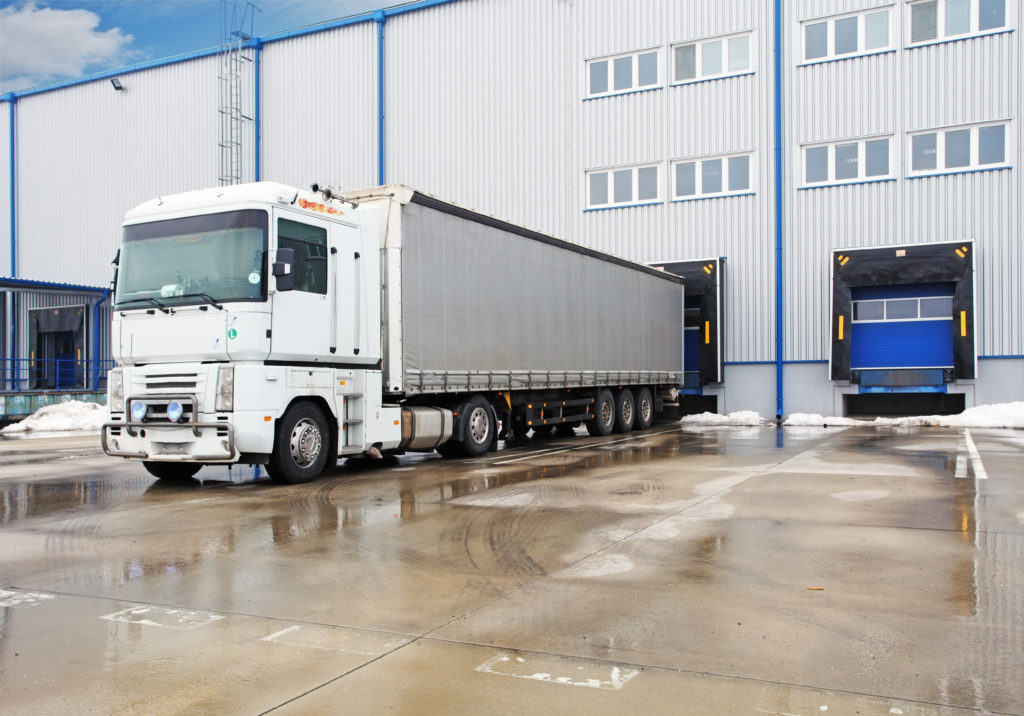
Many store shelves have been empty with retailers selling out of essentials as people are legitimately concerned over the spread of COVID-19, commonly referred to as coronavirus. While many people are sheltering in place at home, our economy continues to rely on the trucking industry to transport goods wherever they need to go.

Some states have restricted non-emergency travel and imposed curfews. The safety and health of our communities are, of course, foremost on everyone’s minds. Yet, we still need things to get by. This pandemic has brought on a near shutdown of the American economy and, as I write this, Congress is hopefully finishing negotiations over the proposed stimulus package aimed at propping up businesses and protecting household’s savings accounts, as well as people just managing to get by. 

Truck drivers and transportation companies play a vital role in keeping grocery stores stocked and allowing hospitals to replenish supplies. Most every item on a store shelf from produce to paper towels got there on a truck. It is essential that processional truck drivers are able to do their jobs. It won’t be the same as before, of course. Closed restaurants and truck stops will make it hard for drivers to find places to stop to rest or even wash their hands. This is where elected officials in every state need to step in and make sure there are adequate facilities available to drivers and that proper precautions are taken to prevent them from getting sick. 

Although the transportation of essential good needs to continue as uninterrupted as possible, every effort should be taken by trucking companies and government to allow drivers the ability to rest when needed and when the law requires. For instance, federal and state laws prohibit trucks from parking on highway shoulders overnight. States that have taken action to limit business operation and travel, must make accommodations for drivers making cross-country trips that require overnight stops. 

The Federal Motor Carrier Safety Administration (FMCSA) website contains information regarding emergency declarations, waivers, exemptions, and permits for drivers. The site continues information about which states have issued emergency declarations and some of the regulatory information associated with that. In addition to check with the FMCSA, drivers and transport companies should check each state’s website where they intend to travel to make sure they are following all local rules as well. FMCSA has also set up a toll free hotline for questions at 1-877-831-2250.

This pandemic is unprecedented. We will likely continue to deal with not only the health and medical emergency resulting from the spread of COVID-19, but also the economic ramifications, as well as continued restrictions on work and travel. As we move forward, we have to understand that we are all in this together. We should continue to do everything we can to try and keep people from getting sick, but we also need to keep I mind that although we are dealing with an extraordinary situation, we must continue to focus on taking precautions in our normal activity, including getting around from place to place when needed, and moving food and goods where they need to go. 

Staying healthy from the threat of infections is not our only concern. With the spread of this virus a hospital stay resulting from a car crash could increase someone’s risk of coming into contact with a person seeking treatment for the virus. All the more reason for transportation companies and government to work together to make sure drivers are able to follow safety rules and get the rest they need as well as the facilities they need to be able to do their essential jobs properly. 

5 of 8 Suspects Plead Guilty to Staged Truck Crashes

March 24, 2020 by Levinson and Stefani Leave a Comment

Five out of eight defendants in an investigation regarding staged truck accidents in New Orleans–which brought fraudulent lawsuits–pleaded guilty in late January, an act which brought further scrutiny upon the remaining defendants awaiting their trials.

Those three, including the alleged ringleader, were all involved in the money fraud scheme, but were not part of the plea bargains. However, one passed away in 2019.

Of this group, two drivers and three passengers in two separate accidents involving 18-wheelers plead guilty before US. District Judge Eldon Fallon to both conspiracy and wire fraud.

In the plea agreements filed in the U.S. court in the Eastern District of New Orleans, four of the defendants confessed–Lucinda Thomas, 63; Mary Wade, 55; Judy Williams, 59; and Dashontae Young, 25, all from Houma. These four left Houma and ended up in an accident in June 2017 near the Danziger Bridge.

Larry Williams, 46, a fifth defendant from New Orleans, admitted he was also a part of a staged accident six days later with a truck in the same area.

Additionally, another two individuals named in the indictment–Damian Lebeaud and Mario Soloman–are currently under federal investigation for their involvement. Two attorneys are also under investigation, according to court documents.

Labeaud was described by federal investigators as conspiring directly with “Attorney A” before and after the fraudulent accidents. Both incidents in the indictment were followed by lawsuits filed by attorney Daniel Patrick Keating.

Group members filed lawsuits after the stagings occured in order to “defraud and obtain money and property from insurance and trucking companies.” Some were seeking up to $1 million in damages.

A local news station’s investigative series dubbed “Highway Robbery” found that Attorney A is in fact Keating–based on his phone number being the one cited in court filings and by federal authorities as the one Labeaud would call regarding the accidents.

“Attorney A and Labeaud met at a restaurant in New Orleans,” said the U.S. Attorney’s Office. “During their meeting, Attorney A and Labeaud agreed that Attorney A would pay Labeaud $1,000 per passenger for staged and legitimate accidents with tractor-trailers.”

In addition, the indictment showed that Thomas had undergone neck surgery because “Attorney A” said she “would get more money through the lawsuit if she had the surgery.”

In the pleas filed on January 30th in federal court, the first staged incident is cited as occurring on June 6th, 2017, followed by a second on June 12, 2017. Both accidents took place in New Orleans, and some of the scammers said they were treated by doctors “known to the grand jury at the direction of one of the attorneys.”

According to the plea agreements, those pleading guilty faced a $250,000 fine and up to five years in prison.

Covenant Transportation Group had a truck involved in one of the staged accidents. The group’s representation apparently spent months investigating the fraudulent incident, scouring cell phone and cell tower records, analyzing dash cam and police body cam videos, and researching other documents that they ended up releasing to the FBI.

Over three months, the transport company’s team worked to find substantial evidence, eventually gathering enough to file documents in the civil suits claiming fraudulent activity.

This isn’t the only incident of its kind, either. Throughout 2019, New Orleans trucking fleets were warned about multiple suspicious incidents taking place after a notable “fake accident” lawsuit against Whitestone Transportation out of Mississippi.

In a series of at least 30 different suspicious accident cases, many similarities have been noticed. Almost all of these staged accidents take place around New Orleans, include multiple passengers in a claimant vehicle, involve sideswipe allegations against commercial vehicle trailers, have minimal damage to the claimant vehicle, have little or no damage to the trailer, and involve a commercial vehicle driver who either denies the crash or is unaware of it.

Regarding the most recent indictment, the U.S. Attorney’s office wrote in a press release: “Attorney A knew Labeaud was staging an accident and Attorney A paid Labeaud for at least 40 illegally staged automobile accidents. In addition, Labeaud and Attorney A would discuss the staging of accidents before they happened.”

Navistar Engine Lawsuit Approved at $135M

March 23, 2020 by Levinson and Stefani Leave a Comment

CHICAGO – A $135 million settlement will now be paid to resolve claims that Navistar sold defective truck engines knowingly.

A federal judge in the city granted final approval of the settlement last month between Navistar Inc. and a court-certified class of around 45,000 plaintiffs.

This settlement benefits truck drivers, particularly, who leased or purchased a MaxxForce 11- or 13-liter engine-equipped vehicle from between the 2011 and 2014 model years. These engines were certified to meet EPA 2010 emissions standards without selective catalytic reduction technology.

This settlement has been one of the the most prominent legal battles for Navistar, a company that builds international trucks. The issue originates from the leasing and sale of over 66,000 trucks with engines equipped with defective exhaust gas recirculation (EGR) systems–which are meant to control nitrogen oxide emissions.

Allegedly, the defect causes engines to heat up much more than similarly-made engines, which leads them to break down more easily.

The plaintiffs claimed that they would not have purchased the vehicles, or would have paid much less, should they have known about the potential defects ahead of time. Because of this, Class Members, along with the plaintiffs, argued that they had sustained financial injury.

When the settlement was made in May of 2019, U.S. District Court Judge Joan Gottschall rules that it was “fair, reasonable, and adequate.”

Lyndi MacMillan, director of business communications for Navistar, said the company looks at the settlement as a way to move forward. “Navistar is pleased with the court’s decision to approve the proposed $135 million class action settlement,” she said. “The settlement is a major step in helping us move past the MaxxForce 1-liter and 13-liter EGR engines issues in the U.S.”

According to the settlement, class members are able to select a “no questions asked” payment of up to $2,500 per truck, a $10,000 rebate off of the price of a new truck, or out-of-pocket costs per truck related to the EGR setup of up to $15,000 total. The agreement has set aside $85 million in cash with another $50 million for the rebate program.

Class Members must file a valid claim by May 11, 2020 to benefit from the settlement.

Who is eligible?

Any consumer who purchased or leased a 2011 to 2014 model year vehicle which used a MaxxForce 11- or 13-liter engine with specific certification meeting EPA 2010 emission standards without selective catalytic reduction tech can benefit from the settlement.

To see if their vehicle qualifies, consumers can check their VIN numbers.

What is the award?

Consumers can receive up to $2,500 in cash or up to $10,000 in rebates per affected vehicle. Additionally, Class Members will get a certain monetary amount for each month that they owned or leased the affected vehicle.

Limitations for the cash option:

-Model year 2011: $26.59 per month

-Model year 2012: $29.07 per month

-Model year 2013: $33.33 per month

-Model year 2014: $39.06 per month

Limitations for the rebate option:

-Model year 2011: $106.36 per month

-Model year 2012: $116.28 per month

-Model year 2013: $133.32 per month

-Model year 2014: $156.24 per month

There is an additional third option from which Class Members may be able to benefit if they choose to forego cash or rebates. The “Prove-Up” option allows Class Members to collect up to $15,000 in covered costs per vehicle owned or leased. These costs include repairing or replacing primary components, or repairing or replacing a secondary component that takes place within 30 days of the first.

The primary components include: the EGR Cooler and the EGR Valve. Secondary components include: the Lambda Sensor, Oxygen Sensor, Oil Centrifuge, Valve/Seat (Intake), Valve/Seat (exhaust). Valve Bridge, Cylinder Head (when accompanied by a Valve/Seat (Intake) and Valve Bridge repair), Turbochargers, Total Engine Replacement or Rebuild (with proven Turbochargers failure), Diesel Particulate Filter, and DOC/Pre-DOC.

In their court filings, the plaintiffs claimed that heavy-duty diesel engine manufacturers have worked to lower NOx emissions with EGR for years, and that all manufacturers, apart from Navistar, adopted selective catalytic reduction (SCR) to remove NOx from the exhaust after federal emission standards were lowered in 2010. 

According to the court documents, Navistar tried to use EGR alone to comply with the rules, but MaxxForce engines prevented the setup to function properly. Since then, Navistar has implemented a new series of SCR-equipped engines.

HOS Relief Issued as COVID-19 Brings Increase in Deliveries–What Does This Mean for Road Safety?

March 19, 2020 by Levinson and Stefani Leave a Comment

As the CoronaVirus outbreak keeps more and more people under lockdown in their homes, the amount of requested supply shipments and home deliveries skyrockets daily. Because of this, The Federal Motor Carrier Safety Administration has issued an expanded declaration of national emergency regarding hours-of-service regulation relief to truck drivers.

While it makes sense that timely shipments are more important now across the globe than ever–especially for emergency supplies–is this what’s safest for truckers and for other drivers on the road?

The expanded declaration by FMCSA aims to give flexibility to CMV (commercial motor vehicle) operations working through emergency efforts to meet the time-sensitive needs for:

  • Medical supplies and equipment, including those for the testing and treatment of COVID-19;
  • Supplies needed for community safety and sanitation, such as masks, hand sanitizer, gloves, soaps, and disinfectants;
  • Food, groceries, and paper products for rushed restocking of stores and distribution centers;
  • Immediate precursor raw materials, like paper, plastic, and alcohol that are required for essential items manufacturing;
  • Supplies and equipment needed to manage temporary housing and quarantines;
  • Persons designated by authorities for medical, quarantine and isolation purposes;
  • Persons needed to provide medical and emergency services; and/or
  • Fuel.

“Direct assistance terminates when a driver or commercial motor vehicle is used in interstate commerce to transport cargo or provide services that are not in support of emergency relief efforts related to the COVID-19 outbreaks or when the motor carrier dispatches a driver or commercial motor vehicle to another location to begin operations in commerce,” the declaration stated.

“Upon termination of direct assistance to emergency relief efforts related to the COVID-19 outbreaks, the motor carrier and driver are subject to the requirements of 49 CFR Parts 390 through 399, except that a driver may return empty to the motor carrier’s terminal or the driver’s normal work reporting location without complying with Parts 390 through 399.”

FMCSA also explained that this is the first time it has issued nationwide relief, an effort that follows President Donald Trump’s issuing of a national emergency declaration regarding CoronaVirus.

“The nation’s truck drivers are on the front lines of this effort and are critical to America’s supply chain,” said Elaine Chao, Secretary of Transportation

In addition, Amazon–the world’s largest online marketplace–announced that in response to COVID-19 it would hire 100,000 new employees, including drivers, to meet the demands of these heavy delivery requests.

While these are particularly difficult times, and it is important (sometimes vitally) for deliveries to be made in a timely manner, we have heard before why relaxing hours-of-service regulations can be detrimental for truckers and those with whom they share the road.

Still, the Trump Administration has been working to ease trucking regulations since long before the COVID-19 outbreak. Its hours-of-service flexibility proposal was presented last year, and plans to allow drivers to divide their 10-hour mandatory rest times into 5-5 or 6-4 hour splits, allowing them to have control over whether or not they are actually resting during that time.

Additionally, the proposal would extend potential driving time by two hours for truckers working during “inclement weather” or any other conditions with possible driving obstacles. It would also lengthen the maximum on-duty period from 12 to 14 hours.

Ken Levinson pointed out the problem with this approach, “It may seem like a good idea to ‘allow’ truckers extra time to make deliveries, but our clients who drive trucks for a living regularly tell us how driving in bad weather is exhausting. Because they have to focus more, they get tired faster. Doubling down by making them drive even more hours is a recipe for disaster.”

Those opposing the regulation changes point out that deaths from crashes involving big rigs hit a 10-year high in 2017, and many of those crashes are a result of truckers driving while fatigued.

The National Transportation Safety Board named that reduction of fatigue-related accidents on its “Most Wanted List” of safety improvements for 2019-2020. Additionally, the Truck Safety Coalition’s offshoot, Parents Against Tired Truckers, is working to prevent the regulation flexibility in order to keep young drivers safe from truckers driving while tired.

With more hours possible on the road with shorter rest times, it is inevitable that many truckers will be driving while fatigued, and therefore impaired. To be sure, with so many people staying home, there are likely fewer drivers on the roads, but tired truckers are still a danger to themselves and to other truck drivers.

“I wish more trucking companies were following Amazon’s lead,” said Jay Stefani. “We absolutely need important items delivered to people these days, but the answer is to hire more qualified truck drivers, not push already overworked truckers to exhaustion.”

With efforts like Amazon’s addition of thousands of new drivers, there will be an unprecedented amount of extra truckers on America’s roadways. Therefore, this may be the time when drivers will have to be more alert than ever.

American Intermodal Management Merges with FlexiVan, Becomes Leader in Marine Chassis Leasing

March 16, 2020 by Levinson and Stefani Leave a Comment

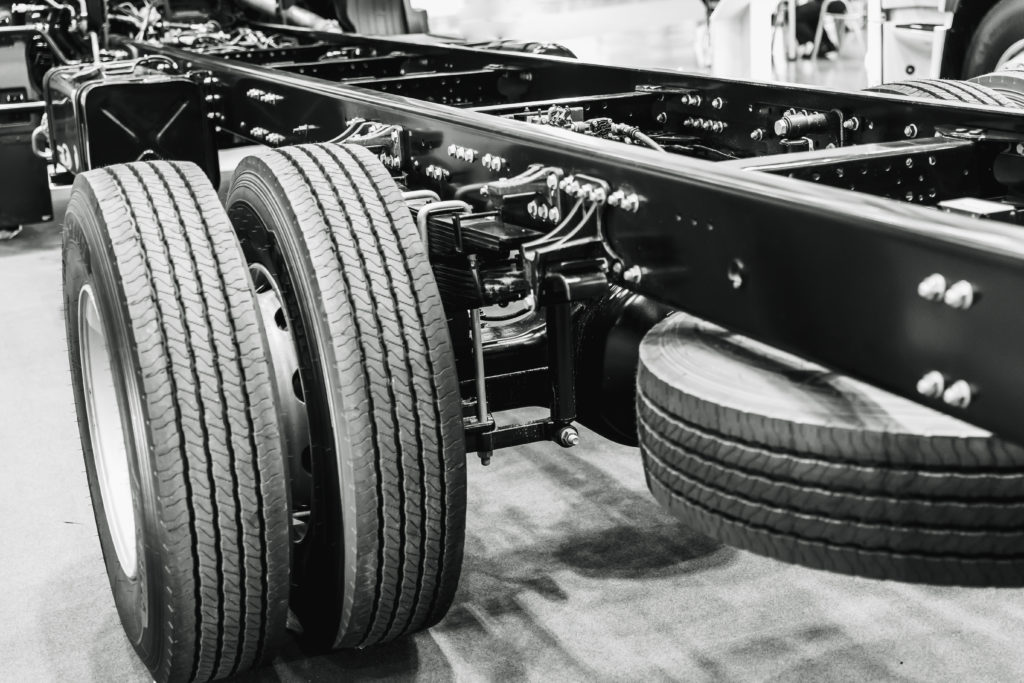
Car Truck Chassis Inside Body

MIAMI – U.S.-based marine chassis lessor, American Intermodal Management (AIM), along with portfolio company I Squared Capital, is now merging with FlexiVan Leasing, as announced January 27th. FlexiVan is owned by Castle & Cooke and is the third largest marine chassis provider in the country, with its 300 employees and over 120,000 chassis.

“I Squared Capital is expanding its global presence across the transportation and logistics value chain with approximately $2.2 billion of equity capital committed across North America, Europe, and Asia,” said AIM Board chairman and I Squared Capital Managing Partner, Adil Rahmathulla. “We are now a leader in trailer and chassis leasing across Europe, Canada, and the U.S. as well as the largest private owner of highways in India.”

AIM currently operates 12,500 chassis, and will reach a combined fleet of 137,500 with FlexiVan.

“This transaction combines FlexiVan’s 65 years of operating history, nationwide presence, and deep customer relationships with AIM’s fleet of new chassis, innovative technology. and data analytics to offer our customers more flexibility and great supply chain efficiency,” said AIM CEO and CEO of the new combined company, Ronald Widdows.

The business will continue to be called FlexiVan, a name originating from the mid-1950s when trucking executive Malcolm McLean helped to develop the first standardized intermodal shipping container.

As for AIM, the company was formed by I Squared in 2016 as a logistics platform, and has become a leading chassis lessor. AIM provides GPS-enabled services to other companies, shipping lines, and retailers throughout the country’s intermodal supply chain, and currently has the innovative technology options to work with FlexiVan’s relationships and deploy its tech-enabled model throughout the U.S.

“This is our fifth acquisition in the transport and logistics sector in the last six months, and [is] a key milestone as we expand our presence in the U.S. market,” explained Rahmathulla.

AIM is a young business and has many of the highly sought-after technologies trucking companies are searching for lately–such as LED brake lights, automatic braking systems, and radial tires. Each AIM chassis has a GPS sensor, an accelerometer that transits distance, speed, and direction, and a load sensor that can communicate when a container is mounted and dismounted.

As FlexiVan acquires AIM’s chassis fleet, it will no longer need to purchase thousands of new chassis from China International Marine Containers, the industry’s leading manufacturer. Importing from the overseas company brought up the issue of tariffs–which will no longer be an issue for FlexiVan, as its chassis from AIM will last for up to 25 years.

Additionally, until this announcement, AIM had been shut out of multiple terminals because it had not established relationships with ocean carriers and terminal operators–which control which chassis are used. Now, it should be welcomed at most ports.

“AIM as an upstart–they didn’t have any of those legacy relationships or contracts, and they were being essentially left out of some business,” said director of transportation consulting with IHS Markit, Paul Bingham. “That’s because their equipment wasn’t able to be used at some specific terminals. This deal breaks down the walls, at least for AIM getting onto the terminals where the acquired company has operations now, so it expands where their fleet can reach, and the merged company will have more opportunities.”

FlexiVan currently works with all major chassis pools, and has current agreements with many large container shipping companies, like OOCL and Ocean Network Express.

“The combination of AIM and FlexiVan will provide strong financial support to continue the upgrade of FlexiVan’s fleet, support significant investment in new assets, and fund ongoing development of innovative IT systems, all of which will allow us to deliver an industry-leading customer experience,” said Charlie Wellins, FlexiVan president.

However, Bingham said it is not guaranteed chassis customers will see an immediate significant change.

“I really don’t know if it is going to fundamentally revolutionize anything, because it’s still not moving the industry to where it’s the actual truckers owning the chassis, like it is in the rest of the world,” he explained. “The issues revolve, as they always have, around maintenance…This particular merger is a change of some of the leadership, but I’m not sure where it’s going to go in terms of management.”

  • « Go to Previous Page
  • Page 1
  • Interim pages omitted …
  • Page 77
  • Page 78
  • Page 79
  • Page 80
  • Page 81
  • Interim pages omitted …
  • Page 138
  • Go to Next Page »

Levinson and Stefani Injury Lawyers in Chicago / Attorney Advertising