• Skip to main content

Levinson and Stefani Injury Lawyers

Client-first legal representation for injury victims. Injured? Free Consultation:

(312) 376-3812

  • Home
  • About Us
    • Attorneys
      • Ken Levinson
      • Jay Stefani
      • Vanessa A. Gebka
    • Practice Areas
      • Truck Crashes
      • Bus Collisions
      • Auto Accidents
      • Child Injuries
  • Firm News
  • Library
    • Articles
    • Cases
    • Law
    • Video
  • Blog
  • For Lawyers
    • Focus Groups
  • Free Case Review

Blog

Transportation Industry Gearing Up As Hurricane Season Nears

July 13, 2021 by Levinson and Stefani Leave a Comment

Coastal states along the Atlantic have to begin preparing themselves for the hurricane season that comes with the summer months–and huge transportation companies in these locations are beginning to ready themselves for what could be potentially higher-than-average amounts of storm activity along the Gulf of Mexico and the Atlantic Coast.

For instance, Amazon.com Inc. has opened fulfillment centers in Atlanta that are currently serving as staging facilities for hurricane relief supplies and resources.

“Instead of us having to wait for disaster and ask the organizations what they need, and then procuring and packing them and then putting them on a plane, we’re doing all of that ahead of time,” said Amazon’s Global Accessory lead, Abe Diaz.

As of now, the company’s Atlanta fulfillment center is holding enough emergency supplies to fill up a 767 cargo airplane–around 500,000 emergency supplies–that will be sent out to the surrounding area when needed for relief efforts.

“Atlanta is going to be our storage hub where we have already bought, packed, and put on pallets the items we need to put on a plane or a truck to [take to] a disaster area, most likely [in the case of] a hurricane,” Diaz continued. “It usually took us a couple of days [to complete these efforts], and now we can do it in one.”

To be able to boost with their reach, Amazon has been collaborating with organizations like Direct Relief, the American Red Cross, the International Medical Corps, World Central Kitchen, Save the Children, and the International Federation of Red Cross and Red Crescent Societies. Because the city of Atlanta has two major north-south interstates running through its center and Interstate 20 and Interstate 285 running east-west (referred to as the Perimeter), Amazon chose this location for its supply center.

In addition, Atlanta is home to the always-bustling Hartsfield-Jackson International Airport, as well as many other trucking companies that can help with these relief efforts. Amazon has also expressed its intention to include more American cities in its natural disaster relief plans.

“Now, we have the items ready and we can put them wherever they need to be,” noted Diaz.

For UPS Inc., also based out of Atlanta, ensuring that all of its facility locations stay open during hurricanes is key in being able to focus on tropical storm relief efforts.

“We want to keep our facilities operating as long as we can and as [safely] as we can,” said UPS’ director of building and systems engineering, Rick Garcia. “When a hurricane comes along, the first thing you lose is power. We strategically place generators near our facilities, and it’s one of the main things we do. With generators, you need fuel, and we have fuel available to keep those generators running. Wherever we need those resources, we want to shift them as needed.”

Maersk, a global shipping company, is also alerting people to start gearing up for potentially hazardous summer storms. In fact, the company said over the last several years, tropical hurricanes have begun starting up earlier in the summer and have been occurring in increased amounts.

“With the global pressure seen on today’s supply chains, it is more important this year, perhaps than any in recent history, to plan ahead with suppliers and logistics service providers to put contingency plans in place as early as possible to mitigate the effects of seasonal climate risk,” explained the head of Maersk’s Special Projects and logistics branch, Rob Townley.

Maersk also plans to collaborate with groups like the Federal Emergency Management Agency in the case of natural disasters and seasonal storms, as well as with the Caribbean Disaster and Emergency Management Agency in order to help heavily-hit areas throughout the Caribbean nations to receive logistical support in regards to hurricanes and other major storms.

Luckily, weather forecasters are often able to track huge tropical storms at least a week in advance–a resource that has been incredibly helpful for many trucking companies to be able to more easily and quickly respond to these kinds of disasters.

Self-Driving Vehicle Bill Reintroduced in House of Reps

July 10, 2021 by Levinson and Stefani Leave a Comment

The U.S. House of Representatives is once again considering a bill that would boost autonomous vehicle access throughout the United States. The Safely Ensuring Lives Future Deployment and Research in Vehicle Evolution (SELF DRIVE) Act was recently introduced by Representative Bob Latta of Ohio and will work to implement federal standards that would help deploy autonomous vehicle service through a variety of industries and agencies.

In recent congressional sessions, Latta has brought up the importance of this potential legislation.

“Self-driving cars have the potential to reduce traffic accidents and deaths, increase mobility, and improve quality of life,” Latta said during the session, “Autonomous vehicle technology can protect millions of Americans, while at the same time, providing seniors and those living with disabilities a way to live their [lives] outside of their homes.”

To make this a viable option, Latta explained that a federal standard framework is the key.

“In order for the United States to lead on this cutting-edge technology, we need a framework that allows industry to innovate while ensuring high safety standards,” he continued. “I urge my colleagues in the House and Senate to work with me on this bill to better ensure that all Americans are safer while on the road and have increased access to mobility.”

In an effort to boost the development, testing, and implementation of autonomous vehicle technology, the National Highway Traffic Safety Administration has made it a priority to focus on this legislation. Luckily, the SELF DRIVE Act has, thanks to transportation policy advancement through Congress, been receiving strong backing from lawmakers throughout the country.

“Recent developments in autonomous vehicle technology have prompted the real need for a national [autonomous vehicle] standard to ensure passenger safety and incentivize continued investment in driverless capabilities,” explained Representative Fred Upton of Michigan. “As the auto capital of our nation, Michigan will play a pivotal role in deploying driverless vehicles and propelling our autonomous fleets into the future.”

Upton also urged Congress to finally implement a federal standard for this kind of technology.

“This critical technology requires a clear national standard, and I look forward to working with my colleagues to set up the necessary infrastructure to continue this important work,” he added.

The legislation’s backers have widely consisted of autonomous vehicle tech supporters throughout the industry, such as Ariel Wolf, who currently serves as General Counsel for the Self-Driving Coalition. Wolf noted the benefits of dedication from policymakers on this subject, and their “continued commitment to autonomous vehicles as a transformative technology that will dramatically improve safety, enhance mobility, and spur economic growth.”

Wolf said this kind of support will change the transportation industry for good–a change that has been long-needed.

“Federal policies that encourage AV development with clear federal and state roles while promoting and protecting American innovation can help to revolutionize how passengers and goods are transported,” he continued. “We encourage Congress to quickly provide a federal framework that can accelerate the deployment of AVs on U.S. roads.”

In fact, autonomous vehicle tech may be able to transform the United States’ entire mobility landscape as we know it, according to Senators Gary Peters of Michigan and John Thune of South Dakota (who co-authored recent autonomous vehicle-related Senate legislation). The tech could indeed change the ways in which drivers obtain connectivity resources, as well as overall freight and passenger corridor access and utilization.

“One of the most important opportunities we can seize is autonomous vehicle technologies,” said Senator Peters. “We know that autonomous vehicles save lives, since 90% of accidents are caused by human error. We know that these technologies are also rapidly emerging and are already impacting the workforce.”

To catch up with other tech-forward countries, America really needs to get on board with AV, he added.

“We know that our competitors on a global stage, especially China, are recognizing the benefits of these technologies,” he explained. “And let’s be clear–let’s be absolutely clear–these technologies are coming inevitably.”

Automated Braking Requirement Could Be in the Works for Big Rigs

July 9, 2021 by Levinson and Stefani Leave a Comment

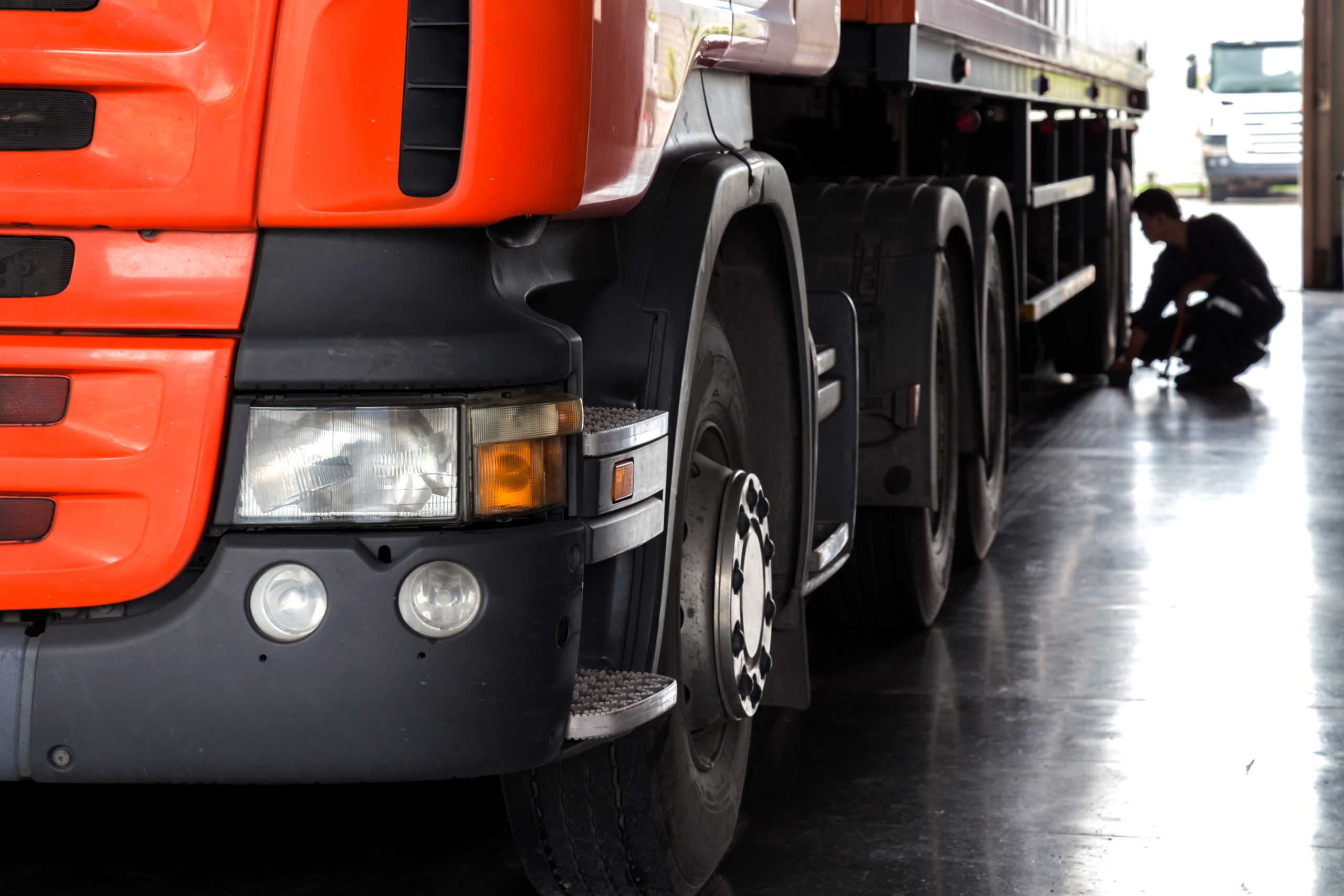
automobile mechanic checking truck in the garage, selective focus

A new proposal could be underway that would begin regulating automatic emergency braking system standards for heavy trucks and would likely require all big rigs to have this kind of technology implemented, according to the National Highway Traffic Safety Administration’s recent announcement. 

These plans would be put in place “over the next year and beyond,” said NHTSA in its mid-June release, which detailed its regulatory agenda for the coming months.

Automated braking systems or collision mitigation are technologies able to apply the brakes of a vehicle in a circumstance where a rear-end crash is probable and the driver has failed to brake or steer away. This is possible due to an alert triggered by the imminent danger through onboard forward-collision warning systems.

The agency is working to set forth a new NPRM on braking systems by April of 2022, following its petition for rule-making on automating braking systems in October of 2015. At that time, the proposal was unable to move forward while Trump was in office.

When the 2015 petition was initially approved by NHTSA, the agency noted that it had already been working on heavy vehicle forward collision avoidance research, as well as research into certain mitigation technologies, for a number of years.

The petition was submitted by groups like Road Safe America, the Center for Auto Safety, Advocates for Highway and Auto Safety and the Truck Safety Coalition. In its research, the agency studied via an ongoing production system field operational test, a driver-warning interface effectiveness evaluation, and first-generation system test track evaluations.

“Based on this research, the agency agrees with the petitioners that forward-collision avoidance and mitigation systems have the potential to save lives by preventing or reducing the severity of rear-end crashes,“ said NHTSA at the time of the petition.

The agency noted the potential to create safer roads–perhaps for the first time in several years–in its most recent announcement.

“Safety is the department’s North Star, and making our roads safer for all Americans is critical,” the agency explained. “The regulatory agenda reflects this–by proposing to make safety technologies like automatic emergency braking standard, to ensure better data collection for autonomous vehicle technology deployments to enable safe innovation, and to update our roadway design and operational practices for the first time in a decade.”

The agency has indeed been researching mitigation technology and forward-collision avoidance on big rigs for many years, the regulatory agenda added. These technologies include both automatic emergency braking system technology and forward-collision warning technology.

“We were excited because, within six months, [NHTSA] granted our petition,” said Road Safe America co-founder Steve Owings in regards to the petition of October 2015. “That was lightning speed for that organization. But, here we are, six years later.”

The NHTSA was put under pressure in early June to create a requirement for commercial motor vehicles to have speed-limiting technology implemented onboard that would include automatic emergency braking systems and set a truck’s maximum speed to 65 miles per hour or 70 miles per hour along with adaptive cruise control. The requirement comes from the Cullum Owings Large Truck Safe Operating Speed Act, named for a young man who was killed on the road when his vehicle was struck by a commercial truck operating on cruise control. The bipartisan act was introduced by Representatives Lucy McBath of Georgia and John Katko of New York, and has received backing from the American Trucking Associations.

Additionally, a new website was recently launched by the agency to streamline the process of providing it with whistleblower information for dealerships, part suppliers, and all motor vehicle manufacturer employees or contractors. Those wishing to share this kind of information with the agency can now find easier methods of doing so on the new webpage, which will help them understand how they should provide certain information and what information is actually important to disclose.

Because there is such an “important role whistleblowers can play in enhancing the safety of the nation’s roadways,” NHTSA explained that it has realized how necessary it is to finally make this system much more easily accessible.

Information About Truck Parking Needs Huge Boost, According to ATRI

July 7, 2021 by Levinson and Stefani Leave a Comment

According to recent research released by the American Transportation Research Institute, accuracy and thorough standardization will make or break efforts to help ease the current truck parking capacity challenges taking place throughout the United States.

The study, which focused on a survey of 1,103 truckers, analyzed perspectives from truck drivers themselves in regards to truck parking information system capabilities. The research also looked into data collected from cross-tabulates within a variety of trucker experience levels, age groups, and sectors. Additionally, the study analyzed how parking information systems are currently utilized by truck drivers and how these drivers perceive the ways in which parking availability data is released.

Of the survey’s participants, one-third noted that to help them find parking availability, they often use both message signs and trucking parking apps. However, ATRI explained that both of these methods have caveats and limitations in regards to quickly and easily finding parking can be. For example, with an app, a truck driver must typically be parked or pulled over to use it in order to find a parking spot due to federal regulations regarding using a cell phone while driving. As of now, many state departments of transportation are looking into boosted trucking parking initiatives that would likely use entrance and exit sensors to indicate when parking is available, among other technologies.

From state-to-state, though, many programs’ methods of collecting and releasing parking information varies, ATRI noted.

“Until we get an infrastructure bill that dramatically increases capacity, the next best thing we have are truck parking information system apps,” said Dan Murray, Senior Vice President of ATRI. “One of the biggest messages that this research conveys is that there’s a lot of complexity and confusion out there.”

Murray also noted that it can be difficult for a trucker to have to use multiple apps in order to find an open spot quickly.

“There’s nearly half a dozen apps available,” he said. “Many drivers are using [from] many [of them] to all of them concurrently. That sort of confusion will pretty much serve to drive people away from these systems rather than towards them.”

According to the survey, long haul truck drivers were the most likely to use smartphone-based truck parking apps, with young people also being the most frequent users–68.7% of truckers under the age of 45 said they often use these kinds of apps. This may indicate that younger drivers are much more comfortable using phone-based tech on the job, or that older truck drivers are more familiar with their routes and where to find parking in a pinch.

Additionally, over half of survey participants noted that they usually will ignore message sign information in regards to parking availability, which shows a lack of faith in the accuracy of this posted information–deeming parking space monitoring system accuracy an important piece of solving the parking availability concern, ATRI said. A push notification method of reaching truckers could be a solution, though, as this kind of automated alert would reduce potential distraction for drivers and help them use their phone less while looking for parking, while still notifying them of important parking-related information.

“This is sort of a win-win for everybody,” Murray explained. “The driver is not distracted, [he] gets real-time information and you’re letting him know what he needs to know without him having to actively search out the information.”

ATRI plans to collaborate with Natso, a truck stop association, during the next phase of its research around this issue. It will also work alongside truck driver groups, tech vendors, and state departments of transportation in order to find the best methods of regulating and standardizing truck parking information systems throughout the United States.

“This new research on driver issues and preferences toward truck parking information systems is hopefully a first step in developing a national driver-centric system, built on clear standards and approaches,” said American Trucking Associations’ America’s Road Team captain and Werner Enterprises driver, Bill Hambrick.

Because the truck parking information systems and technologies being developed and utilized in the public sector vary so often and implement differing information distribution methods, ATRI and its Research Advisory Committee have conceptualized their research into this pressing issue. Truck parking availability continues to be a major concern for the trucking industry as a whole, and currently ranks as number 3 on ATRI’s list of Top Industry Issues.

Potential $579 Billion Infrastructure Budget Possible Following Senator Efforts

July 6, 2021 by Levinson and Stefani Leave a Comment

“Our group–comprised of 10 senators, five from each party–has worked in good faith and reached a bipartisan agreement on a realistic, compromise framework to modernize our nation’s infrastructure and energy technologies,” said a bipartisan senator group that has been working toward an infrastructure deal in a recent joint statement.

These 10 senators have been pushing for $579 billion in new infrastructure spending while negotiators have been working toward almost $1 trillion in President Joe Biden’s top priority deal. The group has been backed by Biden to continue towards this goal following his refusal of a Republican-supported proposal that would have been lacking in bipartisan compromise.

Now, the senators are discussing potential changes with their colleagues behind closed doors.

“This investment would be fully paid for and not include tax increases,” the senators continued in their statement. “We are discussing our approach with our respective colleagues, and the White House, and remain optimistic that this can lay the groundwork to garner broad support from both parties and meet America’s infrastructure needs.”

Democratic senators have been in discussion with the Biden Administration in regards to the expectations for this plan, but, according to the White House, there are still a few areas of concern.

“The president appreciates the senators’ work to advance critical investments we need to create good jobs, prepare for our clean energy future, and compete in the global economy,” explained Andrew Bates, Deputy Press Secretary. “Questions need to be addressed, particularly around the details of both policy and pay-fors, among other matters.”

The current tentative compromise agreement shows positive movement forward in regards to creating successful legislation in a bipartisan congress during 2021, but lawmakers believe this could still have many caveats. As of now, Congress, along with President Biden, is working to find a way to come to an agreement on infrastructure investment plans regarding how best to pay for a highway and road infrastructure package.

The likely cost, according to a negotiation expert, would be around $974 billion over the next five years, or about $1.2 trillion if the bill is passed as Biden suggests–over an eight year timeframe. A package of such a large size would be much higher than Republicans’ previous proposal of $330 billion in overall new spending funds. However, these numbers would still be short of Biden’s proposed $1.7 trillion in spending over eight years.

The final amount has yet to be released by lead negotiators; Senator Bill Cassidy, who is serving as a negotiator on the bill, was recently asked if spending had hit $600 billion. He responded: “The president said that [number] was his goal. So I don’t think anybody felt like they had to exceed his goal.”

Senators are still facing the same obstacles lead Republican negotiator Senator Shelley Moore Capito has been seeing along with President Biden regarding how best to pay for the infrastructure package. They are “fairly close” to a top-line number, according to Senator Jon Tester, another member of the group. However, they are still deciding the ways in which to accrue these funds, and one possibility includes bringing in revenue from uncollected income taxes.

“We still have to talk [about that],” Tester added.

The package would likely provide $1 trillion with $579 billion in new spending for transportation project baselines, Senator Mike Braun of Indiana said he was told by other Senators. According to Braun, aspects of the package would likely be funded by unused coronavirus relief funds–an asset that has still been a nonstarter for Biden.

“They have come up with [something] similar to what I think Capito was working on, but my understanding is it would be a little more money,” Braun explained

Biden is looking for overall investment in highways, roads, and bridges, in addition to large investments in electric vehicle charging stations and broadband capabilities. These are all parts comprising the new economy as he sees it, which would receive funding from corporate tax rate raises from 21% to 28%. As Biden left for his first overseas trip, he requested that senators continue working on the plan.

Still, though, Republicans are pushing for an infrastructure plan that would focus mostly on upgrading current transportation systems and bring about smaller investments in other areas. They are strongly opposed to funding the new spending with tax raises, with Senator Mitt Romney maintaining that the package would indeed bring gas tax increases to match current inflation rates; as of now, the federal gas tax has not risen since 1993. The group of senators is still claiming that the infrastructure package will not include tax hikes.

Pandemic Triggers Spike in Cargo Thefts

July 5, 2021 by Levinson and Stefani Leave a Comment

With the desperation that arose behind much of the criminal activity taking place during the coronavirus era, trucking industry experts say cargo thefts were not excluded.

“Our numbers started to jump [in the] second quarter of last year,” said CargoNet’s vice president of operations, Keith Lewis. Cargo Net is a cargo theft prevention and recovery service “We saw a spike in the numbers and it continued on throughout the year.”

In 2020, CargoNet suffered 1,502 circumstances of theft–events including both cargo thefts and vehicle thefts, which can often occur at the same time. These numbers are much higher than those of 2018 and 2019, which saw 1,181 thefts and 1,106 thefts, respectively. For cargo thefts, specifically, CargoNet experienced 797 in 2018, 758 in 2019, and 1,059 in 2020. In regards to solely vehicle thefts, the company had 810 in 2018, 676 in 2019, and 861 in 2020.

“My opinion–we’re still too early in the year, but almost halfway through–my prediction is we’re going to start to, and I hope–I really do hope for the industry–that we start to normalize [in 2021],” said Lewis.

For these numbers, any circumstances in which cargo was stolen, in addition to events when cargo thefts and vehicle thefts occurred simultaneously, comprise the numbers in the company’s cargo theft category. Vehicle theft numbers can also encompass situations involving dual thefts, but these numbers remain specific to the overall number of vehicles which were stolen in an event. Total theft events involve all thefts reported; however, only one event is recorded when a vehicle and cargo are stolen at the same time. Because of these overlapping events, the 1,502 cargo theft situations reported is lower than those of solely cargo thefts or solely vehicle thefts.

Data compiled by CargoNet comes from law enforcement, trucking companies, and other resources, and groups like the Travelers Cos. utilize CargoNet data to monitor thefts, along with their own investigative unit information.

“The majority of thefts involved both the cargo and the vehicles,” said Travelers Cos.’ vice president of transportation and crime, Scott Cornell. “We’ve definitely seen a big jump in 2020, and it started to come down through the fourth quarter into the first quarter of 2021, which was no surprise [and was] pretty much the pattern we expected.”

Luckily, these numbers have already continued to see improvement and companies are expecting their overall theft activity to return to numbers seen before the pandemic. For example, Cornell noted that 2021’s first quarter saw 289 thefts reported, as compared to 321 during quarter one of 2020.

Regardless, a chunk of theft activity was indeed unique to the events surrounding the coronavirus pandemic.

“In the U.S., full-truckload thefts increased in 2020 by 25 percent as criminals targeted shipments of medical supplies and household supplies,” explained Sensitech’s supply chain intelligence director, Scott Martino. “U.S. pilferages also increased by 35%, as [fewer] organized criminals targeted cargo at rest stops and in storage locations. This is a very clear example of how economics and market equilibrium are particularly relevant in the illicit market.”

In fact, organized crime is usually at the bottom of full tractor-trailer combination thefts in an effort to reach the cargo onboard.

“These organized groups are strategically located in the United States,” explained Lewis. “They’re stealing the tractor-trailer for what’s on the trailer. Typically, they’re going within about 30 miles or so, they’re going to drop the tractor off somewhere, and they’re going to use their own tractor to continue on with the trailer to whatever their cross-dock is or the fencing operation.”

However, these kinds of thefts are not new–big economic changes can easily trigger this kinds of criminal activity.

“If we go back to 2008, when we saw the economic downturn, we saw tremendous increases in cargo thefts,” said Cornell. “And, we also saw shifts in what was being stolen.”

Before 2008, a majority of cargo thieves looked for electronics and other expensive items, but placed their focus more upon food and beverages when the U.S. was deep in recession during 2010. In 2020, though, the most sought-after items were, unsurprisingly, household goods.

“The things that household goods gives us an advantage with, in regards to recovery, is that [they don’t] disappear,” unlike food items, which are quickly consumed, Cornell said. “But [they are] not as traceable as electronics trend to be. So, that was a big change.”

  • « Go to Previous Page
  • Page 1
  • Interim pages omitted …
  • Page 26
  • Page 27
  • Page 28
  • Page 29
  • Page 30
  • Interim pages omitted …
  • Page 128
  • Go to Next Page »

Levinson and Stefani Injury Lawyers in Chicago / Attorney Advertising