• Skip to main content

Levinson and Stefani Injury Lawyers

Client-first legal representation for injury victims. Injured? Free Consultation:

(312) 376-3812

  • Home
  • About Us
    • Attorneys
      • Ken Levinson
      • Jay Stefani
      • Vanessa A. Gebka
    • Practice Areas
      • Truck Crashes
      • Bus Collisions
      • Auto Accidents
      • Child Injuries
  • Firm News
  • Library
    • Articles
    • Cases
    • Law
    • Video
  • Blog
  • For Lawyers
    • Focus Groups
  • Free Case Review

public safety

Supply Chain Issues During Pandemic Become Focus of Lawmakers

October 7, 2020 by Levinson and Stefani Leave a Comment

Lawmakers have been calling for manufacturing environment boosts regarding supply chain products and equipment in an effort to decrease any potential difficulties among supply chains hindered by COVID-19.

Last month, policymakers iterated the need for a safer and more efficient manner of goods production throughout the freight sector at a House Ways and Means hearing.

Oregon Representative and chairman of the trade matters subcommittee, Earl Blumenauer said he plans to move forward a bipartisan trade and manufacturing policy effort that will aim to create more reliable supply chains.

“In the conversations that have been developing around the topic of re-examining supply chains and the relationship between trade and manufacturing at home, there has been a lot of excitement regarding tax incentives, ‘Buy American’ policies, or applying additional tariffs,” said Blumenauer at the hearing. “In our examination, let us not fixate on one particular tool to the exclusion of others.”

The key, he explained, will be a collaborative effort to create the best possible changes and upgrades.

“Meaningful solutions will require us to work together, to be thoughtful, strategic, and creative. They will require our best tools and ideas to work in concert, likely across different policy areas. Without prejudging what those specific tools may be, I am confident that trade policy is an important part of the answer.”

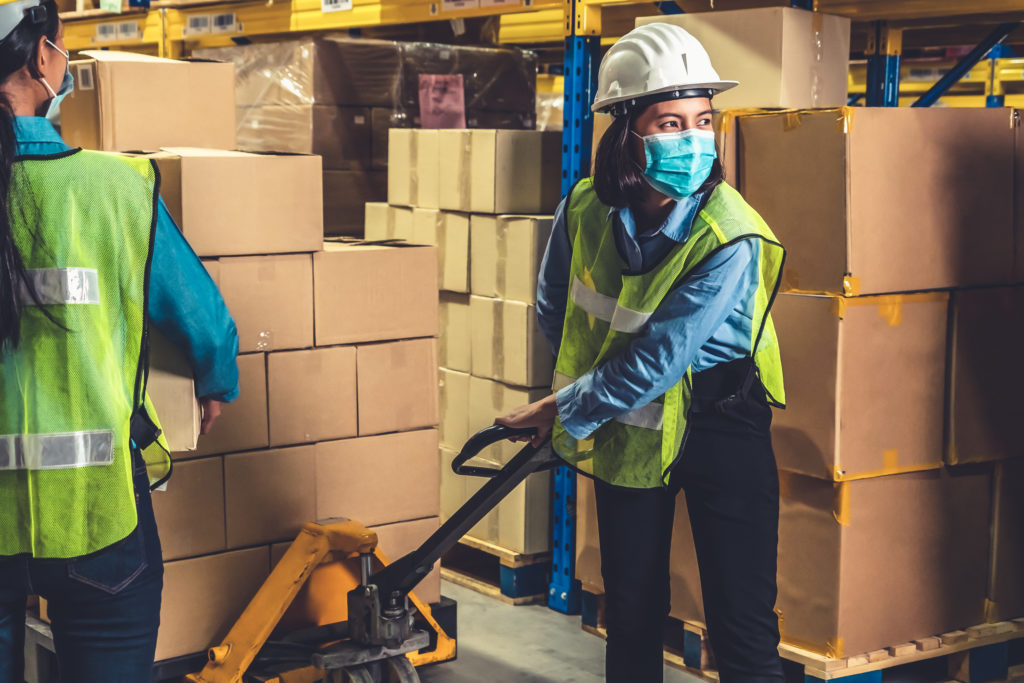
Throughout the pandemic, particular instances of supply chain disruptions have proven to be catastrophic–especially those of Personal Protective Equipment. PPE supply chains have been unable to meet the demand brought about by the coronavirus, especially with July’s spike in nationwide cases. Since then, the country has seen major PPE shortages, as well as shortages of important drugs like Remdesivir.

Although the Trump Administration often turns a blind eye to the shortage of supplies like these, many members of the administration, as well as congressional Democrats and Republicans, have been working to relocate some of these PPE supply chains to the U.S. This effort would require an increase in domestic production, and would align with calls to return manufacturing efforts to the country–a major focus of the Trump Administration’s economic plan.

“This pandemic has shown us how important it is for us to be medically independent and to have supply chains that are reliable and flexible, no matter how they are structured,” said Rep. Vern Buchanan of Florida. “If we want stronger and more resilient supply chains here, then this must be the best place in the world to do business. The pandemic has showcased the urgency for having vital medical products like PPE and pharmaceuticals available quickly and reliable. We cannot rely on our adversaries, like China.”

To combat the virus, the United States quickly leaned on foreign manufacturers for PPE and for masks in general. Because of China’s own outbreaks, its factories could not operate a full capacity and many American companies and factories began breaking from their usual inventory to produce face shields and masks.

Tax-writing Finance Committee chairman Chuck Grassley explained the need for large changes in how the country has operated its supply chains thus far. “We cannot allow our supply chains to rely so heavily on China,” he said, “and I look forward to working with my colleagues, on both sides of the aisle, to discuss how we can diversify our supply chains and increase our domestic manufacturing capacity.”

Other experts have studied how the pandemic has affected pricing changes within the marketplace, especially as delivery drivers and essential workers have been working overtime to meet demands.

Carnegie Mellon University professor of engineering and public policy, Erica Fuchs, discussed with House lawmakers the ways in which manufacturing could get the improvement it needs through specific infrastructure investments.

“By infrastructure, I mean not just roads, bridges, transit networks, water systems, and dams, but also [the] energy, communications, manufacturing, and data infrastructure necessary for all of those,” she explained. “In the same way that we need to build domestically the products that global markets want and only we can make, our infrastructure investments need to be for the infrastructure and the future.”

She also noted that transit infrastructure needs new designs that will allow for safe and easy implementation of smart city systems and driverless vehicles, as well as enable the necessary data infrastructure for better security and privacy.

New Data Show Fatality Rates Rising on Roads, Even With Less Traffic

September 26, 2020 by Levinson and Stefani Leave a Comment

Earlier in the pandemic, we reported on findings that showed road safety had not improved, even though traffic was incredibly light during the nation’s stay-at-home mandates.

A recent study says not only are roadways not safer–they are deadly.

The National Safety Council has released preliminary data explaining that motor vehicle death rates jumped throughout May, regardless of shelter-in-home orders. Estimates show that when compared to 2019, data show a 23.5% rise in fatality rate per miles driven. 

The group, which works to bring an end to the main causes of preventable death and injury, released this information during a roadway safety webinar in mid-July. It explained that per 100 million vehicle miles traveled in May, the mileage death rate was 1.47, up from 1.19 the same month in the year prior. Still, although fatality rates rose, there was a 25.5% drop in total miles driven throughout May 2020 compared to May of 2019.

“Unfortunately, the pandemic has exposed our road safety culture for what it is,” said President and CEO of NSC, Lorraine Martin. “We did not reap the safety benefits we should have experienced.”

The riskier roads at hand are now threatening to undo the traffic safety improvements made over the last few years. With three consecutive years of growing fatalities rates between 2015 and 2017, the United States had seen a gradual decline in overall traffic deaths. Now, more people are resuming their commutes to work, and traffic accidents are now the leading cause of workplace deaths.

May 2020 is the third month in a row that drivers were much more likely to die in a vehicle crash, according to NSC’s estimates. Throughout March and April, motor vehicle death rates per miles drive rose as compared to rates from the same time period in 2019. According to data, there was a 36.6% increase in death rates per miles driven in April, which also saw a mileage death rate of 1.47 per 100 million miles driven. This is up from 1.08 in 2019, although the number of miles driven decreased by 40% from April of 2019.

In March, during the beginning of the pandemic, data showed that there was a 14% increase in fatality rate per miles driven, with a mileage death rate of 1.22 per 100 million vehicle miles driven (up from 1.07 in March of the year before). This occurred even though the number of miles driven decreased by 18.6% from the same time frame in 2019.

NSC has collaborated with its SAFER task force to develop recommendations and guidance to help employers during this time, with information on safer routes and enhanced transportation safety while on the job. This resource details the reasons why employers should focus on roadway safety for their workers both during the pandemic and after.

“As motor vehicle crashes are the leading cause of workplace fatalities, transportation safety should be integral to every organization,” said Martin. “An employer’s reopening strategy is an opportunity to emphasize and reiterate the need for safe streets, as well as safe workplace transportation. Employers can make a real difference in improving safety on our roadways, helping to protect their employees, as well as other road users.”

Martin explains that although reasoning behind these high death rates may still be confusing right now, she believes that the clearer roads have persuaded many drivers to operate their vehicles with less care. National Highway Traffic Safety Administration associate administrator for research and program development, Nanda Srinivasan, said that drivers are often tempted to speed on an empty road. Additionally, many drivers may participate in impaired driving or refrain from using a seat belt.

“It’s clear that our open roads have created somewhat of an open season for reckless driving,” Martin said.

During the first five months of 2020, six U.S. states saw notable jumps in roadway fatalities–New Hampshire had a 64% increase, Connecticut 39%, Louisiana 15%, Missouri 12%, Arkansas 10%, and North Carolina 6%.

According to Srinivasan, drivers need to always keep in mind these safety fundamentals: buckle up, don’t speed, and drive sober.

Executive director of the Governors Highway Safety Association, Jonathan Adkins, also explained that a majority of crashes have some kind of behavioral factor involved, like drinking or speeding.

“The number one concern from Governors Highway Safety offices is five letters: speed,” he reiterated.

Adkins also noted that “traffic-calming infrastructure” would help the issue, which is a method of improving roadways’ physical layouts. There are specific designs that can improve overall road safety, and Adkins cited one example in which some recently-shut-down streets in Charleston have given easier access and higher safety levels to pedestrians and bicyclists.

“Traffic-calming infrastructure is fantastic,” he said. “We’re seeing this across the country, and it’s really encouraging.”

A great safety-centered resource for organizations, employers, and independent drivers to join is NSC’s Road to Zero Coalition, a group of 1,500 members working to end all roadway deaths by 2050.

Supply Chain Workers Form Task Force to Increase Social Distancing During Delivery

September 21, 2020 by Levinson and Stefani Leave a Comment

Recently, a group of supply chain partners, retailers, and manufacturers came together to create a task force that would outline standards needed in order to reduce person-to-person contact when freight is moved from Class 8 vehicles to last-mile drop-offs.

The Contactless Delivery Task Force, launched by the Consumer Brands Association, has developed protocols for safer and smoother delivery processes for everyone involved.

“Everyone is very concerned about ‘How do we keep our employees safe, how do we keep things moving efficiently in a high-demand environment?’” said Consumer Brands Association vice president of supply chains, Tom Madrecki. “But, that issue of safety continues to percolate and continues to be very relevant.”

The group’s primary focus will be electronic bills of lading (eBOL), which bring the benefits of digitizing typically paper-based processes for further efficiency and data accuracy, as well as health and safety improvements (by reducing the need for human contact).

“As shippers continue to build more efficient and resilient supply chains, the eBOL fills in a gap that many clients have been asking for,” said Accenture’s supply chain and operations practice senior manager, Henry Blum. “The touchless BOL will result in entry error reduction, increased visibility to OS&Ds, drive lower transportation costs, and benefit their green footprint.”

EBOLs will help the industry move away from paper documentation and forward into the age of online dashboards, virtual booking, instant quotes, and data analytics. These methods are becoming much more present throughout the industry as shippers more regularly prefer real-time updates and information. Trucking industry carriers have been adopting the technology more rapidly than ever.

Additionally, as more industry workers have been working from home due to COVID-19, the demand for quickly-available electronic information has skyrocketed, and the transition to eBOL has allowed shippers to give faster and more efficient insight into the operations and logistics of their warehouses from their remote locations. For jobs that cannot be done from home, an eBOL allows for easier social distancing as files and documents no longer need to be exchanged in person.

“As CPG companies identify ways to increase supply chain efficiencies and ensure employee safety, electronic delivery verification through a contactless pick-up and delivery process is a natural solution,” said Madrecki.

The task force plans to make contactless delivery and pickup protocol much easier while maintaining and increasing system efficiency and employee safety. Since its launch, the task force has grown to include 25 consumer packaged goods retailers and companies.

“We’re really looking at ‘How do we reduce human interaction so that we can continue to facilitate the movement of goods and services?’” Madrecki explained. “A lot of companies raised the need for contactless deliveries mechanisms or tools.”

One company on the task force is Land O’Lakes, Inc., which hopes to be part of a major change for the progress of supply chains.

“While a major disruptor, COVID-19 now gives us the opportunity to partner across our industry and develop the processes and procedures that will define the consumer packaged goods space for years to come,” said Land O’Lakes senior vice president and chief supply chain officer, Yone Dewberry. “Health, safety, and efficiency have always been our priorities, but now we’re forced to look for new and innovative ways of incorporating technology even further.”

Virtualization is key for the task force, and those that are part of the effort have found a solution to keeping supply chains moving efficiently has been electronic delivery verification. Because of this, eBOL processes are a logical next step.

“We specifically looked at that as the first bite of the apple when it comes to contactless deliveries and how do we remove paperwork and the physical process from deliveries,” said Madrecki. “But, there are clearly other applications.”

If a company is able to implement an eBOL system, it would also be able to put in place other related solutions for different situations, as many aspects of a trucking business involve electronic information transfers.

“If we can work in a concerted way to provide a workable standard for that, then there are clearly other applications to other parts of the delivery ecosystem,” said Madrecki. “It can definitely open up into a lot of different directions.”

Sleep Apnea Found to Have Contributed to Fatal Crash, Continues to be Major Trucking Safety Concern

September 16, 2020 by Levinson and Stefani Leave a Comment

Illinois — After a fatal multi-vehicle crash took place on Interstate 290 in Elmhurst, Illinois in 2018, it was found that some of the circumstances were three of the 10 issues on the National Transportation Safety Board’s Most Wanted List of Transportation Safety Improvements for 2020–one being untreated obstructive sleep apnea.

On March 1st, 2018, a commercial truck-tractor and a semitrailer traveling along I-290 in Elmhurst hit a vehicle that had slowed due to traffic congestion. A chain of crashes occurred after the initial rear-end collision, which included two additional large trucks and three more automobiles. Five people were injured as a result of the seven-vehicle accident, and one was killed.

Three primary safety issues were identified by investigators: fatigue, the lack of a collision avoidance system, and medical fitness for duty. All three of these concerns are on the NTSB’s Most Wanted List.

“This crash tragically highlights the urgent need to implement the safety recommendations association with our Most Wanted List,” said Robert L. Sumwalt, NTSB chairman. “Had our safety recommendations in these areas been implemented, this crash may well have been prevented.”

The NTSB concluded that the lack of a “robust medical certification evaluation process” at a federal level to identify and treat commercial drivers for obstructive sleep apnea was one of the largest issues contributing to the fatal crash.

Investigators found that the trucker who failed to slow down in time for the traffic congestion was “likely fatigued due to an untreated sleep disorder related to obstructive sleep apnea.”

This commercial truck driver had been diagnosed with sleep apnea in 2012 after undergoing a sleep lab test following a previous hospitalization. After speaking with NTSB investigators, the trucker admitted to failing to use his continuous positive airway pressure (CPAP) device for obstructive sleep apnea treatment since his hospitalization. CPAP devices can send reports to a physician via Bluetooth when used.

The NTSB’s Most Wanted List details 10 areas of concern that act as the agency’s guidelines for immediate, necessary recommendations for action, that if put in place, would have the potential to prevent crashes and fatal accidents.

In 2009, the NTSB recommended to the Federal Motor Carrier Safety Administration that a program should be implemented that would identify and help treat commercial drivers with OSA. This concern remains on the Most Wanted List, along with other sleep apnea-related issues.

The NTSB also recommended that forward collision avoidance systems be standardized and installed in all new commercial and passenger vehicles in its 2015 special investigation report. These recommendations are still listed as some of NTSB’s Most Wanted.

“With our Most Wanted List, the NTSB has pointed the way to safer roads, rails, seas, and skies,” said Sumwalt. “But, to make that vision a reality, the recipients of our safety recommendations need to implement them.”

An FMCSA spokesman said that the agency believes “all commercial driver’s license driver medical screening examinations should be robustly performed by medical examiners.”

But, without regulated standards for these tests, the identification and treatment responsibility for obstructive sleep apnea in a driver falls on the shoulders of the medical examiner, said FMCSA medical review board member Brian Morris.

“There are some medical examiners that are quite diligent in performing the exams, and they would do the appropriate screening for sleep apnea,” said Morris. “Other medical examiners don’t focus as much on the issue.”

Still, even if sleep apnea is identified, many physicians won’t ask for a follow-up or require treatment like the CPAP, Morris explained. If untreated, the risk for sleep apnea-related issues is much higher than that of drivers at a low-risk stage.

“Right now, American Trucking Associations definitely recognizes that sleep apnea is a safety concern,” said ATA manager of safety and occupational health policy, Abigail Potter. “There is a lot of data and evidence to that effect.”

While ATA acknowledges the issue as well as FMCSA’s long-term work studying the risks at hand, ATA still says it wants FMCSA to prioritize the consideration of all cost-benefit issues before implementing a new rule, according to Potter.

“The bar for commercial drivers to get medically evaluated and certified has been raised by FMCSA over the last few years,” said Scopelitis Transportation Consulting president, David Osiecki. “Ultimately, the trucking industry and highway safety will be better served by clear guidelines that allow drivers and safety management personnel to anticipate and better plan for the medical evaluation-certification process.”

Truck-Screening Technology Expanding Throughout Arizona

September 5, 2020 by Levinson and Stefani Leave a Comment

To keep compliant trucks moving regularly, the use of innovative truck-screening technology has been implemented across the Arizona Department of Transportation.

In a news release by ADOT, the department said it would be using this tech alongside commercial ports of entry in order to more easily record important identifying information of trucks as well as weight and other qualifying factors. So far, this truck-screening technology has only been in place at rest areas, such as the McGuireville rest stop on Interstate 17, Canoa Ranch on Interstate 19, and Sacaton on Interstate 10.

The truck-screening tech will now be expanded to commercial entry ports along Interstates 10 and 40, and on state Route 95 in Parker.

“This truck-screening system will allow our officers to focus on the commercial vehicles that need our officers’ attention,” said ADOT’s Enforcement and Compliance Division deputy director, Jeff Stanhope. “It helps us make better use of our resources and efforts while allowing trucks in compliance to go on their way.”

The technology, when expended across the major east-west routes of Interstates 10 and 40, will be passing through Arizona in order to connect New Mexico and California. With state Route 95 running along the borders of Arizona, it will also feed into California and Nevada.

“As you’re coming from New Mexico or California on either I-10 or I-40, you’ll go through these truck-screening places,” said Ryan Harding, spokesman for ADOT. “There’s a lot of truck traffic on those interstates.”

This tech has cameras meant to read USDOT numbers and license plates, weigh-in motion sensors, and message signs. At the Ehrenberg and San Simon ports of entry on Interstate 10, the screening technology can identify commercial vehicles that have tires in need of repair, as tire failure on any commercial vehicle can bring potentially catastrophic situations to the road and can allow dangerous tire debris to be left on roadways. For this feature, the agency is still evaluating how accurate the sensors can be.

When a truck is approaching an entry port, signs will direct the driver to the right lane, and when he or she reaches a half-mile point from the port, cameras and sensors are able to capture the commercial vehicle’s information and relay it back to the port’s ADOT Enforcement and Compliance Division officers.

The sensors and cameras along the roadway are meant to more easily collect necessary information about the commercial truck without the driver having to stop.

“The cameras are really high-speed, so they can capture the U.S. DOT number and license plate, and it’s able to weight the truck as it rolls over,” said Harding.

The screening system will then compare the truck’s information against state and national databases, and truckers that are compliant will be allowed to bypass the port. If the port’s system detects a problem, the highway signs will alert the driver that he or she must pull into the port for inspection. Some of these issues calling for a driver to stop include: out-of-service orders, expired registration, or permits not on file. At the Ehrenburg and San Simon ports of entry, this could also include any tire problems detected.

“It just makes it more efficient because the trucks are coming into the port are those trucks that need further inspection by officers, and the trucks that are OK can just continue right on,” said Harding. “It kind of smooths the flow of commerce.”

This truck-screening technology will not only make life on the road easier for truckers, but will also aid overall state planning. Size and weight information will be stored by ADOT in order to help its Multimodal Planning Division make more accurate and necessary decisions in relation to the state’s highway system.

It will also work to save truck drivers and officers resources and time on the job, and make their work a bit more stress-free.

“We hope that this will make it a lot more efficient for the flow of commerce in and out of the state, and make it more efficient for our officers’ time and resources as well by only inspecting trucks that need it,” explained Harding.

Tech and Social Media More Important Than Ever to Drivers During Pandemic

September 2, 2020 by Levinson and Stefani Leave a Comment

As drivers continue working on the front lines during the COVID-19 pandemic, social-distancing regulations can make truckers feel even more isolated than normal.

“Not only are drivers being exposed to the COVID-19 virus on a daily basis as they eat, fuel, deliver, and shower away from home, they worry about exposing their families if and when they do get home,” said president of Women in Trucking Association, Ellen Voie. “Now, add protests in major cities to the mix, and a driver’s physical safety is even more vulnerable. Their families need to be reassured that their loved one–a driver–is safe.”

Ruan president Dan Van Alstine agreed, saying truckers are especially worried about their families when they are returning home, or when they are choosing to self-isolate and stay on the road.

“A lot of times, drivers will have anxiety about what is going on at home,” said Van Alstine. “Right now, kids aren’t at school, and family members might be at risk. This is a bizarre time and can feel very different.”

For some drivers, social distancing has meant missing important family events or not being able to be present for family members in times of need. For over-the-road driver Glenna Willis, it has meant missing her husband’s occupational therapy appointments while he works to recover from recent health problems.

Because of this, Willis communicates with her husband and his doctors through Google Duo while on her breaks as she hauls freight for Tri-State Expedited Service out of Perrysburg, Ohio.

“I have a way to actually see his face and see how he is walking, or watch the occupational or physical therapy so we know what we can do at home,” she explained.

Like Willis, many truckers have been relying on technology to connect with family and friends back home, as well as with their carriers and co-workers. For drivers who are self-isolating on the job or who regularly work long-haul gigs, this mobile tech is especially important.

“Most drivers don’t go to a job and say, ‘Send me to a place where I’m going to have a difficult time staying connected,’” said DriverReach president, Jeremy Reymer.

Video chat capabilities through applications like Zoom and Skype have been widely used across the industry during this time.

“Video is very personal and engaging,” said Reymer, who called video calls the next best thing to chatting in person.

Those connecting with their trucking companies while on the road have found video chat apps extraordinarily useful, as well.

“We have a driver service department that calls drivers every day just to check in and see if they are having any issues we can help with,” said director of driver services for Averitt Express, David Broyles.

Cell phones have also become the new modern citizens band radio, according to professional driver Bob Stanton.

“We do daisy-chain phone calls,” Stanton said of himself and other drivers. “You can add people to the phone call. It is the chitty chat you would have done on a CB, but it is people we know instead of the random truck that happens to be in front of you. The challenge is if the person who started the chain leaves, you have to start all over.”

Stanton also has daily morning calls with his wife to keep them both assured the other is safe. “It is for both of us,” he said. “If she doesn’t call me back, the kids are going to go check on her. If I don’t answer the call, she has the 24-hour numbers for dispatch, so they can see if [my truck] is moving or not.” He also said he shares his location each not with his family via Google Maps.

Some drivers are having a tougher time with the isolation than others. 

“I miss being able to give handshakes to my fellow coworkers,” said Averitt over-the-road driver, Chris Yohn. “I miss being able to have a meal at a truck stop surrounded by other drivers. There is no real way to combat the isolation. It’s just something we have to live with for now.”

Some companies are working on expanding further virtual communication among drivers in order to boost mental health during this time.

For example, driver health and wellness program provider Rolling Strong has a mobile app featuring social media pages allowing drivers to connect to new friends on the site.

“Once you find people, you can message back and forth between those new contacts you’ve made,” said Rolling strong president Steve Kane. “We built this whole gamification aspect of our program. You can create head-to-head competition.”

Kane said the mobile app makes it easier for drivers to connect to new acquaintances, and that drivers can also invite their family and friends onto the site, as well.

Averitt has also created a private Facebook page for Averitt drivers to more easily connect. The group is administered by the company’s driver services workers.

“Drivers share information they feel is important on the page and ask questions,” said Broyles. “We average about 900 posts or comments a day.”

  • « Go to Previous Page
  • Page 1
  • Interim pages omitted …
  • Page 11
  • Page 12
  • Page 13
  • Page 14
  • Page 15
  • Page 16
  • Go to Next Page »

Levinson and Stefani Injury Lawyers in Chicago / Attorney Advertising